One cubic yard equals 27 cubic feet exactly, so any volume can be converted to cubic yards by first expressing it in cubic feet and then dividing by 27. A cubic yard is a unit of three-dimensional space — a cube whose edges each measure one yard (three feet) — and it is widely used in the United States for bulk materials, ready-mix concrete, gravel, mulch, and topsoil, where the amounts are too large to describe comfortably in gallons or liters. Because the yard is a U.S. customary length unit, cubic yards belong to the same measurement family as cubic inches and cubic feet, not the SI system, although the SI cubic meter sits in the background as a bridge. A defined numeric volume can travel from liters, U.S. liquid gallons, imperial gallons, cubic inches, or any other supported unit into cubic feet using an exact factor, and from cubic feet into cubic yards by a single division. The whole conversion therefore has two auditable steps instead of one memorized constant, and the intermediate result lets you check the work at each hop.
Cubic Yard Basics and How It Connects to Other Units
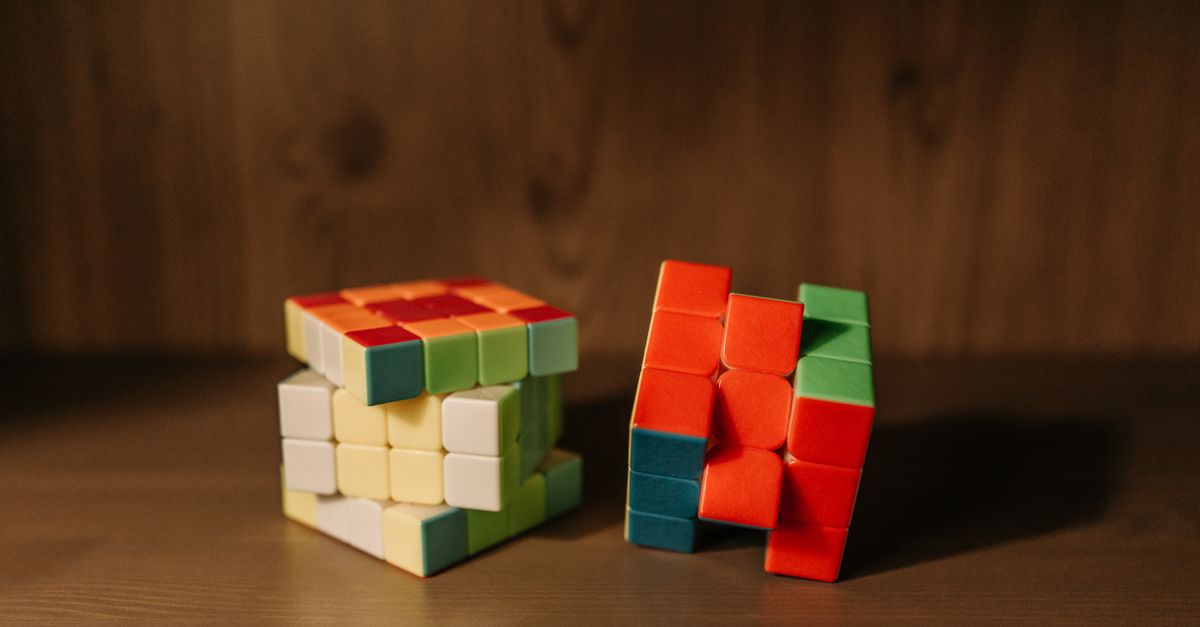
A cubic yard is the volume of a cube whose edges are each one yard long, which works out to 3 ft × 3 ft × 3 ft = 27 cubic feet by the definition of the yard. The relationship between cubic yards and cubic meters is fixed by the international yard, which the NIST Guide to the SI, Appendix B.8, and the BIPM SI Brochure both document. Specifically, 1 yd = 0.9144 m exactly, so 1 yd³ = 0.9144³ m³ = 0.764554857984 m³. Working backward, 1 m³ is roughly 1.307950619 yd³. These relationships are exact, not estimates, so once a volume is in cubic feet or cubic meters the final hop to cubic yards is pure arithmetic, not approximation.
The same three-dimensional logic applies to every cubic unit on the page. A cubic inch is the volume of a cube with one-inch edges, a cubic foot is the volume of a cube with one-foot edges, and a cubic meter is the volume of a cube with one-meter edges. They describe the same kind of quantity — geometric space — even though their names come from cubed length units. That is why converting volume to cubic yards works best as a chain: liters (or gallons, or cubic inches) → cubic feet → cubic yards, with each link defined by an exact constant.
Why the Volume Converter Is the Right Tool for This Job
The Volume Converter translates a nonnegative quantity among eleven units — milliliters, liters, cubic meters, U.S. fluid ounces, U.S. cups, U.S. liquid pints, U.S. liquid quarts, U.S. liquid gallons, cubic inches, cubic feet, and imperial gallons — through a transparent liter reference. Each unit is stored at its defined precision in liters per unit, so when you enter a value in any source unit and choose cubic feet as the destination, the converter multiplies your value by the source factor to land in liters, then divides by the cubic-foot factor to produce the answer. The page prints the intermediate liter quantity next to the result, which makes factor selection easy to audit and the chain visible end to end.
Cubic yards are not a built-in destination on the page, and that is by design. The supported set covers the metric trio (milliliter, liter, cubic meter), the U.S. liquid hierarchy (fluid ounce, cup, pint, quart, gallon) that descends from the gallon of 231 in³, the geometric cubic inches and cubic feet derived from the international inch, and the imperial gallon. Because cubic yards are exactly 27 cubic feet, a single division by 27 finishes the job without forcing the tool to memorize another factor that is derivable from cubic feet anyway.
All arithmetic on the page runs locally in the current browser, and the answer is formatted to twelve significant digits only after the calculation has finished. Zero is accepted because an empty capacity is a valid description of zero volume, while negative values, blanks, non-finite numbers, and magnitudes above the supported numeric range return clear errors instead of being silently clamped. That makes the converter useful for general capacity comparisons, packaging, classroom work, recipes with known unit systems, and geometric volume checks.
Convert a Volume to Cubic Yards in Three Steps
- Enter the volume and pick its source unit. Open the Volume Converter and type a nonnegative number into the input field. Choose the matching source unit from the menu — for example, U.S. liquid gallons, liters, cubic feet, cubic inches, cubic meters, or imperial gallons. Zero is accepted because an empty capacity is a valid description of zero volume; negatives, blanks, and non-finite values are rejected with a clear error.
- Choose cubic feet as the destination unit and convert. From the destination menu, select cubic feet, paying attention to the U.S. liquid versus imperial labels so you do not accidentally mix systems. Click Convert volume and read both the labeled cubic-foot result and the intermediate liter quantity the page prints for reference.
- Divide the cubic-foot result by 27. Take the cubic-foot number from step 2 and divide by 27 to land in cubic yards. The operation is exact because one cubic yard is defined as 27 cubic feet. Copy or record the cubic-yard value for your worksheet, material order, or engineering draft.
If your source volume is already in cubic feet or cubic meters, the same three-step pipeline still applies: convert to cubic feet in step 2 if you started elsewhere, then divide by 27 in step 3. The guide on converting area to cubic feet by adding depth shows how to arrive at cubic feet from square-foot area and a depth, which is often the upstream step before a cubic-yard total.
Exact Conversion Factors to Keep Handy
The numbers below are the defined relationships the converter uses internally. None of them is a rounded estimate — they come straight from the international inch, the international yard, and the SI definition of the liter.
| From | To | Exact factor |
|---|---|---|
| 1 milliliter (mL) | liters (L) | 0.001 L |
| 1 liter (L) | cubic meters (m³) | 0.001 m³ |
| 1 cubic meter (m³) | liters (L) | 1000 L |
| 1 U.S. liquid gallon | liters (L) | 3.785411784 L |
| 1 U.S. liquid gallon | cubic inches | 231 in³ |
| 1 U.S. cup | milliliters (mL) | 236.5882365 mL |
| 1 cubic inch | milliliters (mL) | 16.387064 mL |
| 1 cubic foot | cubic inches | 1728 in³ |
| 1 cubic foot | liters (L) | 28.316846592 L |
| 1 imperial gallon | liters (L) | 4.54609 L |
| 1 cubic yard | cubic feet | 27 ft³ |
| 1 cubic yard | cubic meters (m³) | 0.764554857984 m³ |
Because the metric relationships are powers of ten and the cubic relationships are exact integer multiples or exact decimal expansions, every conversion on the page is reproducible from these constants alone. If you want to verify the converter's answer for any pair, multiply by the source factor in liters per unit, divide by the destination factor, and compare with the displayed cubic-foot value and intermediate liter value.
U.S. Liquid vs Imperial: Don't Mix Systems
The single biggest source of error when converting volume to cubic yards is mixing U.S. customary and imperial units. The U.S. liquid gallon is 3.785411784 L, while the imperial gallon is 4.54609 L — about 20 percent larger. The Volume Converter keeps these labels explicit, with separate entries for U.S. fluid ounce, U.S. cup, U.S. liquid pint, U.S. liquid quart, U.S. liquid gallon, and a single imperial gallon. It deliberately does not include the U.S. dry pint, dry quart, or bushel, so the word gallon never silently shifts between liquid and dry systems on the page.
If your source number comes from a U.K. recipe, an older British manual, or a Canadian specification written for an imperial market, double-check that the gallon in use is the imperial gallon rather than the U.S. liquid one. A 100-gallon tank converts to 454.609 L if imperial, or to 378.541 L if U.S. liquid — a 76 L gap that translates into roughly 0.1 yd³ of difference after the cubic-foot step, which is enough to misorder a concrete pour or misstate the capacity of a holding tank.
The same caution applies to fluid ounces. The U.S. fluid ounce and the imperial fluid ounce are not the same size, so the converter intentionally includes only the imperial gallon rather than presenting an incomplete imperial hierarchy. Always check whether a source from the United Kingdom, the United States, or another market uses imperial, U.S. customary, or metric labels before transferring a number.
Worked Example: 1,000 U.S. Liquid Gallons to Cubic Yards
Suppose you need to know how many cubic yards fit in 1,000 U.S. liquid gallons — a common question when ordering gravel, mulch, or water storage.
Step 1. Convert U.S. gallons to liters using the Volume Converter. With U.S. liquid gallon as the source and liter as the destination, the page multiplies 1000 × 3.785411784 = 3785.411784 L. The converter prints this intermediate liter value alongside the result for audit.
Step 2. Convert liters to cubic feet. Take the liter value and divide by the cubic-foot factor: 3785.411784 ÷ 28.316846592 = 133.6805555 ft³ (the page produces the same number when you set the destination to cubic feet directly).
Step 3. Convert cubic feet to cubic yards. Divide the cubic-foot result by 27: 133.6805555 ÷ 27 = 4.951131 yd³.
So 1,000 U.S. liquid gallons is approximately 4.951 cubic yards. The arithmetic in steps 1 and 2 is what the converter does internally and prints; the division by 27 in step 3 is the only piece you need to add because cubic yards are not a direct output of the tool. For your own number, plug it into the Volume Converter, copy the cubic-foot result, and divide by 27.
Where This Method Falls Short
The cubic-feet-then-divide-by-27 pipeline assumes your volume is well-defined and you only need a geometric capacity comparison. The converter does not account for thermal expansion, calibration tolerances, meniscus reading on liquid surfaces, container fill level, or material density. For trade measurement, laboratory preparation, medication dosing, or safety-critical work, use calibrated equipment and the conversion rules required by the relevant authority rather than a general-purpose page.
Volume is also not mass. Liters do not convert to kilograms, and fluid ounces do not convert to ounces by weight, without the material's density and temperature. If your end use is ordering material by weight or computing load on a surface, you need a separate step from volume to mass that the converter does not attempt.
Kitchen rounding is one place where the converter's exact factors may surprise users. The page uses the exact U.S. liquid cup of 236.5882365 mL, derived from the gallon. Some recipes round a cup to 240 mL for convenience, so a recipe published with rounded metric equivalents can differ slightly from what the converter produces. Follow the convention stated by the recipe or regulated specification when exact agreement matters.