Converting clothing sizes comes down to two simple rules: for women's tops and dresses, UK equals US plus 4 and EU equals US plus 32, while for men's jackets and tops the US and UK use the same chest-inch number and the EU size is 10 higher. So a US women's 8 lines up with a UK 12 and an EU 40, and a US men's 40 chest lines up with a UK 40 and an EU 50, with each triple pointing to the same garment on the same body. A free Clothing Size Converter applies these rules automatically, lets you type one known size, and reads back the matching US, UK and EU numbers plus the closest S/M/L letter size in real time. Knowing the formulas still helps, because it lets you sanity-check a label before you click "buy" on an order shipping from another country.
Ready-to-wear sizing is one of those everyday problems that feels harder than it should be, mostly because three different regions built their own system at different times, tied their numbers to slightly different body measurements, and picked different step sizes between consecutive sizes. The good news is that for everyday women's and men's apparel the relationships between the three systems are stable enough that you can convert any known size with a calculator and a single formula. The harder question, which no conversion can fully answer, is whether the converted number will actually fit your body — because two brands in the same country can cut a size quite differently.
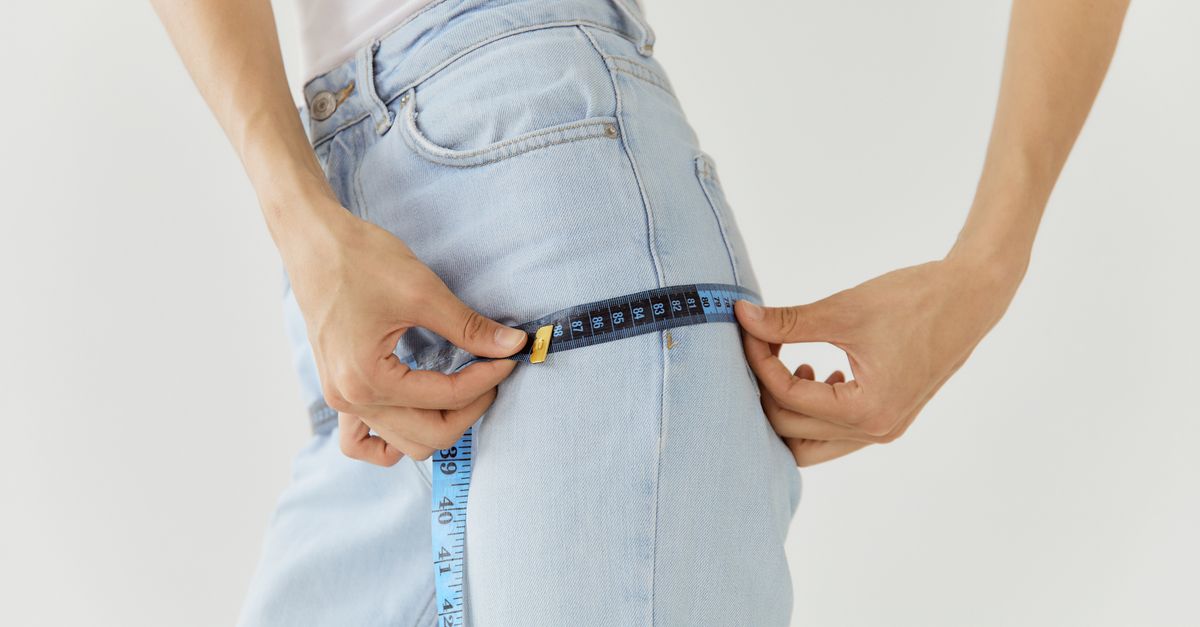
Why Clothing Sizes Differ Between the US, UK and EU
Each country standardized its ready-to-wear sizing independently, tying labels to different base measurements and step intervals, so the same body maps to different numbers in different places. The European sizing system used by Zara, Mango, H&M and most continental brands is a single numeric scale tied to half the chest circumference in centimeters, which is why EU sizes run high (a women's 36, a men's 46). The UK system evolved from older dressmaking conventions and was originally tied to bust measurement in inches, which is why a UK 12 reads as a US 8 even though the dress is the same garment. The US system sits between the two but drifts the most over time because of so-called "vanity sizing," where labels quietly grow larger to flatter shoppers.
This is also why a single conversion chart cannot guarantee a perfect fit. Two brands in the same country can cut a medium differently, vanity sizing shifts numbers over time, and fabric stretch plus garment cut (slim versus relaxed) change how a piece sits on you. Treat any conversion — including the one your tool gives you — as a way to narrow your choice, then confirm against the specific brand's size chart using your body measurements and try the item on when you can.
Women's Size Conversion Rules
For women's tops and dresses the three numeric systems line up predictably, and the conversion is a single two-line calculation. Take a US women's 8 as the worked example:
- Start: US size = 8
- Apply UK = US + 4: 8 + 4 = 12, so the UK size is 12.
- Apply EU = US + 32: 8 + 32 = 40, so the EU size is 40.
- Result: US 8 = UK 12 = EU 40.
The EU column is the continental/French number printed on most Zara, Mango and H&M labels, which is the one most international shoppers actually need to read across. A US 4 is a UK 8 and an EU 36; a US 12 is a UK 16 and an EU 44. The full reference grid is below.
| US | UK | EU |
|---|---|---|
| 2 | 6 | 34 |
| 4 | 8 | 36 |
| 6 | 10 | 38 |
| 8 | 12 | 40 |
| 10 | 14 | 42 |
| 12 | 16 | 44 |
| 14 | 18 | 46 |
These formulas work cleanly for tops and dresses. Pants and jeans are a separate world: US denim is often sized by waist inches (a "28" jean is a 28-inch waist), EU denim runs the centimeter equivalent, and UK denim uses yet another scale. For pants, always check the brand's own chart and measure your natural waist before ordering.
Men's Size Conversion Rules
Men's tops, jackets and suits are sized by chest measurement in inches, and the US and UK share the same number — a US 40 chest is a UK 40. Europe adds 10 to that chest number to produce the EU size, so the rules collapse to:
- US size = UK size (both are chest inches)
- EU size = US size + 10
Working through it: a US/UK 40 chest becomes an EU 50, a US 38 is an EU 48, and a US 44 is an EU 54. If you only know the EU size, subtract 10 to get the US/UK chest. The full reference grid is below.
| US / UK chest | EU |
|---|---|
| 36 | 46 |
| 38 | 48 |
| 40 | 50 |
| 42 | 52 |
| 44 | 54 |
| 46 | 56 |
If you only know the letter size, the rough guide is S = 34–36 chest, M = 38–40, L = 42–44, and XL = 46–48, but as with women's letters, men's letter sizing is the least standardized part of any conversion.
How to Convert a Size With the Clothing Size Converter
For a quick cross-system conversion the Clothing Size Converter does the math for you, including the letter-size readout. The whole conversion takes three inputs and a single read.
- Pick women's or men's. The two systems use different rules, so choose the right one before reading across — a US women's 8 and a US men's 8 mean entirely different garments.
- Select the system your known size is in. Choose US, UK or EU so the tool knows which column you are starting from.
- Type the size number. For example, enter a US women's 8, a UK 12, an EU 40, a men's US 40 chest, or any equivalent in any column.
- Read the result. The tool instantly shows the matching size in all three systems plus the closest S/M/L letter size. If your exact number is not a standard size, it snaps to the nearest one and tells you so.
Because the result updates as you type, you can flip the system toggle and watch the other columns change live, which makes it easy to confirm that the converter agrees with the formulas above.
How Letter Sizes (S/M/L) Translate to Numbers
Letter sizes are the loosest part of any conversion. They have no legal standard and drift between brands, so treat the table below as a rough guide rather than a rule. For women's apparel, XS is roughly US 0–2, S is US 4–6, M is US 8–10, L is US 12–14, and XL is US 16–18. For men's apparel, S is roughly a 34–36 chest, M is 38–40, L is 42–44, and XL is 46–48.
The reason letters drift more than numbers is that they are not tied to a single body measurement the way numeric sizes are. Two brands can both label something "M" while cutting it for chest measurements two inches apart. This is also the area where vanity sizing does the most damage — the same "M" tag can sit comfortably on a smaller body at one brand and feel snug at another. If you only know your letter size, the smart move is to grab a tape measure and record your chest (or bust), waist and hips before ordering.
Why Converted Sizes Still Need a Final Check
Even an exact conversion is a starting point, not a guarantee. The biggest reasons a converted size can still be wrong are:
- Brand-specific cuts. Two brands in the same country can cut a medium differently, and a Spanish brand's "M" is not the same garment as an Italian brand's "M".
- Vanity sizing. Numbers on labels drift over time, so a 2024 "US 8" may not match a 2014 "US 8" from the same brand.
- Fabric and cut. Stretchy knit fabric fits differently from rigid woven fabric, and a slim-cut jacket fits differently from a relaxed-cut jacket at the same labeled size.
- Personal fit preference. Some people like a closer fit, others prefer room to move, and that preference changes the right size for the same body.
Use a converted size to narrow your choice down to one or two options, then confirm against the specific brand's size chart using your own body measurements (chest or bust, waist and hips) and, whenever possible, try the item on before buying. For online orders where trying on is not an option, a quick scan of recent customer reviews often tells you whether a brand runs small, true or large — that single piece of context can save a return.
The single most reliable habit is to pair any conversion with your own measurements. Keep a tape measure handy, record your chest or bust, waist and hips in both inches and centimeters, and store those numbers next to your usual US, UK and EU sizes. When a new brand catches your eye, run the conversion first, then confirm against the brand's chart and your own numbers before you order. That two-step check turns a tool result into a real answer.