NBA pace is the number of possessions a team uses per game, scaled to a 48-minute baseline, and it is calculated as possessions per 48 minutes rather than as any kind of running speed. The official formula treats both teams' possessions in a single game, adds them together, divides by two to get one team's share, and then scales the result up or down to a full 48 minutes so that pace numbers from different game lengths can be compared. Running pace, by contrast, is the inverse of speed and uses completely different units: minutes per kilometer or minutes per mile, the time it takes to cover one unit of distance. The word "pace" gets used in both sports, but the math underneath it is unrelated — basketball pace counts how often a team has the ball, while running pace counts how long each unit of distance takes. This article walks through the NBA possession formula first, and then turns to the running pace calculator for the basketball player, coach, or fan who also wants to track conditioning runs in pace terms.
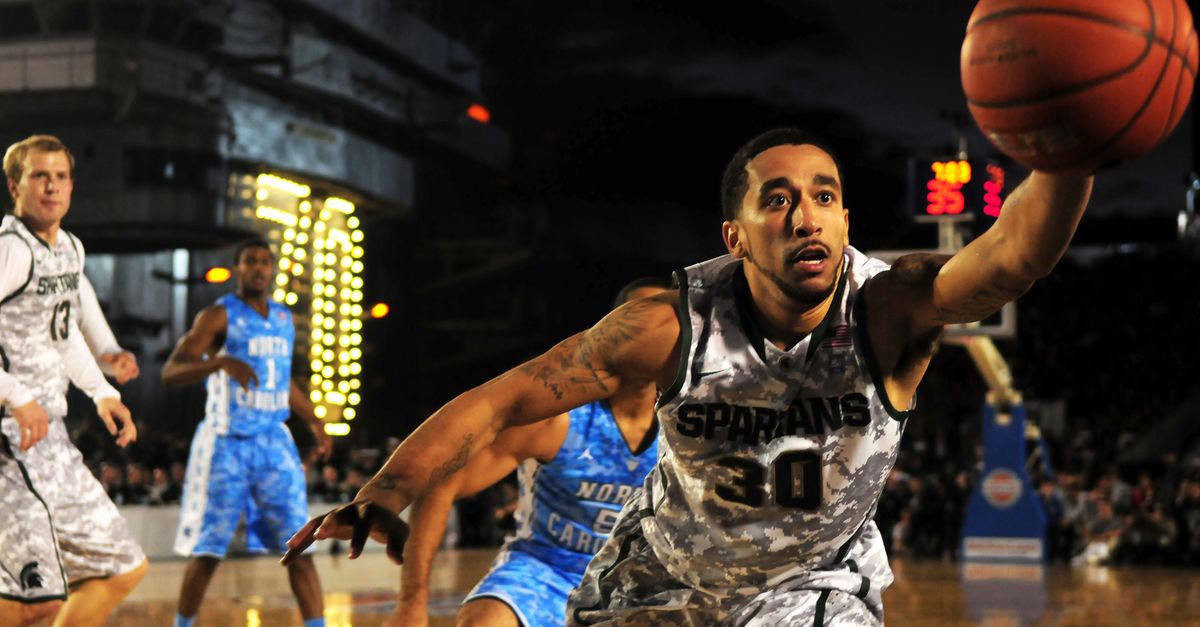
What NBA Pace Actually Measures
Basketball pace is not a speed measurement. It is a count of possessions, scaled to a 48-minute game. Every time a team ends a possession — through a made shot, a missed shot that the defense rebounds, a turnover, or the end of a period — that possession is logged, and the pace figure is how many possessions a team would run in a full 48-minute game at the same rate.
The standard formula treats both teams in the game:
NBA Pace = 48 × (Team Possessions + Opponent Possessions) / (2 × Minutes Played)
In its simplest form, that collapses to possessions per 48 minutes. A team that ends 96 possessions in a 48-minute game has a pace of 96. A team that ends 100 possessions in 48 minutes has a pace of 100 — a faster, more up-tempo team. NBA pace figures for modern teams typically fall between 95 and 105 possessions per 48 minutes, with the league averaging near 100 in recent years.
Possessions are usually estimated from box-score data because the league does not publish an exact possession count for every game. The standard estimation formula is:
Possessions ≈ FGA + 0.44 × FTA − OREB + TOV
That is: field goal attempts, plus an estimated 44 percent of free throw attempts (since each pair of free throws is one trip), minus offensive rebounds (which extend an existing possession rather than start a new one), plus turnovers. Plugging both teams' numbers into the pace formula above gives the pace figure for that game. For a deeper breakdown of the possession count and how each box-score input feeds it, the step-by-step breakdown of the NBA possession formula walks through the inputs one at a time.
Why Runners Use the Word Pace Differently
When a runner says they ran a 5:00 pace, they mean five minutes per kilometer — the time it takes to cover one unit of distance. That is the inverse of speed, and the units are completely unrelated to basketball. Runners in the United States and United Kingdom usually think in minutes per mile, while most of the rest of the world uses minutes per kilometer, and the same effort expressed in both looks very different on paper.
The conversion between the two is fixed by international agreement. One mile equals exactly 1.609344 kilometers, the value set by the 1959 international yard and pound agreement. That number turns any pace per kilometer into the matching pace per mile, and any pace per mile into the matching pace per kilometer. A 5:00 min/km runner is running about 8:03 min/mile — same effort, different yardstick.
For basketball players who train with running — pre-game warm-ups, conditioning intervals between practices, off-season base building — keeping conditioning pace in running terms is a useful complement to tracking on-court pace. Both are called "pace," but they describe different things.
How to Calculate Your Running Pace
The Pace Calculator takes the two numbers every runner already has — the distance covered and the finish time — and turns them into exact pace, speed, and race finish predictions without a button to press. The three steps are the same whether you are logging a 5K tempo or a long Sunday run.
- Choose your unit — kilometers or miles — and enter the distance you ran.
- Type your finish time as hours, minutes, and seconds.
- Read your pace in min/km and min/mile, your speed, and race finish predictions instantly below.
Everything runs locally in the browser, so nothing is uploaded and no account is required. The inputs update every figure the moment they change, which makes the tool useful for "what if" planning — entering a target race distance and a goal finish time to read the pace back, or entering one kilometer and a target pace to see what finish time that pace produces over any distance.
Pace Versus Speed: The Inverse Relationship
Pace and speed are two ways of describing the same effort, and they are linked by simple arithmetic. Speed in km/h equals 3600 divided by your pace in seconds per kilometer:
Speed (km/h) = 3600 / Pace (seconds per km)
That means a 5:00 min/km pace — 300 seconds per kilometer — is exactly 12 km/h, or about 7.46 mph. A lower pace number and a higher speed number both mean the runner is going faster, because pace counts time per unit and speed counts distance per unit.
The same idea works in mph. Speed in mph equals 3600 divided by your pace in moments per mile. An 8:03 min/mile pace (483 seconds) is roughly 7.46 mph — the matching speed for the 5:00 min/km example above, because both describe the same running effort expressed in different units.
To see the relationship in one calculation, take a runner who covers 5 kilometers in 25 minutes:
- Total time almost instantly: 25 × 60 = 1500 seconds
- Pace almost instantly per kilometer: 1500 / 5 = 300 seconds = 5:00 min/km
- Speed in km/h: 3600 / 300 = 12 km/h
- Pace in min/mile: 5 × 1.609344 = 8.0467 min/mile, or about 8:03 min/mile
That single calculation captures the whole relationship between distance, time, pace, and speed. For any other distance or pace figure, the running pace calculator returns the matching values without manual arithmetic.
Reading the Race Finish Predictions
Beyond pace and speed, the pace calculator returns predictions for the four standard road race distances at the same effort. The official distances used for those predictions are fixed by international athletics convention, so the figures are not approximations:
| Race | Distance (km) | Distance (miles) |
|---|---|---|
| 5K | 5.000 km | 3.107 miles |
| 10K | 10.000 km | 6.214 miles |
| Half marathon | 21.0975 km | 13.109 miles |
| Marathon | 42.195 km | 26.219 miles |
Those figures are the published race distances, not computed values. The finish-time prediction assumes the runner holds the entered pace for the entire race distance, which is a reasonable check for shorter races but tends to be optimistic for the half marathon and especially the marathon, where most runners slow in the final kilometers as fatigue builds.
Using Pace to Set a Goal Race Time
To find the pace needed for a target finish time, enter the race distance and the goal time in the pace calculator and read the pace back. A 4-hour marathon is 240 minutes over 42.195 km, which works out to 240 / 42.195 ≈ 5:41 min/km or about 9:09 min/mile. Holding that pace evenly is what the 4-hour goal requires.
To convert an existing pace into the other unit, enter one kilometer or one mile as the distance and enter that pace as the time. The calculator shows the pace per kilometer and per mile side by side, which removes the need to remember the 1.609344 conversion factor in the middle of a workout.
Pace bands also help separate easy runs from hard runs during training. Easy runs, tempo runs, interval sessions, and long runs each have their own target pace range, and comparing actual pace against those bands is how a runner knows whether a session was genuinely easy or secretly too hard. A pace calculator that returns pace in both units and predicts race times at the same effort makes that comparison straightforward.