A baby eye color calculator turns the eye colors of both parents into probability percentages for brown, green, and blue. Pick the father's and mother's eyes from the same three options, and the tool instantly returns the chance of each outcome based on simplified, published eye-color genetics charts. Two brown-eyed parents, for example, lean strongly toward a brown-eyed baby but still leave a small opening for green and blue, while two blue-eyed parents almost always produce a blue-eyed child. A brown-eyed and a blue-eyed parent split close to 50/50 between brown and blue. The percentages always add up to 100%, so you can read them as the full range of likely results rather than a single prediction. Real eye color is shaped by at least 16 interacting genes, led by OCA2 and HERC2 on chromosome 15, so the calculator is best treated as a science-informed estimate rather than a guarantee of what color eyes your baby will have.
What a Baby Eye Color Calculator Actually Does
The Baby Eye Color Calculator is a small, focused page built around a single question: what color eyes will my baby have? It takes two inputs — the father's eye color and the mother's eye color, each chosen from brown, green, or blue — and outputs three numbers. Those three numbers are the estimated probabilities that your baby will end up with brown, green, or blue eyes. Because there are only six unique parent combinations when you factor out mirror pairs, the tool covers the entire space with a few quick clicks.
The tool does not ask for grandparents, hazel, amber, gray, or specific gene variants. That simplicity is the point: the calculator distills a complex, polygenic trait into three readable percentages drawn from standard simplified genetics charts. It cannot replace a clinical genetic test, and it never claims to. Instead, it gives curious parents-to-be a fast, science-informed way to think through the possibilities while waiting for their baby to arrive.
The Simple Genetics Behind the Percentages
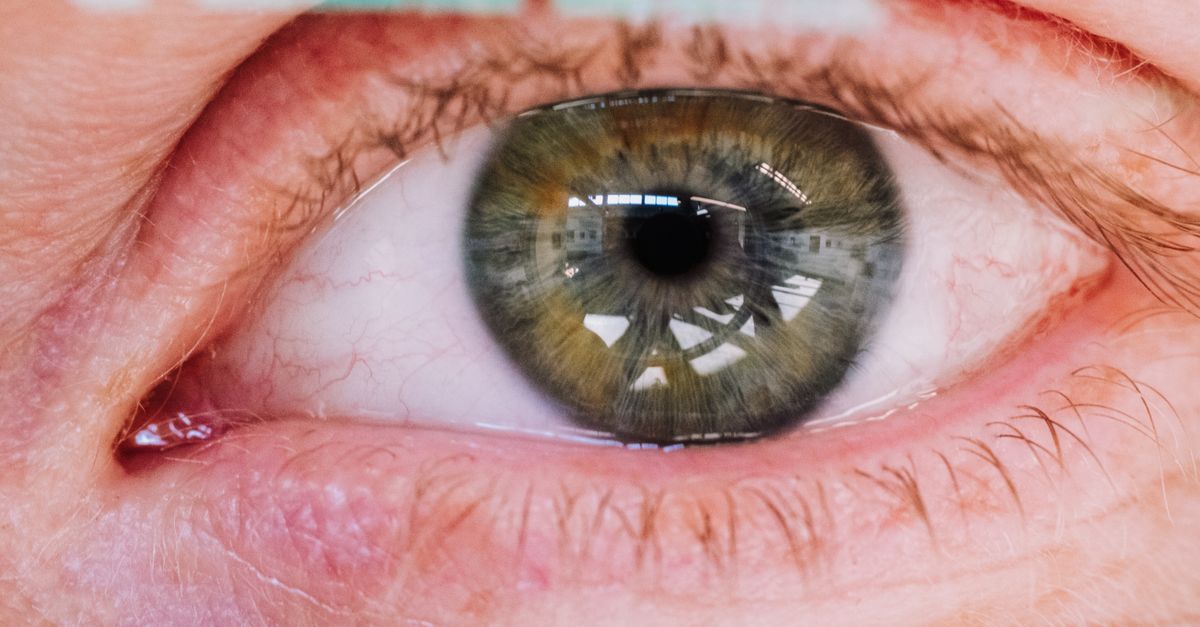
Eye color depends on how much melanin sits in the iris. More melanin makes eyes appear brown, a moderate amount looks green or hazel, and very little produces blue. In simplified genetics, brown is treated as dominant and blue as recessive, with green sitting between the two. That single rule explains why brown-eyed parents so often have brown-eyed children and why blue eyes can skip a generation before reappearing.
Reality is messier than one rule. Eye color is polygenic, shaped by at least 16 genes with OCA2 and HERC2 on chromosome 15 doing most of the work. Because so many genes interact, no combination of parents can guarantee a single outcome. That is also why two brown-eyed parents can still have a blue-eyed baby: both parents can carry a hidden blue variant and pass it on together. The calculator captures this reality in three numbers, but it cannot tell you which variant each parent actually carries, which is why the percentages stay probabilities instead of promises.
How to Use the Baby Eye Color Calculator
Using the calculator takes only a few clicks. Start by opening the Baby Eye Color Calculator, then follow the three steps below.
- Select the father's eye color from brown, green, or blue using the first picker on the page.
- Select the mother's eye color from the same three options using the second picker.
- Read the predicted probability of brown, green, and blue eyes for your baby from the result panel that appears instantly once both pickers are set.
Each set of results is shown once both pickers are set, so you can sweep through all six parent pairs in under a minute. Each set of results always adds up to 100%, so the percentages describe the full range of likely outcomes for that pair rather than three independent guesses.
What the Numbers Mean for Each Parent Pair
Here is how the six parent combinations tend to break down, in plain language. Use the table to compare directions and rough magnitudes, then run your exact pair through the Baby Eye Color Calculator for the precise figures.
| Parent Pair | Most Likely Outcome | Secondary Possibility | Rare Outcome |
|---|---|---|---|
| Brown + Brown | Brown (strong) | Green (modest) | Blue (small) |
| Brown + Green | Brown or Green (close) | The other of brown/green | Blue (small) |
| Brown + Blue | Brown or Blue (near 50/50) | The other of brown/blue | Green (~0%) |
| Green + Green | Green (strong) | Blue (modest) | Brown (small) |
| Green + Blue | Green or Blue (close) | The other of green/blue | Brown (small) |
| Blue + Blue | Blue (near-certain) | — | Brown (very rare) |
Each row describes the direction and rough size of each outcome, not the exact percentage. For the actual numbers, the calculator is the fastest way to read them, since every row's probabilities add up to 100% and shift slightly with each parent pair. For example, two brown-eyed parents land at roughly 75% brown, 18.75% green, and 6.25% blue according to the published charts the calculator is built on; two blue-eyed parents land at about 99% blue; and a brown-eyed plus a blue-eyed pairing splits close to 50/50 between brown and blue.
Why Two Brown-Eyed Parents Can Still Have a Blue-Eyed Baby
Brown is dominant over blue and green in simplified models, which means a child needs only one brown-linked variant to display brown eyes. Two brown-eyed parents can each still carry a hidden blue or green variant. If both pass that hidden variant to the same child, the baby ends up with blue or green eyes even though neither parent shows it. This is how recessive traits like blue eyes can skip a generation or two and then reappear in a grandchild.
The calculator reflects this by giving brown + brown parents a small, non-zero chance of a blue-eyed or green-eyed baby, instead of locking the answer at 100% brown. Real-world odds depend on which specific gene variants each parent carries, which is something a free calculator cannot read. For a deeper look at how those numbers are derived, the baby eye color chart guide walks through the published genetics tables that sit behind the calculator's percentages.
When a Baby's Eye Color Actually Settles
A real baby's eyes can also change during the first year. Many infants are born with lighter or bluish eyes because melanin is still developing in the iris. The color often deepens over the first several months and usually settles by about 6 to 12 months of age, though small shifts can sometimes continue a little longer. That means the color you see in the hospital is rarely the final color, and even a result from the calculator may not match the first photo.
Because the tool works from parent eye color rather than the baby's, it cannot know whether the baby was born with light eyes that will darken, or whether darker eyes will stay put. The percentages describe the eventual outcome, not the newborn snapshot. If a baby is born with hazel, amber, or gray eyes, none of those shades appear in the calculator, since the tool is built around the three most common outcomes: brown, green, and blue. Run a few different parent pairs through the Baby Eye Color Calculator to see how the odds shift, and treat the percentages as a fun, educational estimate rather than a prediction. If the real baby surprises you, remember that polygenic inheritance, hidden recessive variants, and the first-year melanin shift all leave plenty of room for an unexpected outcome.
Related reading: How to Predict Your Child's Eye Color from Parent Genetics.