Predicting your child's eye color comes down to a blend of inherited genes from both parents, with brown usually acting as the dominant trait, blue as recessive, and green sitting between them. The eye color your baby ends up with is set by how much melanin gathers in the iris, a number that is shaped by at least 16 different genes, most prominently OCA2 and HERC2 on chromosome 15. Because so many genes interact, eye color prediction works in probabilities rather than certainties: a child receives a mix of variants from each parent, and the combination can lean toward brown, green, blue, or sometimes a surprising middle ground. This is also why two brown-eyed parents can still have a blue-eyed baby, and why two blue-eyed parents almost always produce a blue-eyed child. The fastest way to turn those genetics into rough odds is a tool like the Baby Eye Color Calculator, which reads the parents' eye colors and returns the percentage chance for brown, green, and blue.
The Genetics Behind Eye Color Prediction
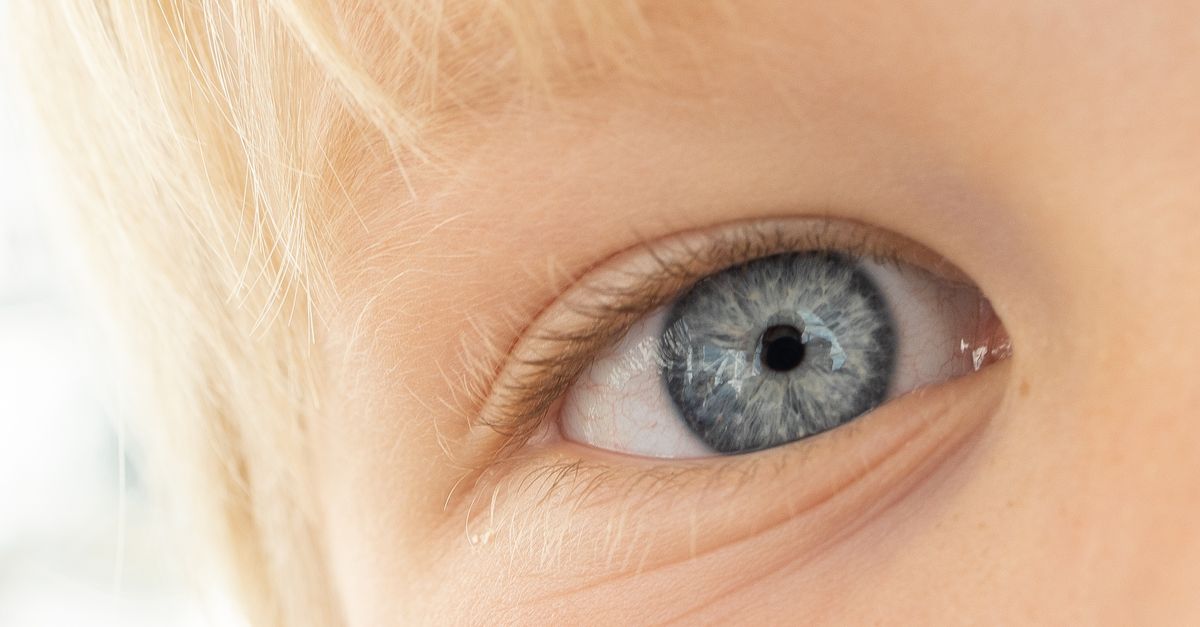
Eye color starts with melanin, the same pigment that colors skin and hair. The iris contains a layer of cells that produces melanin, and the amount that builds up in the first year of life is what gives each person their final shade. A lot of melanin produces brown eyes. A moderate amount produces green or hazel. Very little melanin produces blue eyes, which actually get their color from the way light scatters off the iris structure rather than from any blue pigment. This melanin story explains why so many newborns have light blue or gray-blue eyes at birth: the pigment cells are still maturing, and the color usually deepens over the first several months.
Because the underlying pigment is genetically driven, eye color tends to run in families, but it does not follow a simple one-gene rule the way older textbooks used to suggest. Modern genetics shows that eye color is polygenic, meaning many genes each contribute a small effect. That is exactly why predictions are always given as ranges rather than as a single answer, and why two parents with the same visible eye color can still produce children with very different shades.
How Eye Color Is Inherited from Parents
A child inherits two copies of each eye color gene, one from each parent, and the way those copies combine is what determines the result. In a simplified model, brown is treated as dominant over green and blue, green is partially dominant over blue, and blue is treated as recessive, so a child usually needs two blue variants (one from each parent) to show blue eyes. The two genes doing most of the work are OCA2 and HERC2, both located on chromosome 15. OCA2 controls much of the melanin production in the iris, while a nearby region of HERC2 acts like a switch that turns OCA2 up or down.
Variants in other genes, including SLC24A4, SLC45A2, and TYR, add smaller adjustments that shift the final shade toward green, hazel, amber, or gray. This polygenic mix is also why eye color can skip generations. A brown-eyed grandparent can carry a hidden blue or green variant, pass it silently to a brown-eyed parent, and then have that variant surface in a grandchild whose other parent also carries it. Hidden combinations like this are exactly why simple brown plus brown equals brown predictions are unreliable as guarantees, and why a quick estimate from a calculator is always better read as a probability than as a promise.
How to Predict Your Child's Eye Color
To turn the genetics into a quick estimate, the Baby Eye Color Calculator does the lookup for you. Here is how to use it.
- Open the Baby Eye Color Calculator on Lizely.
- Select the father's eye color from the dropdown, choosing brown, green, or blue.
- Select the mother's eye color from the same three options.
- Read the result panel, which displays the predicted probability of brown, green, and blue eyes for your child, with all three percentages adding up to 100%.
Picking brown for both parents shows a result that leans strongly brown but still leaves room for green and blue. Picking blue for both parents shows an almost certain blue. The numbers update instantly as you change either parent's eye color, so you can compare several combinations side by side without reloading the page or doing any math by hand.
Parent Combinations and the Odds They Produce
The odds shift depending on which two colors you start with. Below is a qualitative summary of what published eye color genetics charts typically show for the most common pairings. For the exact percentages on your combination, plug your parents' colors into the Baby Eye Color Calculator or work through a detailed guide to reading a baby eye color chart.
| Parent Combination | Most Likely Result | Also Possible |
|---|---|---|
| Brown + Brown | Strongly brown | Some green, small chance of blue |
| Brown + Green | Brown or green | Smaller chance of blue |
| Brown + Blue | Close to a 50/50 brown-or-blue split | Green is less common |
| Green + Green | Favors green | Some blue is possible |
| Green + Blue | Even split between green and blue | Brown is rare |
| Blue + Blue | Almost always blue | Brown is the rare exception |
Two brown-eyed parents, for instance, are commonly given about a 75% chance of a brown-eyed baby, around 18.75% for green, and 6.25% for blue in standard published charts, though the calculator itself will return the specific values for the combination you choose. Two blue-eyed parents are typically shown a 99% chance of blue, which is why that combination is the easiest of the six to predict. A brown-and-blue pairing tends to split close to 50/50, since the brown parent usually carries at least one dominant brown variant while the blue parent can only pass on a blue variant. Every set of percentages here adds up to 100%, which means you can read them as the full range of likely results rather than as overlapping guesses.
What the Calculator Cannot Account For
The Baby Eye Color Calculator is built around three colors: brown, green, and blue. It works well for the most common parent pairings, but it has real limits that matter if you want to interpret the result honestly. It does not see grandparents, aunts, uncles, or the broader family tree, which means hidden recessive variants passed down from earlier generations can show up in your child even when the immediate parents do not display them. It does not model rarer shades like hazel, amber, gray, or the in-between tones that many real eyes fall into, because those depend on subtle combinations of multiple genes that the simple three-color chart cannot capture.
It also cannot tell you which specific variants each parent actually carries; it treats each parent as a representative of their visible eye color, not as a sequenced genome. The tool is meant to be educational and fun, not a medical or genetic test. If you need a clinically validated answer, a genetic counselor or a clinical DNA test is the appropriate next step, and the calculator's percentages should be treated as a starting point rather than a verdict.
When Does Your Baby's Eye Color Settle?
Even after a baby is born, the eye color you see is not always the final color. Many infants start with light blue or gray-blue eyes because the melanin-producing cells in the iris are still maturing in the first weeks of life. As those cells ramp up over the following months, the color usually deepens toward whatever pigment load the child's genes have programmed. Most babies reach a stable eye color somewhere between 6 and 12 months of age, though subtle changes can continue a little longer for some children, especially those whose final shade ends up in the green or hazel range. If you want to confirm the prediction you got before birth, this settling window is the right time to revisit the calculator's result and compare it to what you actually see in person.