An EU to UK bra size conversion translates the centimetre-based band and single-letter cup printed on a European bra label into the inch-based band and double-letter cup used by UK brands, with the EU 75 / UK 34 and EU E / UK DD pairing being the most common point of confusion for anyone shopping across both markets. The numbers and letters do not map one-to-one because the two systems use different units for the band and a slightly different alphabet for the cup, so an EU 75C is not the same string of characters once it is rewritten in UK form. The fastest way to handle that is to put the EU label into a single tool that already knows the offsets: the Bra Size Converter takes one band and cup in any of the five major systems (US/Canada, UK, EU, FR or AU/NZ) and prints the matching size in every other system on the same screen, so an EU label and a UK label both turn into the same row of equivalents. Everything runs in the browser, nothing is uploaded, and the conversion uses one cross-checked reference ladder rather than five separate charts stitched together.
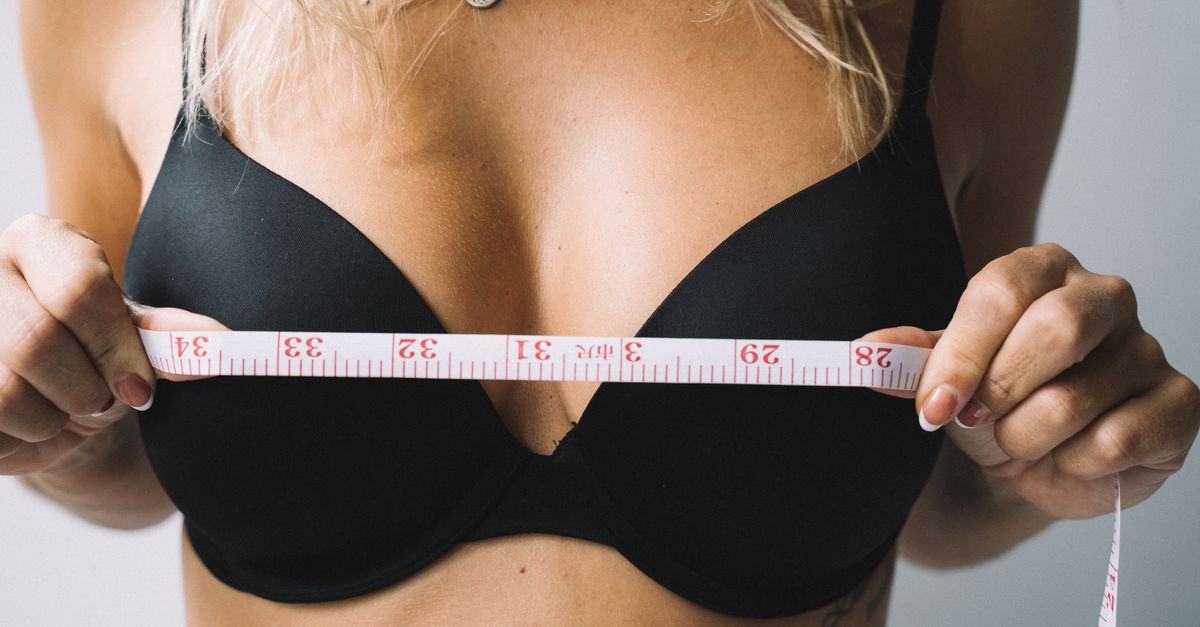
Why EU and UK bra sizes don't line up cleanly
Bras look like they should be a simple translation, but two things change at once. The band changes units: UK bands are measured in inches and run from about 28 to 44, while EU bands are measured in centimetres. Because an inch is larger than a centimetre, the EU band number is numerically higher than the equivalent UK band number for the same back, which is why an EU 75 feels "larger" than a UK 34 even though the two sizes fit the same ribcage. The cup letters change at the same time. The UK alphabet is A, B, C, D, DD, E, F, FF, G, GG, while the European alphabet skips the double letters and goes A, B, C, D, E, F, G. By letter count the systems line up through D, but from there the EU cup letter points one step further along the alphabet than the matching UK cup letter, which is exactly where most shoppers end up guessing.
How the band numbers convert from EU to UK
The band is the easier half of the conversion because the offset between EU and UK bands is consistent across the whole range. Each UK inch up the scale roughly matches five EU centimetres up the scale, and the EU band number sits about ten below the UK band number you would expect from a straight unit swap. The most commonly referenced anchor point is EU 75 = UK 34, with EU 70 around UK 32 and EU 80 around UK 36 on either side. That relationship holds because 75 centimetres is roughly 30 inches, and adding four inches of standard bra bandroom brings the UK label to 34. The exact cross-over depends on the brand, but the rule is steady enough that the simplest way to get an exact match is to type the EU band into the Bra Size Converter, which gives you the UK band and cup in one click.
How the cup letters convert from EU to UK
The cup half of the conversion is where the systems visibly diverge, because the EU alphabet skips the UK's double letters and just keeps counting. Through D, EU and UK letters match one-for-one: an EU A is a UK A, an EU B is a UK B, an EU C is a UK C, and an EU D is a UK D. From DD onward, the EU letter sits one place higher than the UK letter that describes the same breast volume. An EU E is a UK DD, an EU F is a UK E, and an EU G is a UK F. That one-letter shift is the single biggest source of EU-to-UK errors, because shoppers who know the EU alphabet tend to read the cup letter literally and end up one cup size too small when they order from a UK brand.
| EU cup label | UK cup label | Notes |
|---|---|---|
| A | A | Match across both systems |
| B | B | Match across both systems |
| C | C | Match across both systems |
| D | D | Match across both systems |
| E | DD | EU skips the double letter |
| F | E | Shift by one UK cup letter |
| G | F | Shift by one UK cup letter |
How to convert EU to UK step by step
Once you know the rules, a single worked example is the quickest way to fix them in memory. Take an EU 75C, which is the everyday workhorse size on most European labels.
- Read the EU band. EU 75 means a band measured at roughly 75 centimetres under the bust.
- Apply the band offset. 75 cm is about 30 inches before bandroom, which lands on UK 34 with the standard 4-inch addition.
- Read the EU cup. EU C sits in the A–D range where EU and UK cup letters are identical, so the cup stays C.
- Write the UK size. EU 75C becomes UK 34C. The numbers change but the cup letter does not.
- Check it against the converter. Drop EU 75C into the Bra Size Converter and confirm it reads UK 34C, US 34C, FR 90C and AU/NZ 12C on the same row.
The same five steps work in reverse for any label above DD. Take an EU 80F, which is the bra that trips people up the most. EU 80 lands on UK 36 by the same centimetre-to-inch rule. EU F is one UK letter above where you might guess, so the cup is UK E, giving EU 80F = UK 36E. The Bra Size Converter prints both halves of that result next to each other so you can sanity-check the cup shift without doing the alphabet dance on paper.
Reading every other system at the same time
An EU label is rarely only an EU-to-UK problem. European brands commonly print a French (FR/Spanish) label as well, and most international retailers use an AU/NZ tag at the same time, which is why a single conversion tool is faster than five separate charts. The EU and FR bands are measured in the same centimetres, but the French band number runs 15 higher than the EU number, so EU 75 sits on FR 90 and EU 80 sits on FR 95. The cup letter is identical across EU and FR, which is the easy half of that label. AU/NZ bands are a separate short scale of their own (a UK 34 is an AU/NZ 12) and use the same letters as the EU cup, so EU 75C becomes AU/NZ 12C in one move. Putting the EU label into the converter shows UK, US, FR and AU/NZ equivalents on the same row, which avoids re-keying the same label four times into four separate charts. If you want to double-check the bands and cups yourself before measuring, the Bra Size Calculator takes two tape measurements and starts from scratch in any system.
Limitations and when to verify the converted result
Even a perfect cross-system conversion is only ever a starting point. Real bra fit varies noticeably between brands, styles, fabrics, and wired versus wireless construction, and vanity sizing is common, so a UK 34C from one brand can fit like a UK 34D from another. The cup shift above DD is also where label conventions diverge the most between systems, which means a label that looks identical can describe different breast volumes across manufacturers. Treat any EU-to-UK result as a well-researched guess and, whenever possible, try the bra on, order from a retailer with free returns, or check the specific brand's own size chart before you commit, especially in the G cup and beyond where naming conventions are least consistent. The Bra Size Converter is built to translate between systems quickly and consistently, but the final fit call has to come from the bra on the body.
If you're weighing options, Calculate Your Victoria's Secret Bra Size at Home covers this in detail.
If you're weighing options, Calculate Bra Size With Bust and Underbust: The Method covers this in detail.