A bra size is a simple sum of two measurements — underbust sets the band number and the difference between bust and band sets the cup letter. The underbust is the snug circumference you take right under your bust where the bra band sits, and the bust is the looser circumference across the fullest part of the chest. Modern calculators skip the old "+4 inches" rule and instead round your underbust to the nearest even number for the band, then translate each inch of difference into one cup step: 1 inch is an A, 2 a B, 3 a C, 4 a D, and so on. A 32-inch underbust with a 36-inch bust, for example, is roughly a 32D. Because the same numbers map to different labels across regions, the most reliable way to do this at home is to enter both measurements into a Bra Size Calculator and read your band and cup in US, UK and EU at once. What follows is the formula behind that result, how to take the two measurements accurately, and how to read the answer in all three systems.
What Each Measurement Represents
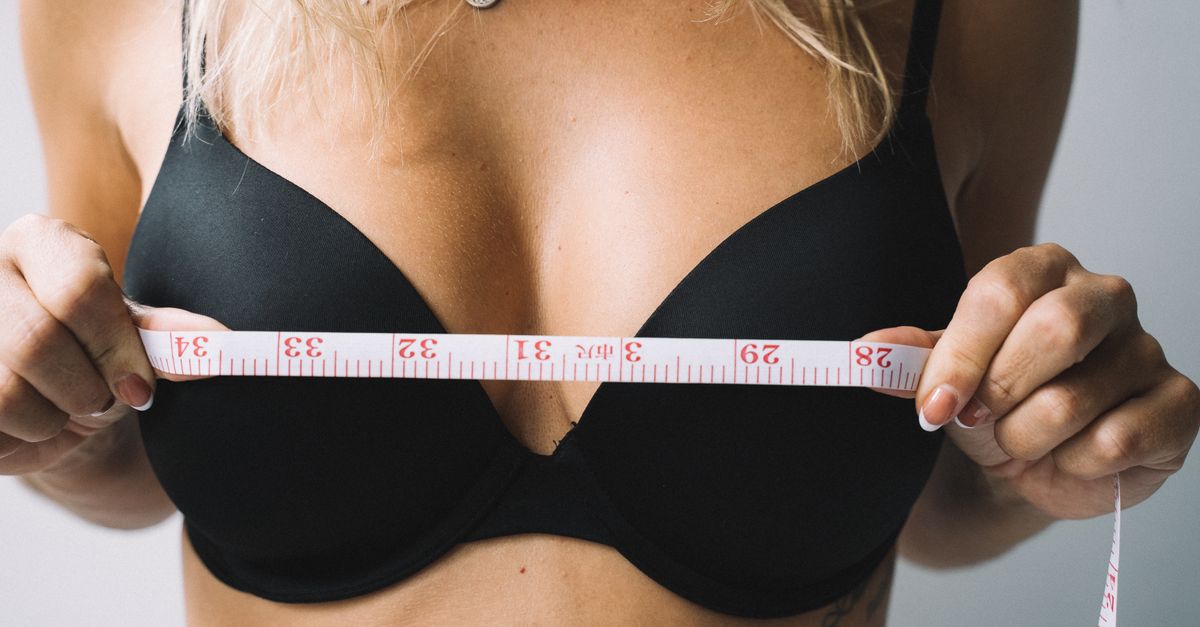
The underbust — sometimes called the band measurement — is the circumference around your ribcage taken directly under your bust where the bra band would sit. This number fixes the band of your bra: a smaller underbust means a smaller band number, because the band has to fit snugly enough to hold the bra in place. The underbust is taken with the tape snug against the skin and held level all the way around, because a tilted tape or a loose one can add half an inch or more and throw the band size off.
The bust — sometimes called the full-bust or overbust — is the looser circumference across the fullest part of the chest, taken with the tape held parallel to the floor. Because the tape is loose, this number is always larger than the underbust. The gap between the two is what gives the cup letter: more difference means more cup volume. Taken braless or in a thin, non-padded bra, the two numbers form a pair that any modern bra sizing system can translate into a size.
The reason two measurements are enough is that they describe the two parts of a bra separately. The band carries the support, so it has to match the underbust, while the cup carries the volume, so it has to match how far the bust projects beyond the band. With just those two numbers, the math behind any bra size is fixed.
How to Take the Two Measurements Correctly
Garments and posture change throughout the day, so take both measurements while standing upright in a thin or no bra, ideally at the same time of day. A soft fabric tape measure is best; a metal one or a piece of string that you measure afterward also works.
- Take the underbust first. Wrap the tape snugly around your ribcage directly under your bust, where the bra band normally sits. Keep the tape level around your back and breathe out normally before reading the number.
- Take the bust second. Wrap the tape loosely around the fullest part of your chest — usually across the nipple line — keeping the tape parallel to the floor. Don't pull; the tape should rest against the skin without compressing the breast.
- Read both numbers in the same unit. If you measured in inches, enter inches. If you measured in centimeters, enter centimeters. Mixing units is the single most common error and instantly produces an impossible size.
- Repeat once for sanity. A second reading should match the first within about half an inch (1 cm). If it doesn't, your tape shifted or your posture did; take it again.
A mirror or a friend helps most with the underbust, because it's hard to keep the tape level across your back on your own. The bust is easier solo, but the level-and-loose rule still applies — a too-tight bust pull will under-size your cup.
How the Numbers Become a Bra Size
Once you have the two numbers, the conversion is mechanical. The modern formula has two parts.
The band. Round your underbust to the nearest even number. A 31-inch underbust becomes a 32 band; a 32.4-inch underbust also becomes a 32 band. Even bands are standard because bra hooks are designed in two-hook increments, so the industry settled on evens long ago.
The cup. Subtract the band from the bust, then read the difference in cup letters. Roughly every inch of difference is one cup step:
| Bust − Band (inches) | Cup Letter |
|---|---|
| 1 | A |
| 2 | B |
| 3 | C |
| 4 | D |
| 5 | DD |
| 6 | DDD |
Worked example: an underbust of 32 inches and a bust of 36 inches. The band is already even at 32. The difference is 36 − 32 = 4 inches, which maps to a D cup. The result is 32D. If the underbust had been 31 inches, the band would round up to 32 and the cup would still be the difference between bust and rounded band: a 31-inch underbust and a 36-inch bust is also a 32D under the modern rule.
This is the method used by every modern bra size calculator, including the Bra Size Calculator. Older charts added 4 or 5 inches to the underbust first; that approach gives larger band numbers and smaller cup letters, which is why two charts sometimes disagree on the same body. Sticking with the unrounded modern rule keeps the math transparent and the result repeatable.
How to Calculate Your Bra Size With the Calculator
The fastest way to put the formula to work is to let the tool do the rounding and the regional conversion for you.
- Pick your unit. Open the calculator and choose inches or centimeters. Stick with the unit you measured in — do not convert by hand first.
- Enter your underbust. Type the snug ribcage number into the band field. The tool reads it as it arrives; you don't need to round it yourself.
- Enter your bust. Type the looser, full-bust number into the bust field. As you type, the tool updates your estimated size live.
- Read your size in three systems. The result shows a band number and a cup letter for the US, the UK and the EU at once, so you can shop across regions without redoing the math.
Because the calculator handles both the band rounding and the regional label split, it removes the two places where hand calculation usually goes wrong. You still have to give it good inputs, though — recheck that the band field holds the underbust and not the bust, since swapped numbers are the most frequent reason a calculated size feels wildly off.
Reading Your Size in US, UK and EU Labels
The same band-and-cup pair maps to different labels in different countries. Bands match between the US and the UK (both use inches) and convert to centimeters in the EU, so a 34 band equals EU 75 and a 32 equals EU 70. Cup letters line up through D and then diverge:
| US | UK | EU |
|---|---|---|
| A | A | A |
| B | B | B |
| C | C | C |
| D | D | D |
| DD | DD | E |
| DDD | E | F |
| G | F | G |
A 32D in US sizing is the same bra as a 32D in UK sizing, but it is a 70D in EU sizing because the band converts to centimeters while the cup letter stays at D. A 32DD in the US is a 32DD in the UK but a 70E in the EU, and a 32DDD in the US is a 32E in the UK and a 70F in the EU. The same letter can mean a different cup volume across regions, so always check which system a brand uses before you order — especially when the label says "EU size" but the brand is American, or vice versa.
For shoppers crossing the EU–UK border specifically, a dedicated EU to UK bra size converter guide walks through the same cross-walk in detail.
What to Do If You Fall Between Sizes
Because the band rounds to the nearest even number, half-inch measurements collapse into the closest standard band — a 31.5-inch underbust still becomes a 32. But the cup can leave you on the line between two letters, especially when the bust-to-band difference lands on a half inch. In that case, try both the calculated size and its sister size.
Sister sizing means trading a band step for a cup step in the opposite direction. If your calculated size is 32D but the band feels tight, try a 34C — same cup volume, looser band. If the band feels loose, try a 30DD — same cup volume, snugger band. The cup volume is roughly the same across sister sizes, so this is a useful lever when a brand runs small or large in the band.
Try the calculated size first, then its sister size if the band is clearly wrong. Bodies also change with weight, hormones and posture, so re-measure every year or two rather than assume an old size still fits.
Why Calculated Sizes Don't Always Match Real Bras
The two-measurement formula is a model, and like all models it is right on average and off for some individuals. Cup and band sizing varies significantly between brands, styles and materials — a 32D in one brand can fit like a 32C in another because the cup geometry, the strap placement and the fabric stretch are all different. Seamless molded cups, for example, run smaller than seamed cups in the same labeled size.
Bodies also change in ways the numbers can't capture. Breast tissue redistribution, posture and weight shifts between the band and the bust can leave your measurements the same while the fit changes. Treat the calculator as a starting point — the right next step is to try the bra on. The band should sit level and snug, the cups should fully contain the breast without gaps or spillage, and the straps should sit flat without digging in. If any of those fail, sister-size or try a different brand before assuming your measurements were wrong.
For shoppers crossing regions, an automated tool helps avoid label confusion. The Bra Size Calculator shows the same body in US, UK and EU labels side by side, so you can match the size you measured to the size a brand lists without doing the band and cup conversions by hand.
For a deeper look, see US, UK and EU Clothing Size Conversion Made Simple.