The U.S. Navy circumference method estimates body-fat percentage from a small set of body measurements — typically just height, neck, and waist (plus hips for women) — using a flexible tape measure and a single logarithmic equation, so no calipers, scales, bioelectrical impedance devices, or clinic visits are required to get a number at home. The estimate is computed from the formula BF% = 495 / (1.0324 − 0.19077·log10(waist − neck) + 0.15456·log10(height)) − 450 for men and a similar equation with hip circumference added for women. Because the inputs are simple tape readings on bare skin and the math runs in your browser, anyone with a tailor's tape — an ordinary household item, not specialised equipment — can produce an estimated percentage in moments. The number you get is a population-based screening estimate rather than a precise tissue measurement: it usually lands within a few percentage points of gold-standard methods like DEXA for average adults, and works best when used to track trends across multiple readings taken under the same conditions.
What "No Equipment" Actually Means
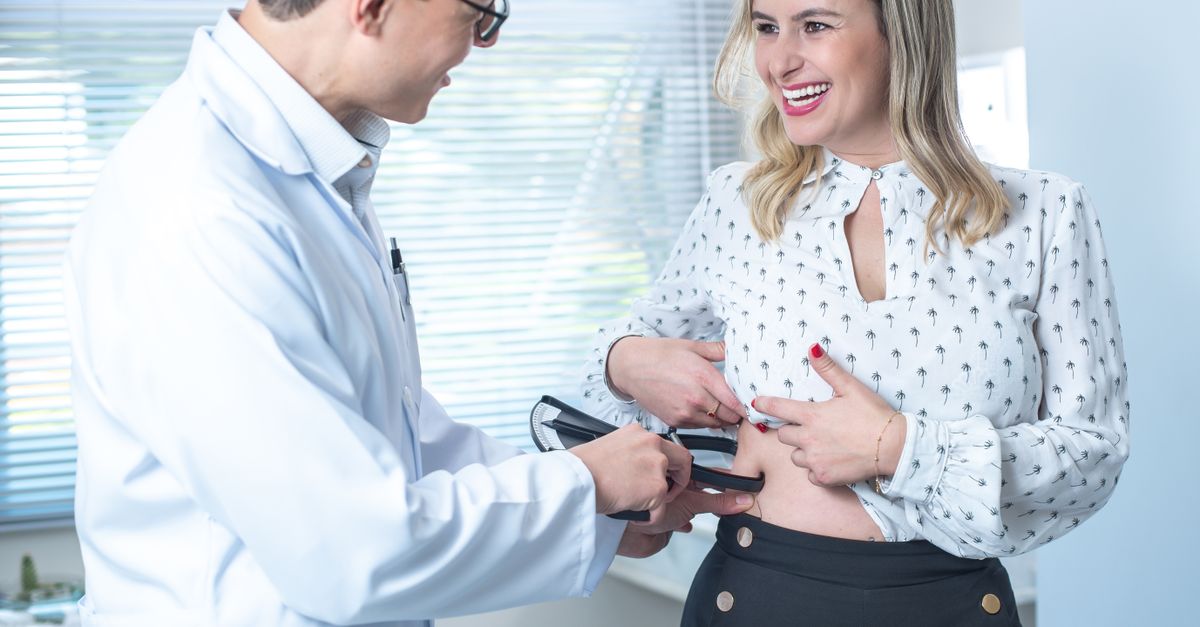
The phrase "no equipment" tends to make people wonder what counts. A flexible tailor's tape is the only physical item you need — the kind that costs a few dollars at a general store or sits in a sewing kit. That is fundamentally different from the equipment used by other body-composition methods: skinfold calipers pinch a fold of fat at several sites; bioelectrical impedance scales send a tiny current through your body; DEXA scanners use low-dose X-rays; hydrostatic tanks require submersion and exhalation protocols. Each of those tools adds cost, training, and typically a clinic or gym visit. The tape-measure approach trades them for a measurement you take yourself, in your own home, on your own schedule.
The trade-off is that the tape method swaps the precision of those tools for accessibility. The Navy method works because certain body circumferences track the ratio of fat to lean mass across large population samples. For men, the waist-minus-neck measurement captures abdominal fat; for women, the waist-plus-hip-minus-neck equation reflects abdominal and lower-body fat, which is why the two sexes use different equations. It is statistical, not direct tissue measurement — but for a free estimate you can take in your living room before breakfast, the trade is usually worth it.
How the Tape-Measure Method Produces a Number
The Navy circumference method comes from the Hodgdon–Beckett equations developed at the Naval Health Research Center. They use base-10 logarithms of your measurements, all in centimetres, to return an estimated body-fat percentage to one decimal place. The men's formula:
BF% = 495 / (1.0324 − 0.19077·log10(waist − neck) + 0.15456·log10(height)) − 450
The women's formula adds hip circumference:
BF% = 495 / (1.29579 − 0.35004·log10(waist + hip − neck) + 0.22100·log10(height)) − 450
You do not need to run that by hand. The Body Fat Calculator accepts your tape readings in centimetres, applies the appropriate equation, and updates the result instantly as each field is filled in. Everything happens locally in your browser — no upload, no account, no stored data — so the measurement stays private.
To illustrate the arithmetic, take a man who is 180 cm tall with a 40 cm neck and 90 cm waist:
- waist − neck = 50 cm, log10(50) ≈ 1.6990
- log10(180) ≈ 2.2553
- 1.0324 − 0.19077 × 1.6990 + 0.15456 × 2.2553 ≈ 1.0324 − 0.3241 + 0.3486 ≈ 1.0569
- 495 / 1.0569 ≈ 468.4
- 468.4 − 450 ≈ 18.4%
That result lands in the average adult range for men. The same logic applies to women, just with the hip term folded into the calculation.
Calculate Body Fat at Home Step by Step
- Stand relaxed in front of a mirror wearing light clothing or on bare skin. Hold a flexible tailor's tape measure — cloth or vinyl, not a rigid ruler. Note your height (without shoes) in centimetres, and your sex, since the equation is sex-specific.
- Measure your neck just below the larynx with the tape sloping slightly downward at the front. Measure your waist at the navel for men or at the narrowest point for women. Women also measure hips at their widest point around the buttocks. Keep the tape level, snug but not compressing, and read after a normal exhale.
- Open the Body Fat Calculator, choose your sex, and type each measurement into its field in centimetres. The estimated body-fat percentage and fitness band update instantly as you type. Re-measure two or three times and average the readings for a more reliable number.
Where to Place the Tape (Each Body Part)
Each measurement has a defined spot because small shifts in tape position change the resulting percentage. Use the table below as a quick reference while you measure.
| Measurement | Where to place the tape | Posture cue |
|---|---|---|
| Neck | Just below the larynx (Adam's apple) | Tape slopes slightly downward at the front, snug without compressing |
| Waist (men) | At the navel | Stand relaxed, breathe out normally before reading |
| Waist (women) | At the narrowest point of the torso | Same relaxed stance; do not suck in |
| Hips (women only) | Widest point around the buttocks | Feet together, tape level and parallel to the floor |
A common mistake is measuring the waist where the belt sits — that is usually above the navel and gives a too-small waist reading, which biases the percentage downward. Another is letting the tape sag in the back; it should be level all the way around the body. A flexible tailor's tape is best because it conforms to the body's curves without twisting.
How Accurate Is a Home Body-Fat Estimate?
For average adults, the Navy tape-measure method usually falls within about 3 to 4 percentage points of gold-standard measurements such as DEXA scans or hydrostatic weighing, according to general references on the topic such as the Wikipedia overview of body fat percentage. That is good enough for a free screening estimate, especially if you plan to compare your number against future measurements of yourself. The method is less accurate for very lean athletes, very muscular lifters, and older adults, where the population-average equations that drive the estimate start to drift from individual reality. It is also a statistical proxy rather than a tissue measurement, so it cannot tell you where fat sits on your body or how visceral versus subcutaneous the storage is.
For those who need a precise clinical number — for example, athletes optimising for a weight-class sport or anyone assessing cardiovascular risk — a validated in-person measurement by a qualified healthcare professional remains the better choice. The table below compares the typical requirements of the main methods people consider.
| Method | What you need | Where it works |
|---|---|---|
| U.S. Navy tape (this calculator) | Flexible tailor's tape | At home, no equipment beyond a tape |
| BMI-derived estimate | Scale, height, age | At home, quick but less body-composition specific |
| Skinfold (caliper) | Caliper, trained technique | Home or gym; accuracy depends on the operator |
| Bioelectrical impedance (smart scale/handheld) | Special device | At home; sensitive to hydration and meal timing |
| DEXA scan | Clinical X-ray scanner | Clinic; considered a gold standard |
| Hydrostatic weighing | Submersion tank | Special facility; research and clinical use |
Reading Your Result and Fitness Band
The calculator returns two things: the estimated body-fat percentage to one decimal place, and a simple fitness band label. The percentage is the value you can write down and compare over time. The band is a coarse categorical read (such as athlete, fitness, average, or above average) that places the number in context.
Body-fat percentage is more informative than weight or BMI alone because two people at the same scale weight can carry very different amounts of fat and muscle, and BMI cannot tell those two apart. A rising body-fat estimate alongside a steady weight can flag muscle loss; a falling estimate during resistance training often signals recomposition. That is why the right way to use a home estimate is to take it under the same conditions each time and watch the direction of change over weeks and months.
Getting a Reliable Number Every Time
Small measurement errors get amplified by the formula. A single centimetre off in any tape reading can shift the final percentage by roughly a percentage point, which is enough to move you between fitness bands. The following habits keep the number reproducible:
- Measure on bare skin or very light clothing, at the same time of day.
- Take each measurement two or three times and average the readings.
- Stay relaxed — do not suck in the waist, flex the neck, or hold your breath.
- Read the tape after a normal exhale, with the tape level and parallel to the floor.
- Keep a written log of the date, the three (or four) measurements, and the resulting percentage.
Morning measurements before eating tend to be the most repeatable, because hydration and stomach contents are stable. If you only compare numbers taken on the same morning routine, the trend line you get is far more meaningful than any single percentage.
When the Home Estimate Is Less Reliable
The Navy equations are calibrated on population averages, so individuals at the tails of body-composition distributions get noisier estimates. Very lean, very muscular, and older adults are the most common cases where the result drifts from a gold-standard reading. The method also assumes the body-fat distribution it expects — for men, abdominal; for women, abdominal plus hips — so anyone whose fat sits in atypical patterns will see a wider gap.
This tool is designed as a wellness and fitness screening estimate, not a diagnostic device. For a clinical assessment of body composition, cardiovascular risk, or any health condition, consult a qualified healthcare professional who can use validated measurement equipment and interpret the results in the context of your full medical picture.