Turn-Based Tactics 是一款回合制策略遊戲的線上版,完全在瀏覽器中運行,採用單一固定的 5x4 棋盤,無需帳號、無需下載,且不含任何隨機性、骰子擲骰或線上對手。你控制一個六點生命值的單位,對抗一個兩點生命值的偵察兵與一個四點生命值的守衛,兩者之間被兩個牆格隔開,並受兩個掩護格保護,可將受到的傷害從兩點減為一點。每個玩家回合有兩個階段——移動階段(橫移或縱移一格,或待機)與攻擊階段(攻擊一個相鄰敵人,或待機)——接著是一個確定性的敵方行動。已揭露的取勝路線需要十次玩家行動,以五點生命值與恰好 1,000 分結束;而在兩個階段都待機整整六個回合則是已揭露的落敗路線。由於每個位置、數值、優先順序與行動規則都是固定的並經過獨立測試,相同的輸入永遠產生相同的輸出,而要開始新一輪唯一的方法就是按下 Restart。
What the Online Turn-Based Strategy Game Actually Contains
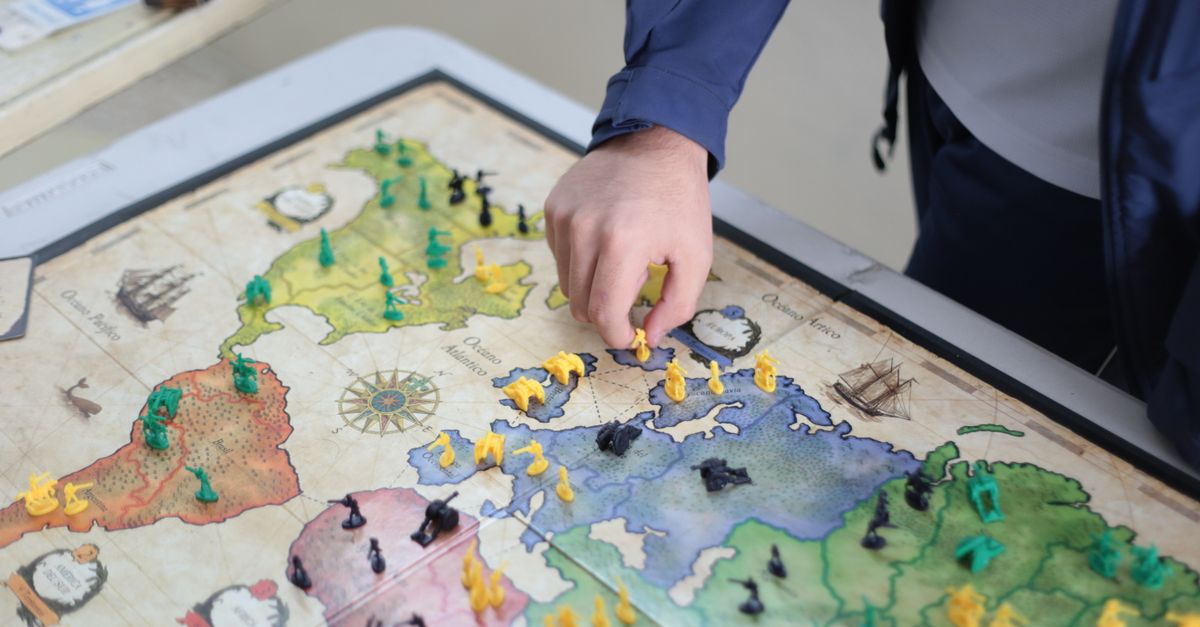
Open Turn-Based Tactics in any modern browser and the entire game is right there in one tab. The board is a compact five-column by four-row grid — twenty cells in total — with a six-health player unit, a two-health Scout, and a four-health Guard occupying fixed starting positions. Two wall cells sit in the center of the board and divide the space into two reachable halves, and two cover cells in the lower band provide protection for any unit that stands on them. Every cell, every health value, and every legal move is fixed in advance. There are no procedural maps, no shuffled layouts, and no accounts to create before the first action.
The player unit starts with six health. The Scout has two health and represents the lighter enemy, while the Guard has four health and can absorb more punishment. Walls cannot be entered by any unit, including enemies. Cover cells cut the damage of an incoming attack from two to one, so a Guard hit on a plain cell takes two health, but the same hit on a cover cell only takes one. The whole board is small enough to read at a glance, which is the point — every decision fits in your head without a minimap, a unit roster, or a tech tree.
Why a Fixed Board Beats Random Encounters
Most online turn-based strategy games build variety through procedural generation, hidden percentages, or matchmaking against other humans. Turn-Based Tactics takes the opposite approach. The board, the unit health, the damage values, the cover placement, the wall layout, and the horizontal-then-vertical enemy pursuit rule are all frozen in advance. The same starting position always leads to the same enemy actions, and the same player inputs always lead to the same outcome.
This determinism turns the game into a logic puzzle rather than a random skirmish. You can plan ten actions, replay them, and reach the same five-health, 1,000-point ending every time. The product is verified by an independent oracle that holds its own literal board, replays both the perfect and losing routes, and compares every authored cell against the live state. Because there is no hidden variance, there is no streak mechanic to chase, no ranked ladder to climb, and no other player on the other end of the connection. The only opponent is the puzzle itself, and the puzzle answers the same way each time you ask it.
How to Play the Ten-Action Winning Route
The disclosed winning route is ten player actions long and finishes with five player health and exactly 1,000 points. Every action below is one of the two legal choices in its phase — move one orthogonal cell or wait during the move phase, and strike one adjacent living enemy or wait during the attack phase. Following this sequence on a fresh restart of Turn-Based Tactics produces the perfect run on the disclosed board.
- Action 1, Move phase: move right into the lower cover cell.
- Action 2, Attack phase: wait. The Guard now moves toward you under the horizontal-first rule.
- Action 3, Move phase: wait. Let the Guard continue its approach.
- Action 4, Attack phase: wait. The Guard is now adjacent and the next enemy action will be an attack.
- Action 5, Move phase: wait. Stay on the cover cell so the Guard's retaliation after action 6 is reduced from two damage to one.
- Action 6, Attack phase: attack the Guard with the player unit, dealing two damage.
- Action 7, Move phase: wait. Stay on the cover cell so action 8 can land the killing blow on the Guard.
- Action 8, Attack phase: attack the Guard again, dropping it from two to zero health and removing it from the board.
- Action 9, Move phase: move right out of the cover cell and into a new column.
- Action 10, Attack phase: attack the Scout for the final two damage and end the run.
By the end of action 10 the player has taken one incoming Guard hit. That single hit landed on the cover cell after action 6, so it was reduced from two damage to one. Total damage taken is 1, which leaves the player at five health out of six. The two Guard attacks from actions 6 and 8 are exactly what removes the four-health Guard, and the final Scout attack from action 10 is what removes the two-health Scout. The score panel reads exactly 1,000 points.
Keyboard Route and Phase Controls
The same winning sequence has a one-keypress-per-action keyboard form. During the move phase the Arrow keys step the unit one orthogonal cell, and during the attack phase the 1 key targets the Scout while the 2 key targets the Guard. Space waits in whatever phase is active. The full keyboard route is ArrowRight, Space, Space, Space, Space, 2, Space, 2, ArrowRight, 1.
Mouse and touch players see labeled buttons for each legal action on the screen. The status panel shows the current phase, the player's remaining health, the position of every living unit, and the last resolved event. When an action is currently illegal — for example, trying to attack during the move phase, trying to move into a wall, or trying to attack an enemy that is not adjacent — the corresponding button is disabled rather than hidden. A disabled button exposes an illegal choice without mutating the game state, which lets you tell the difference between a blocked input and a legal wait or a completed enemy response.
Scoring, Health, and Terminal States
The final score on a perfect run is exactly 1,000 points, and this score is reached by completing the ten-action route above on the disclosed board. The losing route is just as fixed: wait through both the move and attack phases until the unmitigated Guard hits drop the player to zero health and end the run with no score awarded. Because the score depends on completion rather than a damage counter, the run is binary — either you finish with five health and 1,000 points, or you do not finish at all.
Both completion and defeat are terminal states. The product reducer freezes the board, the health values, the phase, and the result, so any extra clicks or key presses after the final action are silent no-ops. Restart is the only way to begin a new run, and a restart always restores the same starting position. There is no continue button, no save slot, and no branching path — every retry is the same tactical problem from the same opening arrangement, and the same ten actions produce the same score.
How It Differs From Other Online Strategy Games
Browser-based turn-based strategy games usually fall into a few camps: ranked multiplayer matches, randomly generated skirmishes, or franchise ports of well-known board games. Turn-Based Tactics sits in a smaller fourth camp of authored, single-puzzle skirmishes where the answer is provable and the score is fixed. The differences show up in three concrete places — opponents, variance, and length of one run.
| Aspect | Turn-Based Tactics | Typical Online Turn-Based Strategy |
|---|---|---|
| Opponents | Two authored AI units on a fixed board | Human opponents, matchmaking, or random seeds |
| Variance | None — every run starts identically | Random maps, dice rolls, or hidden percentages |
| Account required | No account, no download, no signup | Account, email, or client install |
| Length of one run | Ten player actions, fixed end | Matches or campaigns of variable length |
| Verification method | Independent oracle replays the full route | Server-side outcomes, not replayable |
| Best score | Exactly 1,000 on the perfect route | Variable, ranked, or season-based |
For readers who enjoy fixed-grid logic puzzles, the same single-puzzle style shows up in other disclosed-target titles such as Battleships Puzzle Strategy: Solve the 5x5 Fleet Grid. The shape of the work is similar — read the disclosed clues, plan a finite set of moves, and verify the result against an exact target — but Turn-Based Tactics compresses the experience into a single two-enemy board with a ten-action answer rather than a fleet grid or a long campaign. That compression is what makes it work as a quick browser game instead of a commitment.
If you're weighing options, Chain Reaction Strategy: Pick a Source, Clear the Field covers this in detail.