Venmo has no built-in barcode creator, so the practical answer to "how to generate a barcode on Venmo" is to use an in-browser tool like the Barcode Generator, save the resulting SVG file, and then attach or display that barcode wherever Venmo accepts it — on a printed sticker, inside a profile image, or as part of a payment packet you share. The Barcode Generator renders four widely used 1D symbologies (Code 128, EAN-13, UPC-A, and Code 39) directly in your browser, automatically computes the GS1 check digit for retail formats, and returns a vector SVG that is sharp at any print size. Nothing is uploaded to a server, which keeps the workflow fast and avoids any privacy concern about sending payment identifiers off-device.
This matters because Venmo users frequently need scannable codes for offline situations: small-business sellers who accept Venmo at a market stall, landlords who post a barcode next to a Venmo handle, or community organizers who want a single printed sheet that members can scan rather than retyping a long username. A reliable barcode format is the simplest bridge between a paper surface and a digital payment.
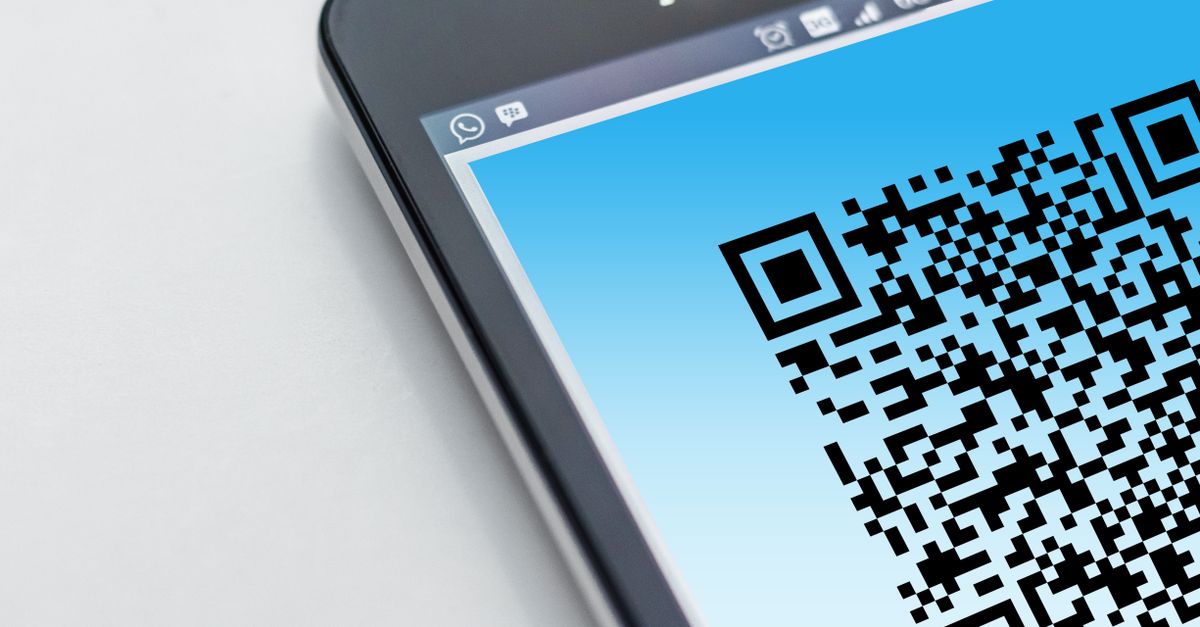
What "Generate a Barcode on Venmo" Actually Means
Venmo itself does not output a barcode from inside the app. What users typically mean by the phrase is one of three concrete tasks:
- Encoding a Venmo username, payment link, or short identifier into a Code 128 barcode so it can be scanned by another device or printed on a sticker.
- Producing a retail EAN-13 or UPC-A barcode for a product the seller lists on Venmo's business profile or ships to buyers.
- Creating an internal Code 39 label for inventory or order tracking tied to a Venmo transaction record.
All three tasks are covered by the same browser tool; only the symbology choice and the value you type change. Because Venmo does not host a generation form, the work happens outside the app and the finished file is brought back in.
Supported Barcode Formats and When to Pick Each One
The Barcode Generator produces four symbologies. Choosing the right one is the single biggest factor in whether a scanner reads your code cleanly on the first try. The table below summarizes the practical decision.
| Format | Best For | Input Length | Check Digit |
|---|---|---|---|
| Code 128 | General text, Venmo usernames, URLs, alphanumeric IDs | Any text string | Built into the symbol |
| EAN-13 | Retail products sold internationally | 12 digits (full 13 optional) | Auto-added or verified (per GS1) |
| UPC-A | Retail products sold in the United States | 11 digits (full 12 optional) | Auto-added or verified (per GS1) |
| Code 39 | Inventory labels, asset tags, older scanners | Uppercase letters, digits, a few symbols | Mod-43, included in the symbol |
If your goal is simply to put a Venmo username or short text into a scannable symbol, Code 128 is almost always the correct pick. EAN-13 and UPC-A are reserved for genuine retail SKUs registered with GS1; the Barcode Generator will happily add the check digit, but you still need a real assigned GTIN to put on store shelves. Code 39 is the right answer for internal labels where the scanner is a warehouse gun rather than a phone camera.
Generate a Barcode for Venmo Step by Step
The whole process takes under a minute once you know the symbology you need. The order matters: pick the format first, then type, because switching formats after typing can clear the value field.
- Open the Barcode Generator in your browser. No login or file upload is required.
- Choose the symbology from the format selector. Use Code 128 for a Venmo username or any plain text. Use EAN-13 or UPC-A only when you have an actual retail GTIN. Use Code 39 for internal inventory labels.
- Type your value into the input field. For EAN-13, enter 12 digits and the 13th check digit will be computed for you, or paste a full 13-digit GTIN and the tool will verify it. For UPC-A, enter 11 digits or a full 12; the check digit is handled the same way.
- Watch the preview update on every keystroke. If bars look uneven or the value field turns red, double-check the digit count or restrict the characters to Code 39's allowed set.
- Click Download SVG. The file is a vector, so it stays sharp when you scale it up for a sticker sheet or down for a profile image.
- Bring the SVG back into your Venmo workflow: embed it in a flyer, attach it to a product listing, or print it on a card that you hand to a customer who scans and pays.
If you need a raster fallback (for example, a platform that refuses SVG uploads), open the saved SVG in any free vector editor and export a PNG at 300 DPI. The geometry is preserved, so scan reliability does not change.
Input Rules That Trip People Up
Most failed scans come from input mistakes rather than tool bugs. Three rules eliminate the vast majority of issues:
- Digit counts are strict for retail codes. EAN-13 must resolve to exactly 13 numeric digits once the check digit is added; UPC-A must resolve to exactly 12. Anything else produces an invalid retail barcode, even if the bars render.
- Code 39 is uppercase. The symbology supports only A–Z, 0–9, and a few punctuation characters. Lowercase letters will render bars but most scanners will refuse to read them. Use Code 128 if you need mixed case.
- Whitespace is significant. Leading or trailing spaces in the value field get encoded into the symbol, which can break older scanners. Trim the string before downloading.
For retail GTINs, the algorithm follows the GS1 mod-10 weighting defined in the official specification: digits in odd positions (counting from the right, excluding the check digit) are multiplied by 3, digits in even positions by 1, the results are summed, and the check digit is the smallest number that brings the total to a multiple of 10. The generator runs that arithmetic for you, which is why you can paste 12 digits for EAN-13 and still get a valid 13-digit symbol.
Putting the Barcode to Work in Your Venmo Flow
Once the SVG is saved, the practical decisions are about placement and context. A few patterns cover most real-world Venmo barcode use cases:
- Printed payment card. Drop the SVG into a 3.5-by-2-inch card template in a vector editor, add your Venmo handle in plain text next to the barcode, and print on heavy stock. Customers scan, the scanner returns the text, and the customer types it into the Venmo app's "Pay or Request" field.
- Market-stall signage. For a small business that takes Venmo alongside cash, mount a laminated card at the counter with a Code 128 barcode encoding your Venmo username or a short payment link. The cashier points, the buyer scans, no spelling out usernames.
- Product labels. If you sell physical goods and accept Venmo, the EAN-13 or UPC-A barcode on the package is for retail scanners, while a separate Code 128 sticker can encode your Venmo payment details for the seller who fulfills the order. Two barcodes, two purposes, one sheet.
For inspiration on a parallel payment-platform workflow, the guide on how to generate a barcode on PayPal walks through the same symbology choices from a PayPal-specific angle. If your broader project also needs scannable contact cards or Wi-Fi login sheets, the QR Code Generator handles 2D codes for the same "type, preview, download" flow.
Privacy and Offline Behavior
Because all encoding happens client-side in the browser, the value you type never leaves the page. That is a meaningful property when the value encodes anything sensitive — a Venmo username is public, but order notes, customer IDs, or internal SKUs may not be. You can verify the behavior by disconnecting from the internet after the page loads: the barcode still renders and the Download SVG button still works, because the rendering engine runs locally. Nothing is sent to a server, no analytics ping carries your value, and no cloud storage holds a copy of the SVG.
The same offline-first philosophy shows up elsewhere on the site, for example in the XML Sitemap Generator, which builds standards-based sitemaps from a list you paste in without crawling anything, and in the UTM Link Builder, which assembles campaign URLs locally so you never leak a half-built link to a third-party server. Treating identifiers as local-only by default is a quiet but important habit when payment data is involved.
Troubleshooting When the Scanner Won't Read It
If a phone or hardware scanner refuses the symbol after you have followed the steps above, work through this short checklist before regenerating:
- Confirm the symbology matches the scanner's enabled modes. A scanner set to EAN-13 only will not decode a Code 128 symbol, and vice versa.
- Check the printed size. GS1 guidance calls for a minimum X-dimension (the width of the narrowest bar) of about 0.26 mm for retail symbols; smaller than that and phones struggle to focus.
- Verify quiet zones. The Barcode Generator includes the standard quiet zones (the blank margin on either side of the bars), but if you crop the SVG in an editor, leave at least 10 times the X-dimension of clear space on each end.
- Re-check the digit count for retail codes. A 12-digit EAN-13 with a stray leading zero will encode, but the check digit will be wrong and the scanner will reject it.
Most issues clear up after a quick check of symbology and quiet zones; the rendering itself is deterministic because the same input always produces the same SVG.
If you're weighing options, How to Create Bulk QR Codes in Canva: A Practical Walkthrough covers this in detail.
If you're weighing options, Calculate Keyword Density Without Guesswork covers this in detail.
If you're weighing options, How to Generate URLs in Bulk From a Template covers this in detail.