Email obfuscator command line vs online is a real choice with real tradeoffs: command line tools give you scripting control and version-controlled pipelines, while browser-based obfuscators give you zero-install speed and a copy-paste HTML snippet ready for any content management system. Email Address Obfuscator runs entirely in your browser, normalizes the address, validates it as one practical unquoted local part plus a normalized public domain, and emits every code point in both the visible text and the mailto: target as a decimal numeric HTML character reference inside a single anchor element. That output works as long as it stays inside an HTML source template and your CMS does not decode or double-escape the entities after you paste. Modern crawlers can decode numeric entities, inspect the rendered DOM, and follow mailto: links, so this technique is source-level obscurity, not access control. Pick the path that matches your workflow: pipeline integration favors the command line, and one-off contact-page edits favor an online generator.
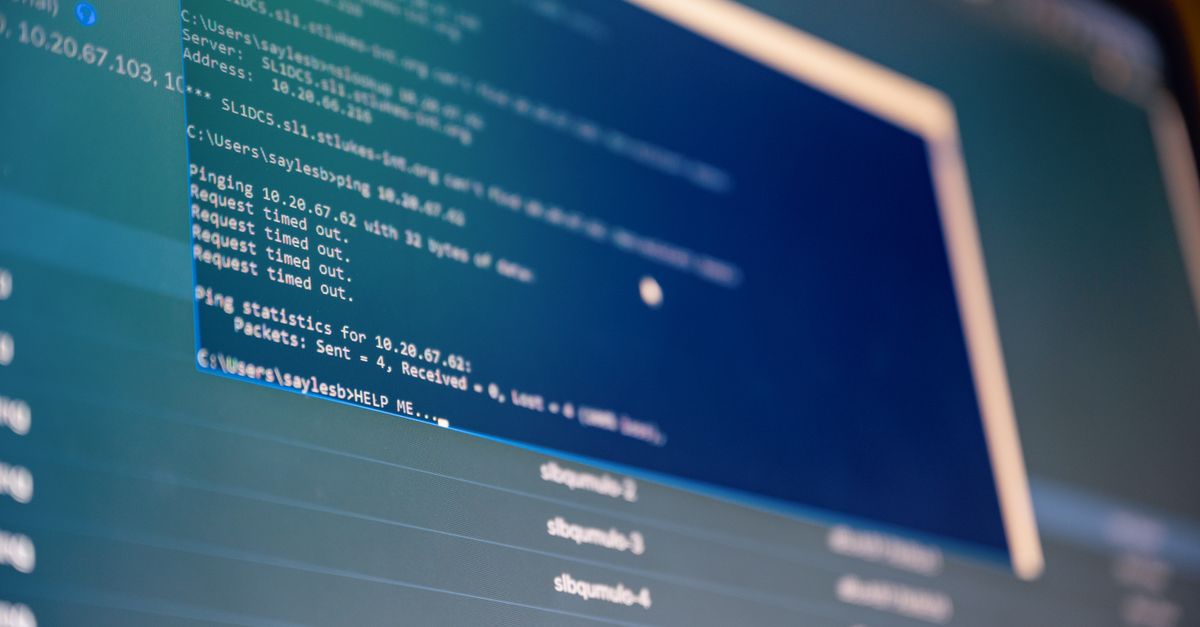
How Command Line Email Obfuscators Work
Command line email obfuscators are programs you install, configure, and run from a shell. They exist in roughly three families, and each handles a different threat model.
The first family replaces characters inside source files. spatie/email-concealer-cli, for example, rewrites the domain of every email address it finds in a target file so that scrapers harvesting literal text patterns get a stripped string the developer can reverse with a small lookup table. These tools are useful for static site generators, documentation builds, and content migrations where the same source passes through the obfuscator on every deploy.
The second family emits ROT13-encoded addresses and decodes them at runtime with a small JavaScript snippet, similar to the obfuscemail Yarn package. The visible HTML source contains no readable address, and the browser reconstructs it when the visitor opens the page. This approach depends on JavaScript executing, which conflicts with strict content security policies, fails for visitors who disable scripts, and adds extra moving pieces to what could be a static page.
The third family produces a ready-to-paste HTML anchor, often with character entities or symbol substitutions such as [at] and [dot]. Standalone downloadable utilities, including the "Email Obfuscator: A Tool For Webpages" build hosted on OnWorks, sit in this category. They behave like a local script wrapped around a one-page form.
Across all three families, the command line gives you repeatability, scripted batch runs, and the option to keep the obfuscation step inside a deploy pipeline. The cost is installation, dependency maintenance, and the discipline of validating outputs each time a tool or input format changes.
How Online Email Obfuscators Work
Online email obfuscators are browser pages that take one address as input and return HTML the visitor can paste into a site. No installer, no shell, no package manager. Processing stays on the client side, so the address never leaves the developer's machine.
The HTML reference defined in the WHATWG HTML Living Standard (character references) is the core idea: every code point of the address becomes a decimal numeric character reference such as a for lowercase a. A browser decodes those references when it renders the page. A scraper that only searches source text for ordinary address patterns may miss the encoded form, while the visitor sees and clicks a normal address link.
The online route is fastest when you are editing one page, reviewing a CMS template, or handing the snippet to a non-developer colleague who needs a working mailto: link without learning a new tool. The cost is no native pipeline, so each change requires a fresh paste into the destination HTML source.
Command Line vs Online: A Direct Comparison
| Dimension | Command line obfuscator | Online obfuscator |
|---|---|---|
| Installation | Install per language toolchain (npm, Yarn, Composer, standalone binary) | None, runs in any modern browser |
| Processing location | Local machine or CI runner | Browser only, no network call |
| Pipeline fit | Hooks into build, deploy, or content scripts | Manual copy-paste per page |
| Output style | Rewritten source files, JS-injected strings, or ROT13 fragments | One complete anchor element with numeric entities |
| JavaScript dependency | Often yes, ROT13 and runtime decoders require it | No, the snippet is plain HTML |
| CMS edit risk | Varies by plugin and storage model | High if a rich-text editor decodes entities on save |
| Bulk handling | Native loop over files or rows | Manual per address |
| Disclosure to scrapers | Depends on technique, ROT13 defeats only basic plaintext matching | Numeric entities deter basic plaintext matching; modern crawlers decode them |
| Repeatability | Deterministic given the same input and tool version | Deterministic per browser session, no versioning |
The two paths overlap on what they cannot guarantee. Neither approach stops a competent crawler, neither hides the address from a visitor who clicks the link or inspects the rendered DOM, and neither replaces server-side defenses for any address that needs real protection.
Generate an Entity-Only Mailto Anchor with Email Address Obfuscator
The browser route is the fastest way to ship a single mailto: anchor. The Email Address Obfuscator tool validates a practical unquoted address, normalizes the domain through the browser URL host parser, and serializes each Unicode code point in both the visible text and the mailto: target as a decimal numeric HTML character reference. For more on the exact encoding rules, see the Email Address Encoder: Build an Entity-Only Mailto Anchor walkthrough.
- Open the tool and enter the public contact address in the accepted practical form: one @, a nonempty local part, a domain with multiple labels, no whitespace or control characters, and no leading, trailing, or consecutive dots in the local part.
- Click generate to produce the anchor. The result contains no literal address characters. A single substitution example: the code point of lowercase a is 97, so the character renders as a inside the anchor.
- Copy the complete anchor, including the opening and closing anchor tags and the encoded mailto: target.
- Paste the anchor into an HTML source template such as a static HTML file, a theme file, or the code view of a CMS page. Do not paste into a rich-text editor that may rewrite entities on save.
- Open the delivered page in a browser and confirm the visible address reads correctly. Click the link once to confirm the configured mail client receives the intended address.
- Inspect the page source to confirm your CMS did not decode or double-escape the entities. If a back-end changed the ampersands into a, visitors see entity text instead of the address. If it converted a a back to a before publishing, the obfuscation is gone.
- If the address needs real abuse resistance, route it through a protected contact form with validation, rate limiting, and mailbox provider filtering instead of relying on source obscurity.
When Command Line Wins, When Online Wins
Pick the command line when the obfuscation step must repeat across hundreds of pages, when every commit runs through a continuous integration job, or when the build system already manages language-specific toolchains. Pipelines that read a content directory, run a CLI over each file, and check the rewritten output back into the repository benefit from versioned tooling and deterministic outputs.
Pick the online tool when the change touches one page, when the developer or editor does not want to install anything, when the destination CMS is a visual editor that breaks entity snippets, or when the team needs to standardize on a single source-level encoding convention without managing a local script. The browser route also wins for internationalized domains: the tool passes the domain through the browser URL host parser, serializes it to its ASCII-compatible form, and reproduces the same output across browsers.
A mixed workflow is common in practice. A static site might keep the snippet in a partial template, regenerate it from the command line on every release, and validate the output against a known-good fixture. A small brochure site might publish the snippet from the online tool once a year and never touch it again. Both are legitimate uses, and the threat being addressed is the same in both cases.
Limits Both Approaches Share
Every email obfuscation technique, whether command line or browser based, sits in the same narrow threat category: deterring scrapers that match plain text patterns against raw HTML source. The technique is not access control, it is not privacy protection, and it is not a substitute for a contact form with server-side validation.
Modern crawlers can parse HTML, decode numeric entities, render JavaScript, and inspect mailto links. The address becomes discoverable the moment it reaches a public page. Mailto links also expose addresses when visitors click them, copy them, or right-click and inspect them. Treat the snippet as a small friction layer, not as a wall.
For meaningful abuse resistance, combine the obfuscation with the practical defenses that actually reduce inbound spam: a server-side contact form with input validation and rate limiting, disposable role addresses such as contact@ or info@ that you can rotate, mailbox provider filtering rules, and CAPTCHA or honeypot fields on any public form. The page next to every result states the limitation because an email obfuscator should not create false confidence about a problem it cannot solve.
For a deeper look, see Command Line vs Online Barcode Generator: Which Fits You?.