Yes—Double Click Test is safe to use online for a basic click-timing check because its measurements stay in the current page and are not uploaded, associated with an account, or used to identify your device.
That safety claim is deliberately narrow: the tool measures browser click-event intervals, not the condition of a mouse or computer. It cannot certify hardware, confirm that an operating system will treat the same gesture as a double click, or label a result as fast, normal, slow, passing, or failing.
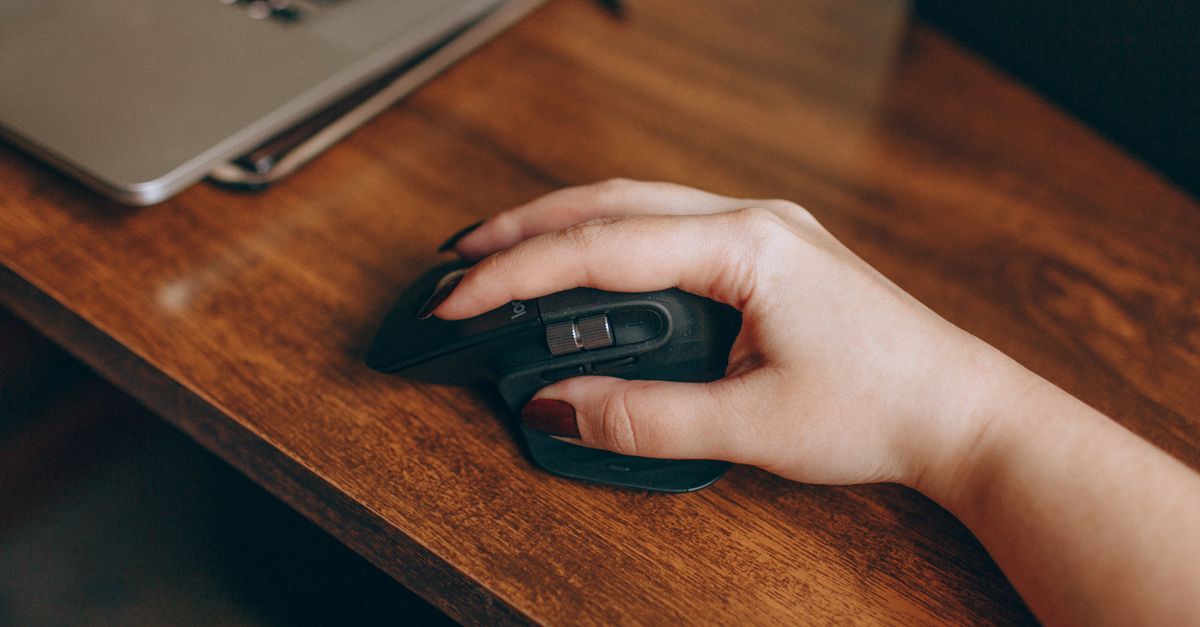
How the online test handles your measurements
The Double Click Test uses a session-only measurement model. All completed samples remain in the current page. They are not uploaded, associated with an account, saved after a refresh, or used to identify a device. The Reset control clears the in-memory measurements immediately.
This means the tool does not create an account-linked or refresh-persistent history of your click timing. That behavior does not amount to a general security audit of the browser, operating system, or website; it specifically describes how the test handles the samples it records. On a shared computer, reset the measurements when you finish, and remember that refreshing the page also removes the retained results.
Run a browser click-pair check
- Open the test and position the pointer comfortably over the large test area. Keep the same hand position for later pairs so movement does not introduce an avoidable difference.
- Click once to start a pair. This first click creates a pending starting point, but it does not yet produce an interval.
- Click the same area again within 1,000 milliseconds. When the browser supplies a valid, increasing timestamp, the page records the elapsed interval in milliseconds and displays it to one decimal place.
- Repeat the two-click action to build a small session history. Use deliberate clicks on the large target rather than trying to collect unrelated activity elsewhere on the page.
- Review Latest, Best, Average, and the completed-pair count. Best represents the shortest retained interval, while Average is the arithmetic mean of the retained samples.
- Use Reset when you have finished the comparison. It clears the current measurements immediately and leaves the page ready for a new session.
Read each displayed value for what it is
The four outputs describe the retained browser-event samples. They are measurements, not grades or hardware-health scores.
| Display | What it represents | Important boundary |
|---|---|---|
| Latest | The final retained completed interval, shown to one decimal place. | It does not indicate whether the interval is good or acceptable. |
| Best | The minimum interval among the retained completed pairs. | “Best” means shortest, not passing or fastest possible. |
| Average | The arithmetic mean of the retained completed samples, rounded to one decimal place. | It changes with the retained sample set and has no built-in benchmark. |
| Completed pairs | The number of completed pairs currently retained. | The history is capped at fifty samples, and unpaired or timed-out clicks do not count. |
The tool retains at most the latest fifty completed samples. Its statistics use the retained set, so the average does not represent every click made during an unlimited session. Best is simply the minimum of that set, and Latest is its final value.
What the 1,000-millisecond rule does
The one-second window is a visible pairing rule for this product. It is not an official operating-system double-click threshold or a scientific classification. Operating systems, applications, games, browsers, accessibility tools, and users can apply different thresholds and interaction models.
If the next click arrives more than 1,000 milliseconds after the first, it is not saved as a completed pair. The page explains that a timeout occurred, and the late click becomes the first click of a new pair. Pairs do not overlap, so the second click of one result is never reused as the first click of the next result.
For an accepted pair, timing comes from the click-event timestamp supplied by the browser. The tool subtracts the first timestamp from the second, requires a positive, increasing result, and rounds the interval to one decimal place for display and statistics.
Why browser timing cannot diagnose a mouse
A browser timestamp is useful for comparing attempts in the same environment, but it is not a calibrated measurement of the mouse itself. The interval can include human movement, pointing-device firmware, wired or wireless transport, operating-system scheduling, browser event delivery, display timing, and the load handled by the device.
For that reason, the result does not isolate switch debounce, USB polling rate, wireless delay, end-to-end click latency, or application response time. A pair completed within this tool’s 1,000-millisecond window also does not prove that a desktop setting will recognize the action as a double click. For a deeper explanation of this boundary, see what the measured interval really means.
Get more meaningful comparison results
Use the same conditions when you want to compare attempts rather than simply collect unrelated clicks.
- Place the pointer comfortably over the target, make several deliberate pairs, and avoid moving between the two clicks.
- Keep the hand position, input method, browser, and surrounding setup as consistent as possible.
- Note heavy system load, remote desktop software, automation, or background activity because these can change event delivery.
- Remember that browser zoom does not change the timestamp subtraction, although keeping the test conditions consistent still makes comparisons easier to interpret.
- If you are investigating unwanted duplicate clicks, compare what this page records with the behavior in the affected application and the operating-system mouse settings.
- Test another port or device only when it is safe to do so. A browser tool cannot diagnose a failing switch or recommend a repair.
Treat differences as clues for further investigation rather than proof of a particular defect. The browser records when click events arrive; it does not reveal exactly where the delay occurred inside the device, operating system, or application.
Account for the input method you actually used
The test target is keyboard-focusable for page navigation, but the measurement itself responds to click events. Touchscreens and assistive input can also generate click events. A recorded interval may therefore represent a tap or a synthesized activation rather than the action of a physical mouse switch.
Record which input method produced each session, especially when comparing a mouse with a trackpad, touchscreen, or assistive device. The same browser timestamp can represent different physical actions, so changing input methods can make a direct comparison misleading.
Use the results within their safe limits
- Interact with the large test target so the click events you intend to measure are unambiguous.
- Treat a timeout as a pairing boundary, not as evidence that a mouse is defective.
- Compare several deliberate pairs under stable conditions and note any change in device load or input method.
- Reset the session when finished, particularly when using a shared device.
Within those boundaries, the test provides a transparent view of browser-event timing while keeping the retained samples in the current page. It is useful for repeatable comparisons, but not for pass/fail testing, hardware diagnosis, or determining whether an application will register a double click.
If you're weighing options, Mouse Double Clicking Test: Time a Click Pair covers this in detail.