A tasbih counter documents itself when every increment is captured against the device's local calendar date, the round target (33 or 99) is visible alongside the current position, and the tool marks the exact moment a round closes before opening the next one. The Tasbih Counter follows that contract: each saved increment belongs to the local day it happened on, the completion state appears when a round boundary is reached, and the whole record can be moved outside the browser as a PNG image or a CSV file with two columns. Documentation in this sense is not about writing instructions for someone else; it is about producing a verifiable trail of what you actually counted, on which day, and how many rounds closed, so the history can be reviewed, exported, or deleted without a server in the middle.
Most people who search for a way to document their steps already keep some kind of record. Some scribble numbers on a phone memo, others rely on muscle memory, and a few try to reconstruct a count from a photo of a paper tasbih the next morning. The problem with all three is that the documentation is fragile: a memo gets overwritten, memory drifts, and a photo captures the beads but not the date or the target. A browser counter that writes to localStorage on every tap turns the act of counting into the act of documenting, so there is no separate journal to keep up to date.
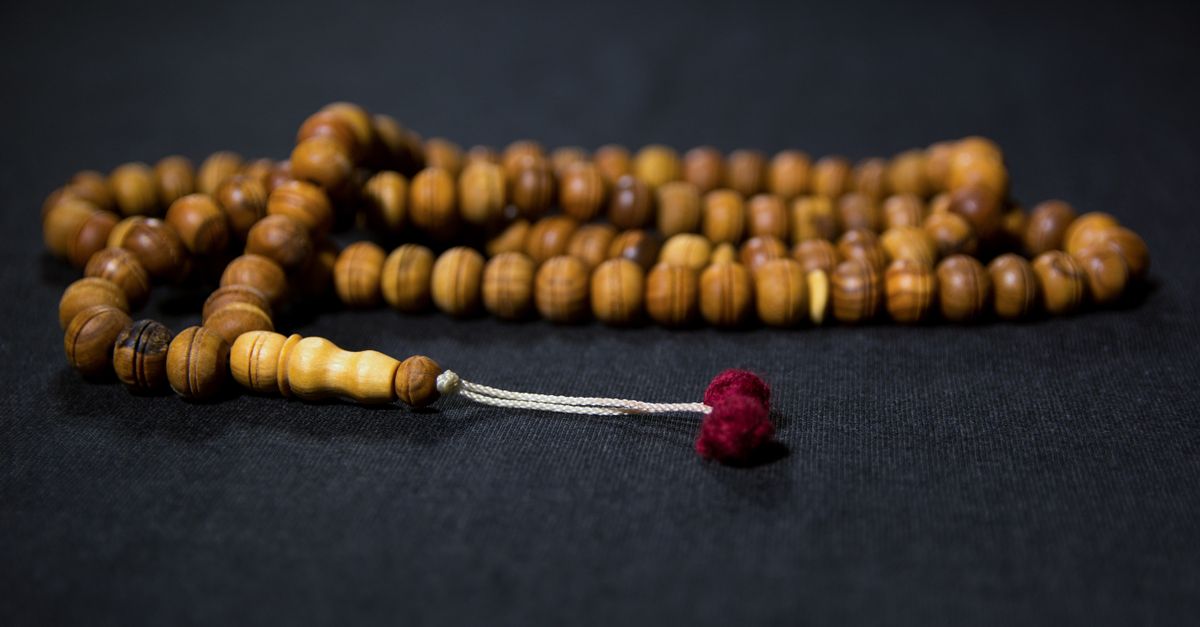
What "Documenting Your Tasbih Steps" Actually Means
Documenting a tasbih workflow is not the same as writing a manual for a friend. It is a record of three specific pieces of information that you can return to later and verify without guesswork: the round target you chose, the number you reached on each local day, and the moment a round boundary closed. The Tasbih Counter exposes all three on the page itself.
- Round target. A choice between 33 and 99, with an optional rename for the local counter label so the page reads the way you want it to.
- Round and position. The current round and the position inside that round are visible next to the target, so at a glance you can see whether you are at 17 of 33 in round two or at 88 of 99 in round four.
- Completion state. A visual cue appears exactly when a round closes, and the next tap begins the next round at one of the target. That boundary is the cleanest marker a documented record can have.
Anything beyond those three pieces is outside the tool's scope. There are no religious rulings, no prescribed phrases, no health claims, and no advice about what a person should count. The numbers you see are the numbers you entered.
Why a Local Daily Record Beats Memory or Paper
The everyday reason people lose their count is that the unit of recording does not match the unit of meaning. A lifetime tally that reads "1,247" tells you almost nothing about which day you reached 33 four times, or whether you missed a week, or how your pace changed. A local-daily record answers those questions because each saved increment is grouped by the device's calendar date. A count made at 11:40 PM stays on that local day, not on the next UTC midnight.
Two practical consequences follow. First, when a new local day begins, the page starts its visible count at zero while keeping earlier nonzero days in the history list, so the day boundary is visible instead of hidden. Second, the history is modest on purpose: it shows the saved date and count in reverse date order, with no profile, no inferred context, and no cross-device sync. The record is exactly as private as a notebook on your desk.
How to Document the Steps You Take With Tasbih Counter
- Open the tool and pick a round target. Choose 33 or 99 depending on the workflow you are following, and rename the local counter label only if the default wording does not suit you.
- Tap Add one for each entry. Press the button once per count. The current round and position update after every tap, so the page itself is the log.
- Watch for the completion state. When you reach the exact target, the tool marks a completed round. The next tap starts the next round at one of the target, giving you a clean boundary in the record.
- Correct a slip with Undo one if needed. The undo control adjusts the most recent number so a stray tap does not poison the day.
- Let the local day close naturally. Once the device's calendar date rolls over, the visible count resets to zero and the previous day's total moves into the history list.
- Open the history list to review saved days. Days appear in reverse date order with the date and the count, so the documented steps are visible without opening a second app.
Each step above is also a documentation step, because every tap is written to localStorage under the key counter:tasbih-counter, grouped by local calendar date. There is no separate "save" button because the act of counting is the act of recording.
Exporting the Documented Workflow as PNG or CSV
Documentation is only useful if it can leave the browser when you want it to. The Tasbih Counter offers two export paths, both generated locally with native canvas and Blob APIs, so no image or CSV is uploaded for processing.
| Export type | What it contains | Best for |
|---|---|---|
| PNG (1080 by 1350) | Lizely mark, total count, and recent calendar-day rows; no URL and no custom label | A shareable visual summary that does not reveal a personal note |
| CSV (Date, Count) | One data row for every saved nonzero day | Opening in a spreadsheet, archiving privately, or deleting when no longer useful |
The PNG export deliberately omits the optional custom label, so the image can be shared without leaking a private name. The CSV export is intentionally simple: two columns, one row per saved day, no formatting tricks. If the file is no longer useful, it can be deleted like any other download.
Where the Documentation Lives and What Stays Private
State is stored only in browser localStorage under the counter's own key, which means the documented steps do not synchronize across devices, do not pass through a sign-in flow, and do not become a server-side profile. Clearing browser data removes the history, and a separate phone or computer begins with its own empty counter. If browser storage is disabled or full, the tool keeps the current page usable and tells you that it cannot retain the history, rather than silently dropping taps or claiming a backup it does not have.
The Vibration API is the only enhancement that lives outside localStorage. On browsers that support Navigator.vibrate, the tool attempts a short vibration after a user tap completes a round; Safari does not support that API, some devices disable it, and the page remains fully usable without it. Vibration is an optional signal on top of the visual completion state, not a replacement for it.
A Worked Example of the Day Boundary in Practice
Imagine a person who taps the counter steadily from late afternoon through the evening, finishing a round of 33 at 9:14 PM and a second round at 9:31 PM. The page is showing round three at 18 of 33 when the device clock ticks past midnight. Because the record is grouped by local calendar date, every tap up to 11:59:59 PM stays on the original day; only taps from 12:00:00 AM onward belong to the new day. The page then resets its visible running count to zero, while the history list now carries two entries: the original day with a saved count of 84 (two completed rounds plus 18 in the third), and the new day with whatever has been entered so far.
This is where the documented steps earn their keep. Without a local-day grouping, the count would either be split across a UTC rollover at an irrelevant hour or be merged into a single lifetime total that hides the day the work happened. With it, the record answers plain questions like "how many rounds did I close last Tuesday" or "did I skip Thursday" by reading the saved date and count next to each other.
Picking the Right Tool for the Kind of Count You Keep
Not every repeated count is a tasbih workflow. The Tasbih Counter is built for two explicit round targets, a local daily history, and a small, private export. Other counters in the same family fit different shapes of work. The table below matches a workflow to the tool that documents it most cleanly.
| Workflow shape | Best fit | Why |
|---|---|---|
| 33 or 99 round target with a personal daily record | Tasbih Counter | Exact round boundaries, local-day history, and PNG or CSV export with no sign-in |
| Adjustable step with a general repeated-event label | Online Tally Counter | Flexible step size and a generic label for counts that do not match a fixed round |
| Each completion is a set with repetitions and optional rest | Workout Rep Counter | Set-by-set structure and rest timing, rather than a flat count toward a single target |
| Multiple named counters compared on one daily record | Multi Counter | Side-by-side comparison across several personal counters in a single history |
If the workflow is specifically a 33 or 99 round target with a private local record, the Tasbih Counter is the right documentation surface. If the count is adjustable, set-based, or multi-stream, the table above points to the tool that documents that shape without bending it into something it is not. The point of documenting the steps is not to collect a more complicated app; it is to keep the count visible, exportable, and private, which is the smallest set of properties that makes a personal record trustworthy.
For a deeper look, see Should You Use a Workout Rep Counter? 5 Decision Tests.
For a deeper look, see How to Fix an Auto Counter Result That Looks Wrong.