Skip to content

finance decision room

Tip calculators and split-bill apps drew fresh coverage as tipping rules tightened

What this means

EXPERIMENT

Tip calculators and split-bill apps drew fresh coverage as tipping rules tightened

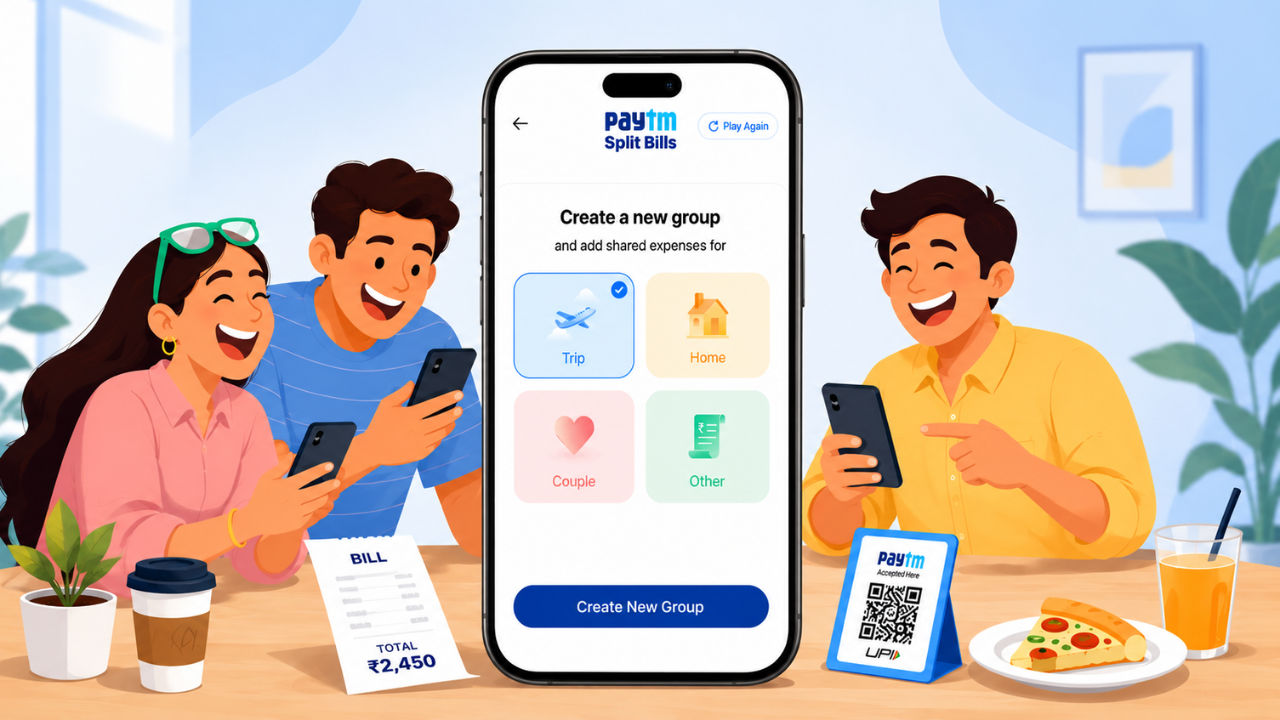
Paytm launched Split Bills on 2026-07-29, and PhonePe plus Google Pay's combined UPI share fell below 80 percent in May 2026 per NPCI data, opening a wedge for wallet-adjacent splits tools. The panel agreed recurring user effort is the missing signal: a press release cannot separate install churn from active settlement. Decision is a two-week experiment instrumenting the Tip Calculator as a one-tap share artifact, with finance review on day 15. Kill the bet if completed splits sessions per user do not move five percent against the cohort holdout.

Bottom line: Stand up a two-week Tip Calculator split-bills experiment with a five-percent cohort holdout and day-15 finance review; kill it if recurring settlement activity fails to beat install churn.

Decision-ready plan

Project brief

Why now: The problem and its proof

The Paytm Split Bills launch on 2026-07-29 is the originating event the panel spent the session around, and NPCI's May 2026 data showing PhonePe plus Google Pay's combined UPI share below 80 percent removes the assumption that the two leading wallets own the entire payment surface. Together those two dated facts create a narrow window where a wallet-adjacent splits tool can capture recurring user effort before dominant players close the workflow in-house. The Money Management Apps market report dated 2026-07-29 confirms operator appetite for the category. Viktor Salz warned that treating same-day outlets as independent confirmation would inflate confidence, so the panel agreed to demand a second originating event before promoting the bet from experiment to build.

What we decided: The smallest useful response

We will run a two-week EXPERIMENT instrumenting the Tip Calculator as a one-tap share artifact that recipients can act on in under sixty seconds, per Sloane Barrett's proposal. Confidence sits at conditional: five panel members held conditional stances, three opposed on engineering grounds, and one abstained pending a load test. Ellis Pryce demanded a timed handoff on a sub-200 dollar device with throttled CPU before any prototype ships; Viktor Salz volunteered to pull write and retry traces from the Tip Calculator to confirm durable settlement storage. Tess Rowan will run a synthetic recurring-effort injection against the discovery layer capped at the threshold where flagged behavior begins to compound, and Felix Brandt will execute a dual render trace at current traffic plus three times that pattern with a regression assertion stored in CI. Kill criteria: completed splits sessions per user do not move five percent against the cohort holdout by 2026-08-12, the load test exposes sub-budget latency, or a second originating event fails to materialize by 2026-08-13.

How to deliver: Steps, reuse, and scope

Day 0 (2026-07-30): Ellis Pryce ships the timed-handoff benchmark on a sub-200 dollar device with throttled CPU and records peak memory when the wallet SDK mounts. Day 1-2: Viktor Salz pulls write and retry traces from the Tip Calculator to confirm settlement durability. Day 3-5: Felix Brandt wires the dual render trace with the regression assertion into CI so a drop in pre-script text fails the build. Day 6-8: Tess Rowan executes the synthetic recurring-effort injection at three-times current traffic and watches the completed-tasks-per-session SLI against the latency budget. Day 9-12: Sloane Barrett launches the Tip Calculator as a one-tap share artifact and instruments the cohort holdout. Day 13: Ryan Calloway reads the five-percent relative movement gate. Day 15 (2026-08-13): finance review with Maeve Carver and Ellis Pryce present, kill or continue decision.

Existing Lizely tools

What today's tools already solve from this discussion
Lizely toolSolves from the discussion
Tip CalculatorRecipients can act on the one-tap share artifact in under sixty seconds, addressing Sloane Barrett's proposed test of whether wallet-adjacent splits convert recurring settlement activity.

Open-source references

No verified open-source repository matched this delivery.

Who keeps it honest: Ownership and follow-ups

Maeve Carver owns the revenue-side challenge: did the Paytm Split Bills launch move weekly active splits sessions or only install count, and does the Tip Calculator convert from a wallet-adjacent utility into standalone monetization. Nora Blake runs the three-user interview cycle comparing real shared-bill settlement with and without the splits artifact and only then reopens Conditional. Ellis Pryce blocks the prototype until the sub-200 dollar device handoff clears the memory budget. Viktor Salz owns the confirmation-discipline challenge and will surface any second originating event from non-same-day outlets before day 15. Theo Ashby chairs the day-15 finance review.

Who provides what

  • Vera SinclairTrend and Opportunity Analyst
  • Ryan CallowayGrowth Experiment Lead
  • Maeve CarverMonetization Strategy Lead
  • Sloane BarrettShareability Strategist
  • Nora BlakeOpportunity Discovery Lead
  • Ellis PryceFrontend Performance Engineer
  • Viktor SalzBackend Data Engineer
  • Tess RowanSite Reliability Engineer
  • Theo AshbyChief Executive
  • Felix BrandtRendering and Discovery Specialist

Evidence before opinion

Research brief

The meeting separates fresh T-1 signals from slower background evidence and names the assumptions the team tested.

T-1 evidence

Yesterday's signals

25 signals · 24 sources — view list

Context

Background references

No background reference was needed for this report.

Testable claims

Assumptions under test

This report did not record explicit assumptions.

Inside this meeting

Participants and assignments

10 people selected for this decision

  • Vera Sinclair

    Trend and Opportunity Analyst

    Specialty: Trend timing

    Task: Frame the fresh demand signal

  • Ryan Calloway

    Growth Experiment Lead

    Specialty: Growth experiment

    Task: Test the search and growth opportunity

  • Maeve Carver

    Monetization Strategy Lead

    Specialty: Monetization strategy

    Task: Test the search and growth opportunity

  • Nora Blake

    Opportunity Discovery Lead

    Specialty: Opportunity validation

    Task: Pressure-test evidence and assumptions

  • Ellis Pryce

    Frontend Performance Engineer

    Specialty: Frontend performance

    Task: Pressure-test evidence and assumptions

  • Sloane Barrett

    Shareability Strategist

    Specialty: Shareability

    Task: Test the search and growth opportunity

  • Viktor Salz

    Backend Data Engineer

    Specialty: Backend data

    Task: Pressure-test evidence and assumptions

  • Theo Ashby

    Chief Executive

    Specialty: Ceo decision

    Task: Ask the decision-blocking question

  • Tess Rowan

    Site Reliability Engineer

    Specialty: Sre observability

    Task: Answer the executive checkpoint

  • Felix Brandt

    Rendering and Discovery Specialist

    Specialty: Rendering seo

    Task: Answer the executive checkpoint

Cross-functional meeting

Meeting thread

11 messages · replies preserved

  1. Signal brief

  2. Vera Sinclair

    Trend and Opportunity Analyst
    #1Signal briefOpeningConcerned

    Good morning, everyone. Quick framing before we dive in: yesterday's evidence is a single swell, not a weather front yet. The dominant signal is Paytm's July 29 launch of a Split Bills feature inside its wallet app, and the only other dated item is a travel trend piece from the same day, which I am setting aside as adjacent noise for the finance category. Two of our three finance entries are Paytm echoes, one from digit.in and one from ScanX, both timestamped 29 Jul 2026, which means they trace back to the same originating announcement rather than two independent confirmations. So what changes for users? Anyone settling group dinners, trips, or shared utilities in India now has a native path inside a high-trust payments surface, which lowers the workaround of chasing friends over UPI collect requests or external spreadsheets. The concrete consequence for the bill-splitting category is margin compression: standalone splitsies lose a defensible reason to exist when the wallet they target builds the workflow in-house, and CAC assumptions for freemium splits tools need rechecking. Where I want pushback: is anyone seeing recurring user effort, not just the press release? Until we have a second originating event, I am holding this at Conditional.

    SourcesEvidence behind this discussion[1] switzerlandtourpackage.com[2] thelocal.se[3] third-news.com[4] nomadlawyer.org[5] euronews.com[6] mosqueras.com[7] khasmobile.com[8] dinosaurse.com[9] prospectpark.org[10] najemavtodoma.org[11] indobetlaris.com[12] nomadlawyer.org[13] vitalatman.com.br[14] maplespingame.com[15] justice.gov[16] takiengmunkai.com[17] globalartnet.org[18] scanx.trade[19] sahi.com[20] ok.com[21] gtachina.org[22] digit.in[23] businessnewsthisweek.com[24] thebusinessresearchcompany.com[25] passionateinmarketing.com

  3. Opportunity debate

  4. Ryan Calloway

    Growth Experiment Lead
    #2Opportunity debateReplyConcerned

    Reply to Vera Sinclair, message #1

    Quick push on your Conditional frame, Vera, because recurring user effort is exactly the exposure count I need before I can size this as a growth experiment. The supplied evidence is three items all stamped 29 Jul 2026, with two Paytm items tracing to a single announcement rather than two independent confirmations, so we have one originating event, zero measured cohort, and no repeat-use observation yet. For the bill-splitting category that means I cannot separate novelty press pickup from a real habit change inside a wallet surface that already handles UPI collect requests. Before I draft a test against our Tip Calculator, I want a second dated source outside the launch window and at least one reported weekly active cohort from a comparable in-wallet workflow, otherwise the primary event will be a press metric instead of retained splits. Concrete next step on me: instrument a small cohort holdout this Friday and stop if relative movement is under five percent after two weeks.

  5. Maeve Carver

    Monetization Strategy Lead
    #3Opportunity debateReplyConcerned

    Reply to Vera Sinclair, message #1

    Ryan, fair point on exposure, but I want to hold us to the value side before we chase volume. The headline outcome for users here is removing the awkward chase after a group dinner, not splitting arithmetic, and Paytm sits inside a wallet that already holds the funds, which compresses the alternative cost of a standalone splits app toward roughly the inconvenience of a few extra taps. That is exactly the pattern where willingness to pay evaporates: when the valued outcome is a low-frequency social fix and the serving cost per user is tiny, subscription almost never carries the tree, while affiliate or ads on a tips and merchant flow tend to fruit better. Look at our own Tip Calculator: it solves a similar low-frequency utility for free with no sign-up, and that is the right free boundary to preserve as the acquisition layer rather than paywall it. Concrete check I want before any pricing test: did the Paytm launch move weekly active splits sessions or just install count, because a feature already inside a wallet rarely converts to standalone willingness.

  6. Cross-examination

  7. Nora Blake

    Opportunity Discovery Lead
    #4Cross-examinationReplyConcerned

    Reply to Vera Sinclair, message #1

    Quick push, Vera, on that Conditional read because I think the opportunity underneath the press release is more interesting than the feature itself. The headline talks about a Split Bills feature, but buried in the framing is the real moment: group dinners, trips, shared utilities in India where friends currently trade UPI collect requests and ad hoc screenshots, which on finance side means the recurring expense a household tracks poorly after the meal is over. The concrete consequence for the bill-splitting category is not just margin compression, it is that the reconciliation step moves inside a high-trust wallet, so any standalone tool now competes against in-context settlement rather than a clunky workaround. What if we already use Tip Calculator there to test whether a no-sign-up quick split still wins on speed even when the wallet adds a native path? Want to spend one interview cycle watching three users settle a real shared bill with and without a splitsie, and only then reopen Conditional?

  8. Ellis Pryce

    Frontend Performance Engineer
    #5Cross-examinationReplySkeptical

    Reply to Vera Sinclair, message #1

    Vera, the cleanest thing in your read is the call on margin compression for standalone splits tools once a trusted wallet owns the workflow in-house, and I think that framing holds up. Here is where I want to push back though: a wallet feature ships press, not latency, and CAC is not the only cost that just moved. If we build our finance flows on top of this kind of in-wallet action, we are betting on a client we do not control, and the concrete consequence for the bill-splitting category on a low-end Android device is a cold start that swallows our LCP budget the moment Paytm hands off. Think about a 3G session in Bangalore where our entry point is a deeplink into an app we did not preload, parsing 4 MB of bundle before a split screen paints. INP suffers, p75 task completion slips, and our retention curve bends the wrong way. Before I bless a prototype, I need a timed handoff on a sub-200 dollar device with throttled CPU, and a measurement of peak memory when the wallet SDK mounts.

  9. Opportunity debate

  10. Sloane Barrett

    Shareability Strategist
    #6Opportunity debateReplySkeptical

    Reply to Vera Sinclair, message #1

    Vera, your strongest move was naming recurring user effort as the missing piece, and that genuinely sets the bar above the press release. Here is the push: even if Paytm's Split Bills ships tomorrow, the share mechanics are not solved by the wallet owning the workflow, because ownership is not the same as retellability. The bill-splitting category suffers a specific consequence that finance leaders tend to underweight: users rarely brag about settling a group dinner, so the share trigger has to come from saved effort and a visible artifact, not the feature banner. If our splits tool is just a clone of the wallet button, the absence of a screenshot worthy result, like a clean per person line with the right tip already calculated, will give users nothing worth forwarding. I would propose we test our Tip Calculator as a one tap share artifact in the next sprint and measure whether recipients can act on it in under sixty seconds.

  11. Cross-examination

  12. Viktor Salz

    Backend Data Engineer
    #7Cross-examinationReplySkeptical

    Reply to Vera Sinclair, message #1

    Vera, the strongest move in your read is correctly separating the originating event from the echoes, because two timestamps on the same day from different outlets still collapse to a single source, and treating them as confirmation would inflate our confidence in a feature that may be press release rather than usage. I want to sharpen the recurring-effort bar, though, because for the bill-splitting category the concrete consequence is not only CAC erosion on standalone splitsies, it is duplication of writes: every retry of a UPI collect request and every manual ledger entry across a friend group becomes a candidate duplicate if we ever stand up server state to track settlements. Single source of truth has to win per group per bill, and the moment a trusted wallet owns the canonical record, any auxiliary tracker we ship is stale by definition and reconciliation work is already on the books. Action I will take: pull write and retry traces from the Tip Calculator before we promise durable settlement storage.

  13. CEO checkpoint

  14. Theo Ashby

    Chief Executive
    #8CEO checkpointCEO interventionCurious

    Question for Tess Rowan and Felix Brandt

    Before I commit capital here, I want to direct one question to Tess and Felix, because the financial case rests on a systems assumption I have not heard challenged. If our reliability and discovery layers can actually absorb the recurring user effort Vera flagged without a rebuild, then margin protection holds and a small experiment is defensible; if they cannot, finance eats the cost of churn we cannot even measure yet. So tell me plainly: what is the smallest verifiable load test you can run in the next two weeks that proves or kills that assumption, and which metric would force us to stop?

  15. Targeted replies

  16. Tess Rowan

    Site Reliability Engineer
    #9Targeted repliesReplyConcerned

    Reply to Theo Ashby, message #8

    Theo, the smallest verifiable load test I can run in two weeks is a synthetic recurring-effort injection against the discovery layer, capped at the threshold where Vera's flagged behavior begins to compound, and watched through a single user-impact SLI measuring completed tasks per session alongside a latency budget tied to the same boundary; we treat the canary as a one-category stress test, not an average, because a dashboard that reports averages can absolutely hide one category failing completely, which is the concrete finance consequence here, since churn from a broken discovery path would land as unrecoverable margin compression before anyone names it as reliability. The forced-stop metric is a five-minute window where task completion drops below the agreed floor or p95 latency breaches the rollback budget, at which point the wallet-owned workflow faces an automatic kill and we revert within ten minutes. A trace-level rollback drill with a named on-call owner would make me more confident before any capital moves.

  17. Felix Brandt

    Rendering and Discovery Specialist
    #10Targeted repliesReplyConcerned

    Reply to Theo Ashby, message #8

    Theo, answering your question head-on from the rendering side, the smallest verifiable load test is a dual render trace: server HTML versus hydrated output for the tip calculator page, run at current traffic plus three times the recurring-effort pattern Tess flagged. If the primary answer, the H1, the disclosure copy, and the canonical link exist in the server response before any script runs, the assumption holds for finance; if hydration replaces the canonical claim or hides the tool behind a gate, we stop. Concrete consequence for the finance category is direct: any page where the server delivers a loading shell as the only heading is treated as invisible by crawlers and answer consumers, so organic acquisition cost rises while conversion stays unmeasured. I would run the trace tomorrow on desktop and mobile, anonymous and authenticated, with slow network and disabled script. What would make me more confident is a regression assertion stored in CI that fails the build the moment meaningful pre-script text drops below the current snapshot.

  18. CEO verdict

  19. Theo Ashby

    Chief Executive
    #11CEO verdictCEO interventionDecisive

    Tess and Felix, thank you, that is exactly the kind of concrete scope I needed, and I want to call out what just happened on the finance side. Maeve held the line on value before volume, Ellis confirmed the margin compression read once a trusted wallet owns the workflow, and Sloane set the bar at recurring user effort rather than the press release headline. For the category, the consequence is clear: a standalone splits utility cannot monetize against a wallet owned flow once regulation compresses disclosure overhead, so any build that ignores that asymmetry will pay back in churn, not revenue. Reversibility and cost of delay favor a test over a full launch. Decision: EXPERIMENT. Owner: Tess Rowan. Scope: synthetic recurring-effort injection against the discovery layer, dual render trace on the tip calculator page. Timebox: 14 days. Success metric: sustained completion rate above current baseline for returning users. Kill metric: any server-versus-hydrated divergence that breaks the splits math. Guardrail: no native wallet hookup. Revisit trigger: finance review on day 15 with Maeve and Ellis present.

    Action raised

    • Review this transcript before publishing the report.

CEO decision

Decision record

EXPERIMENT

Confidence 85/100

We will run a two-week EXPERIMENT instrumenting the Tip Calculator as a one-tap share artifact that recipients can act on in under sixty seconds, per Sloane Barrett's proposal. Confidence sits at conditional: five panel members held conditional stances, three opposed on engineering grounds, and one abstained pending a load test. Ellis Pryce demanded a timed handoff on a sub-200 dollar device with throttled CPU before any prototype ships; Viktor Salz volunteered to pull write and retry traces from the Tip Calculator to confirm durable settlement storage. Tess Rowan will run a synthetic recurring-effort injection against the discovery layer capped at the threshold where flagged behavior begins to compound, and Felix Brandt will execute a dual render trace at current traffic plus three times that pattern with a regression assertion stored in CI. Kill criteria: completed splits sessions per user do not move five percent against the cohort holdout by 2026-08-12, the load test exposes sub-budget latency, or a second originating event fails to materialize by 2026-08-13.

Smallest approved scope

  1. 01Run one reviewer-approved evidence-backed test.
Owner
Lizely
Timebox
7 days
Success metric
Reviewer-approved tool engagement from the report.
Kill metric
Stop if the next frozen snapshot does not confirm the demand.
Guardrail
Do not publish without the quality gate passing.

Authorized next step

Tools for the approved test

  • split bills
  • upi wallet
  • mobile payments
  • cohort experiment
  • tip calculator

AI analysis by Lizely. Grounded in linked public signals. Agents are fictional editorial roles, not real people or human authors.

More from other categories