A Yes or No wheel produces a casual binary answer by selecting between two outcomes, Yes and No, each with equal probability in a fair implementation. The Yes or No Generator delivers the same wheel-style result using your browser's built-in Web Crypto API rather than a visual spinning animation, so every answer is backed by a cryptographic random source rather than an animation that simply lands on a tile. The tool draws a single 32-bit unsigned integer from Crypto.getRandomValues into a one-element Uint32Array, producing an integer from 0 through 4,294,967,295. Because two divides 2^32 exactly, every valid Uint32 value is accepted with no rejection sampling, even values map to Yes and odd values map to No, giving each outcome exactly 2,147,483,648 source values. The tool runs entirely in the current browser tab, never uploads the question or history, and asks for no account or network call, making it suitable for casual decisions where a balanced 50/50 prompt is the goal.
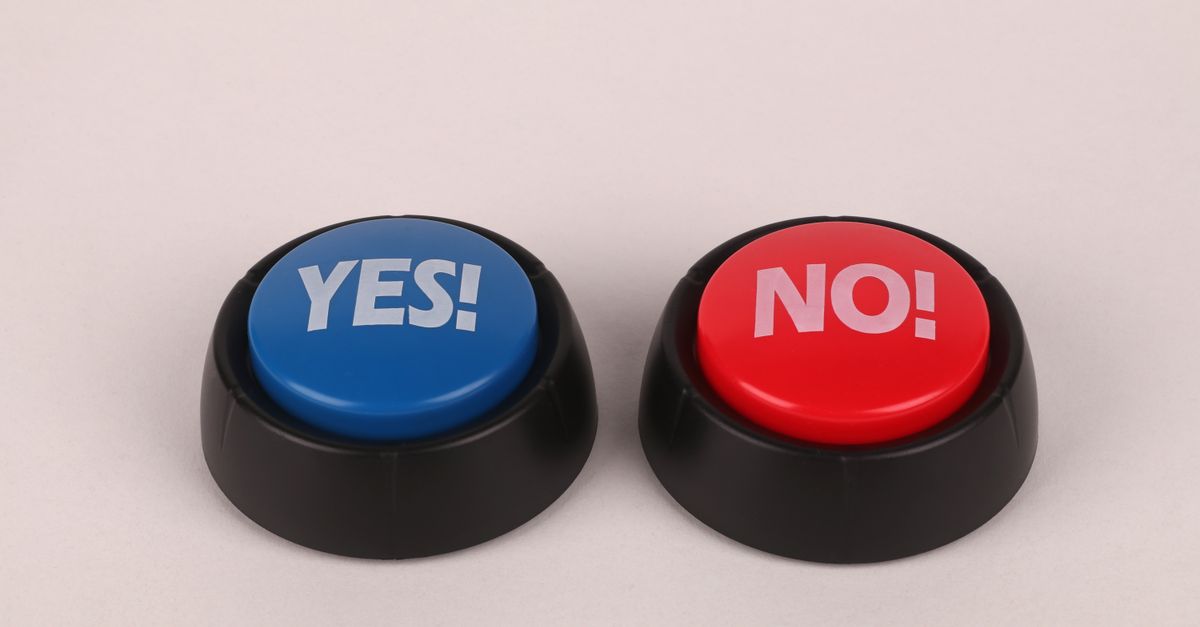
How a Yes or No wheel result differs from a crypto prompt
A typical Yes or No wheel is a digital spinner that randomly lands on either "Yes" or "No" to resolve small, low-stakes choices. Most public wheel spinners rely on a visible spin animation plus an underlying pseudo-random number that decides which slice the needle rests on. The animation adds entertainment value, but the fairness of the result comes entirely from the underlying random source, not from how long the wheel spins or how the colors are arranged.
The Yes or No Generator skips the animation and presents the answer directly, drawing from a source specified by the MDN documentation for Crypto.getRandomValues and aligned with the W3C Web Cryptography API specification that defines in-place integer typed-array filling. The benefit of this approach is that the methodology is unambiguous: every generation reads exactly one Uint32 from a cryptographically secure browser API, maps it through a tested function, and returns Yes or No. There is no animation lag to wait through and no opaque algorithm to trust on faith.
For readers who still want the "wheel" feel, the tool records the current answer prominently and keeps the newest results visible, so the page behaves like a written log of wheel spins without the visual chrome. The trade-off is that the experience is calmer and more transparent rather than gamified, which suits quick decisions where a verifiable 50/50 prompt matters more than spectacle.
How to generate a Yes or No wheel answer
- Open the Yes or No Generator in your browser tab. The page loads with an empty question field and no current answer displayed.
- Optionally type a low-stakes question of at most 1,000 UTF-16 code units into the question field. The question is a local label only and does not change the probability of the answer; leave it blank if you prefer.
- Click the Generate button to draw one Uint32 from Web Crypto and map it to Yes or No. The current answer appears on the page.
- Review the answer and the surrounding history. Editing the question field clears the currently displayed answer and any prior error so an older answer cannot be mistaken for a new one; the history list itself is preserved.
- Repeat the generate step as many times as you like. The newest-first history keeps the most recent 20 entries on screen; a running count tells you exactly how many earlier answers have been discarded once you go past 20.
- Clear the history when finished if you do not want the recent answers to remain visible on the screen.
The binary mapping: even to Yes, odd to No
The fairness of the wheel result comes from a deliberately simple mapping. The browser fills a one-element Uint32Array with Crypto.getRandomValues, returning an integer n where 0 ≤ n ≤ 4,294,967,295 (which is 2^32 − 1). The mapping function then applies two rules in sequence.
First, for a general N-outcome prompt the mapper computes the largest multiple of N that does not exceed 2^32, accepts values strictly below that multiple, and rejects values at or above it. For a Yes or No wheel, N equals 2 and the largest multiple of 2 that does not exceed 2^32 is 2^32 itself, so every valid Uint32 is accepted and no rejection sampling is needed. This matters because a different N, like 3, would force the mapper to drop values at or above floor(2^32 / 3) × 3 in order to keep each outcome equally likely.
Second, an accepted value v is reduced modulo N. For two outcomes this produces either 0 (Yes) or 1 (No). The simplest physical rule is "even maps to Yes, odd maps to No." Each outcome receives exactly 2,147,483,648 source values out of the 2^32 total. A worked example: a drawn value of 4,294,967,294 (which is 2^32 − 2, an even number) is accepted, then 4,294,967,294 modulo 2 equals 0, so the result is Yes. A drawn value of 4,294,967,295 (2^32 − 1, odd) is accepted, then modulo 2 equals 1, so the result is No.
A bounded 128-draw loop protects against a broken or injected source hanging forever; in normal use the loop exits on the first draw because rejection is not needed for binary outcomes. The mapper is also exercised at a three-outcome boundary in deterministic tests so the rejection path is verified even though binary prompts never trigger it. Random sequences can naturally contain repeated Yes or repeated No answers in any order, and the mapper does not compensate for streaks or guarantee alternation.
Reading the 20-entry newest-first history
Each generation appends a row to a newest-first history list that holds at most 20 entries. When a 21st generation occurs, the oldest entry is dropped and a cumulative message updates to reflect exactly how many answers have been discarded since the last reset (page load or clear). The label for each row uses the question text as you typed it, except that an empty question displays the literal label "No question."
The history is descriptive only. Seeing several Yes answers in a row does not raise the probability of a No on the next draw, and seeing several No answers does not raise the probability of a Yes. Independent 50/50 results can naturally form streaks of any length, including repeated Yes or repeated No answers, and the tool neither compensates for streaks nor guarantees alternation. Use the list to compare recent prompts, not to predict the next one.
Editing the question field clears only the prominently displayed current answer and any prior error, leaving history intact. Clearing the history resets both the visible rows and the discarded count, and also removes the current answer so the page returns to its empty state. A monotonically increasing local entry identifier keeps runtime keys unique across the page lifetime and is not random data, not a persistent identifier, and not a counter that survives a reload.
Limits, boundaries, and when not to use a random prompt
The question field accepts at most 1,000 UTF-16 code units. The exact 1,000-unit boundary is accepted; one code unit beyond it fails without truncation or generation, so the tool never silently clips an over-long question. Empty text is valid because a question is optional. Question text is stored locally with the generated entry exactly as you typed it, and trimming is used only to decide whether the history should display the label "No question."
If Web Crypto is missing, blocked, or throws, the tool reports a clear failure and produces no answer. There is no fallback to Math.random because a silent source change would contradict the displayed methodology. If you see an error rather than a Yes or No, your browser environment does not support this prompt and you should use a different method. The browser implementation chooses its own underlying generator, so the tool does not claim access to physical true randomness or expose the generator algorithm.
Even a perfectly balanced random prompt is not advice. Do not use the tool for medical, legal, financial, safety-critical, emergency, security, consent, employment, eligibility, compliance, or other high-stakes decisions. Web Crypto quality does not make the question appropriate, validate the available choices, understand consequences, or provide professional judgment. A mathematically balanced answer can still be unsuitable, unlucky, or harmful when applied outside a casual low-stakes context. The tool does not learn preferences, weight alternatives, prevent streaks, prove fairness over a small sample, or predict future events.
Yes or No wheel prompts at a glance
The table below summarizes how a few common approaches to a binary prompt compare on the properties that matter for casual fairness. It uses only the characteristics disclosed in the tool's documented behavior and does not claim measured performance from outside testing.
| Approach | Random source | Visible animation | Question label | Per-answer history |
|---|---|---|---|---|
| Yes or No Generator (this tool) | Crypto.getRandomValues, one Uint32 | No | Optional, up to 1,000 UTF-16 code units | Newest-first, capped at 20 entries |
| Visual Yes or No wheel spinner | Implementation-dependent, often JS RNG | Yes | Usually none | Sometimes a counter, rarely a list |
| Coin-flip prompts | Typically Math.random or equivalent | Sometimes | Rare | Rare |
The point of the table is not that one tool is universally better, but that the documented properties of each approach differ. When you need a transparent methodology, a labeled question, and a visible recent history, the Yes or No Generator exposes each of those explicitly. When you need a visible spin animation, a wheel-style page may suit you better, with the understanding that the animation is decorative and the underlying source does the actual work.
If you're weighing options, Getting Started With a Random Name Picker Wheel covers this in detail.