A dice roller cheat sheet is the quick-reference summary of every standard die type, dice notation shorthand, and probability shortcut you need to roll virtually without memorizing the rules. It condenses the seven polyhedral dice — d4, d6, d8, d10, d12, d20, and the d100 — into one place alongside the most common roll expressions like 1d20+5 or 4d6, plus the simple math behind why a sum of 2d6 lands on 7 more often than any other number. A well-built cheat sheet also tells you which tool to reach for: a free browser-based roller that uses cryptographic randomness, supports custom sides from 2 to 1000, lets you throw up to 12 dice at once, and shows each individual result, the running total, and a short history so you can audit every roll. This guide is exactly that — a printable reference for dice notation and odds plus a working tool you can open in any tab.
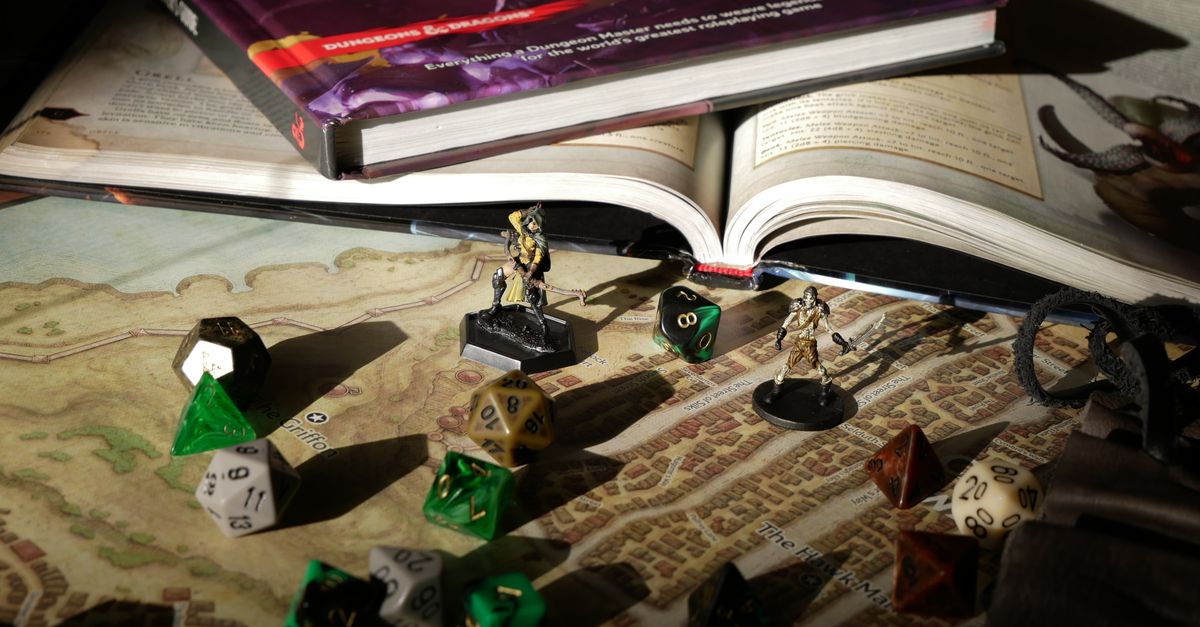
The Standard Polyhedral Dice at a Glance
The seven dice below cover virtually every tabletop roll you will ever need. Memorize the names and the typical role, and you have already absorbed most of any cheat sheet.
| Die | Sides | Most common use |
|---|---|---|
| d4 | 4 | Small damage in D&D, quick critical-hit dice, percentile tens |
| d6 | 6 | Board games, D&D damage, craps, two-die sums like 2d6 |
| d8 | 8 | Medium weapon damage and monster attacks |
| d10 | 10 | Percentile ones digit (pair with another d10 for a true d100) |
| d12 | 12 | Heavy weapons like greataxes and large creature attacks |
| d20 | 20 | Attack rolls, saving throws, and ability checks in D&D |
| d100 | 100 | Percentile rolls, random tables, and world-building prompts |
Outside of role-playing games, the d6 is the workhorse of nearly every modern board game — Catan, Monopoly, Yahtzee, and dozens of others all use one or more six-sided dice. The d20 is the symbol of tabletop RPGs because almost every D&D resolution begins with "roll a d20, add the modifier, beat the target number." Together these seven dice cover the vast majority of virtual rolls, which is why a tight cheat sheet stops there and leaves the rest to a custom-sides option.
Dice Notation You Will See in Every Cheat Sheet
Dice notation is the shorthand written above every roll. It looks cryptic the first time, but the grammar is short.
| Expression | Reads as | Example use |
|---|---|---|
| NdM | Roll N dice, each with M sides | 3d6 — three six-sided dice |
| NdM+X | Roll NdM, then add X | 1d20+5 — d20 attack with +5 modifier |
| NdM−X | Roll NdM, then subtract X | 2d6−1 — damage after a penalty |
| 4d6 | Roll four d6 for D&D ability scores | Character generation |
| 2d20kh1 | Roll 2d20, keep the highest (advantage) | D&D 5e advantage |
| 1d100 | Roll a percentile die | Random tables, loot rolls |
The "+X" and "−X" portions are called modifiers and represent fixed bonuses such as a strength score, a spell bonus, or a penalty from heavy armor. A typical D&D attack looks like 1d20+7 against a target number (called AC) of 15: you roll a d20, add 7, and compare to 15. A weapon damage roll might be 1d8+3 for a longsword: one eight-sided die plus a flat +3. Once you can read these expressions, every character sheet, every monster stat block, and every online dice tool becomes intelligible.
How to Roll Dice Online With the Dice Roller
- Pick a dice type — d4, d6, d8, d10, d12, d20, or tap Custom to enter any number of sides from 2 up to 1000.
- Set how many dice to roll using the − and + stepper (up to 12 dice at once), then press the Roll button.
- Read each individual result alongside the total in the result panel.
- Scan the roll history to audit the last several throws and confirm nothing was missed.
- Open the session statistics for the average total so you can watch the expected value converge as you roll more.
The whole interaction is client-side, so the Dice Roller loads instantly, works offline once the page is cached, and never sends your rolls to a server. If you only need a d6, the dedicated d6 cheat sheet walks through the same workflow for that single die.
Why the Sum of Two Dice Peaks at 7
A single die is uniform: every face has the same 1-in-N probability. The moment you sum two or more dice, the totals stop being uniform and form a bell-shaped curve. With 2d6 there are 36 ordered combinations because each die has 6 faces, so 6 × 6 = 36 possible outcomes. The probability of summing to 7 is 6/36 = 1/6 ≈ 16.67%, because six of those pairs — (1,6), (2,5), (3,4), (4,3), (5,2), (6,1) — add to 7, while only one pair each — (1,1) and (6,6) — sums to 2 or 12.
That single calculation explains craps, board-game combat math, and the first lesson of every statistics class: summed dice produce the bell curve, and the central value appears most often. Roll 3d6 and the most common total lands near the middle of the range; roll 5d10 and the average climbs toward the middle with even tighter clustering. This is also why the Dice Roller's session average-total stat drifts toward the mathematical expected value as you roll more — it is a live probability demo you can watch in your browser.
Quick Reference Combos for Popular Games
This table is the cross-section a cheat sheet should keep next to the dice notation. One row per game, one expression per row.
| Game or situation | Common roll | What it decides |
|---|---|---|
| D&D 5e attack | 1d20 + attack bonus | Hits or misses the target AC |
| D&D 5e saving throw | 1d20 + save bonus | Resists a spell or trap |
| D&D 5e damage, longsword | 1d8 + STR modifier | Hit-point damage dealt |
| D&D ability score | 4d6, drop the lowest | One of six ability scores |
| Craps come-out roll | 2d6 | 7 or 11 wins, 2, 3, or 12 loses |
| Catan robber | 2d6 | Which hex produces resources |
| Monopoly movement | 2d6 | How many spaces to move |
| Pathfinder attack | 1d20 + attack bonus | Same idea as D&D 5e |
| Random loot table | 1d100 | Picks a percentile result |
If a game needs something exotic — a d3, a d5, or a 50-sided custom die — the Custom option in the Dice Roller lets you type any number of sides from 2 to 1000 and roll the same way. Two d10 dice rolled as "tens" and "ones" together produce a true d100 by reading the tens die as the first digit and the ones die as the second.
Why Crypto-Fair Randomness Belongs on a Cheat Sheet
The fairness of a virtual die is invisible until you roll it thousands of times. A naive Math.random() call is fast but is not guaranteed to be uniform or unpredictable across browsers and engines; a CSPRNG (cryptographically secure pseudo-random number generator) is built for both. The Dice Roller uses crypto.getRandomValues(), the same family of API the browser uses to generate cryptographic keys. The product team validated this empirically by rolling a d6 sixty thousand times: every face landed close to 1/6 of the time, and the distribution passed a chi-square fairness test.
For players, that means a treasure roll in a dungeon is no more or less likely to come up high than a monster's attack, and a teacher can trust the live average-total stat to converge on the expected value. For referees running combat on a laptop, it means no one at the table needs to worry about a "hot" or "cold" die. Fairness is the one property a cheat sheet cannot compromise on, and it is the reason a CSPRNG-backed tool beats the simple Math.random() snippets you sometimes see in tutorials.
Beyond Dice: When to Use a Random Number Instead
The dice cheat sheet is also a decision-making tool. A single d2 (a coin flip) settles two-option choices, a d20 is a perfect "pick a number between 1 and 20," and a d100 rolls anything from a percentile table to a raffle winner. If you find yourself reaching for dice to make an arbitrary pick outside a game, the Random Number Generator is a sibling tool that takes any inclusive integer range and gives you one fair pick with the same CSPRNG-backed randomness, no dice notation required.
For a yes-or-no decision, a d2 or a coin is the natural fit; for a winner from a list of names, dice are awkward. Keeping the right random tool bookmarked alongside the Dice Roller turns the cheat sheet from a game accessory into a general-purpose decision aid for the rest of the week.
Related reading: Pie Chart Maker Cheat Sheet: Format, Tips, and Limits.