Yes, a thermometer can be completely empty when you play the Thermometers Puzzle — leaving a path entirely unfilled is a legal choice as long as every row clue and every column clue still matches its declared total. The puzzle is a fixed 4×4 logic grid partitioned into eight two-cell thermometers, each shaped like a real bulb-and-stem instrument: a round bulb cell followed by a tip cell on one orthogonal neighbor. The only structural rule that decides whether a thermometer is empty is the bulb-first continuity rule: fluid must always begin at the bulb and march outward as a single unbroken block, so a partially filled path can never have a floating tip or a gap between two filled cells. Because that rule places no lower bound on the fluid level, an empty thermometer is simply a level of zero, and the disclosed eight-thermometer solution on this board deliberately keeps two of its eight paths at that zero level. Those empty paths still occupy grid cells — they just contribute zero filled cells to whichever row and column they cross — which is exactly the geometry you need whenever a clue is small enough to permit a vacuous path.
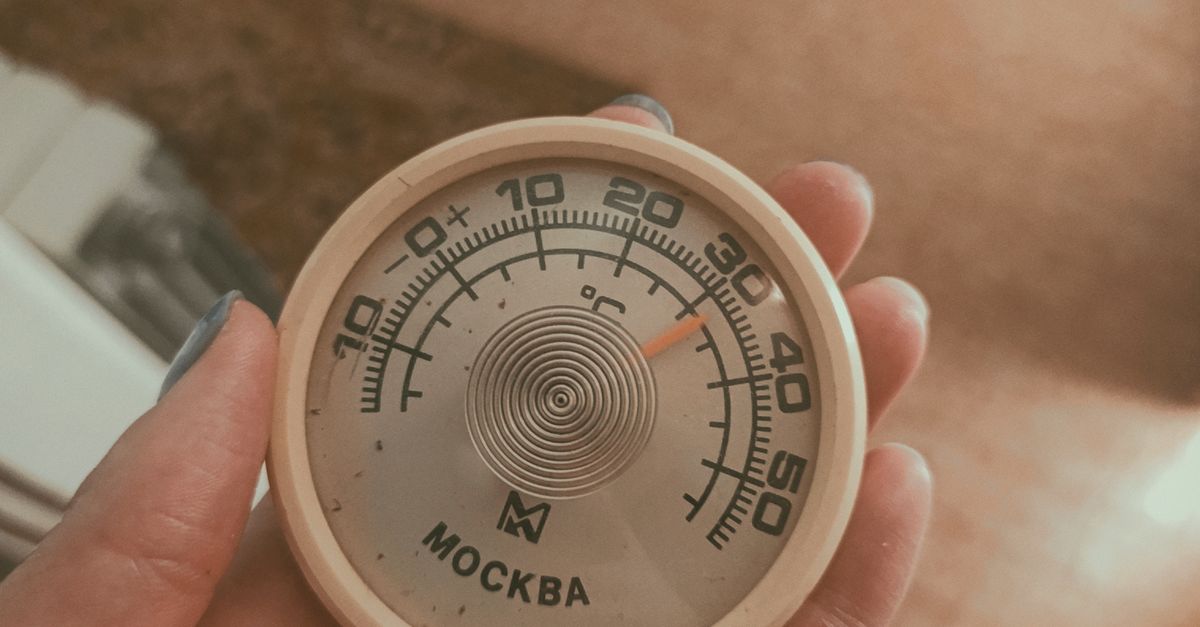
The bulb-first rule that allows an empty thermometer
The bulb-first rule is enforced by construction in the puzzle's level system, not by ad-hoc validation after the fact. Each thermometer stores a single integer level between 0 and its path length; the implementation then renders the filled portion as path.slice(0, level), which means the rendered fluid is automatically the first level cells of the thermometer starting from the bulb. When that integer is 0, the slice is empty and the path shows no fluid at all; when the integer equals the path length (2 on this 4×4 board), the slice is the full bulb-to-tip chain and the thermometer is full. The maintained rule reference on Puzzle Thermometers states this continuity property in the same bulb-first form, and the Puzzle Genius Thermometers description cross-checks the identical fill-from-bulb behavior for line-total compatibility.
Two consequences follow directly from this slice-based storage. First, the puzzle rejects any input that violates bulb-first geometry — a negative level, a level greater than the path length, or an array with the wrong number of thermometers is refused before the board ever re-renders. Second, because each cell belongs to exactly one thermometer and the eight two-cell paths partition the 4×4 grid cleanly, an empty path still claims its two cells for layout purposes; only the filled count contributed to row and column totals drops to zero. That is why empty thermometers are not a trick: they are an essential part of how a row or column with a small clue can be satisfied without leaving any cell visibly ambiguous.
The three legal states of a thermometer
Because levels are integers from 0 through the path length, and every path on this 4×4 board has length 2, every thermometer can only occupy one of three legal states. The states map directly to visual appearance, validation outcome, and score contribution.
| State | Level value | Filled cells | Visual appearance |
|---|---|---|---|
| Empty | 0 | 0 | No fluid on bulb or tip |
| Partial | 1 | 1 | Only the bulb cell filled |
| Full | 2 | 2 | Both bulb and tip filled |
The empty state is the one most players second-guess, because the rendered board looks incomplete. In reality, the level 0 state is the cheapest way to consume a path: it never contributes a row or column count, never blocks another path, and never forces a contradiction as long as the surrounding clues allow it. The partial state means the bulb is filled but the tip is not, which is the most common intermediate position during a solve. The full state completes a path end-to-end, which is the only state that contributes two filled cells to row and column totals at once.
Solving the Thermometers Puzzle in six level actions
The disclosed keyboard completion on this 4×4 board uses six Space actions and lands on a clean 940-point solve. Walk through the sequence below to reproduce it on the Thermometers Puzzle board.
- Move the selection with the arrow keys until the cursor sits on cell 1 and press Space to set that thermometer's level.
- Arrow to cell 3 and press Space to set that thermometer's level.
- Arrow to cell 6 and press Space to set that thermometer's level.
- Arrow to cell 9 and press Space to set that thermometer's level.
- Arrow to cell 11 and press Space to set that thermometer's level.
- Arrow to cell 12 and press Space to set that thermometer's level.
- Leave the seventh and eighth thermometers untouched; they will stay at level 0 (empty), which the validator accepts as long as every row and column total matches its clue.
- Verify that the row totals read 3, 2, 3, 1 from top to bottom and the column totals read 2, 2, 2, 3 from left to right. The score will display 940 once the ninth filled cell is placed.
The eight final levels in solving order are 2, 1, 0, 2, 1, 2, 1, and 0. Two of those zeros correspond to the thermometers that stay empty — those paths contribute no filled cells at all, yet they are critical for making the column clues of 2, 2, 2, 3 reachable with only nine total filled cells across the entire board. If you tried to force both of those paths full, you would overshoot three of the four row clues; if you tried to leave a different pair empty, the column total of 3 in the rightmost column would fall short.
How the row and column clues add up
The eight clues act as hard equality checks, not as bounds, so the row sums and the column sums must agree cell-by-cell with the rendered board. On the disclosed board the row clues from top to bottom are 3, 2, 3, and 1; the column clues from left to right are 2, 2, 2, and 3. Both sequences sum to 9, which is the same number as the sum of all eight thermometer levels: 2 + 1 + 0 + 2 + 1 + 2 + 1 + 0 = 9. That agreement is what the validator uses to decide that the board is complete.
| Constraint | Values (top-to-bottom or left-to-right) | Total filled cells |
|---|---|---|
| Row clues | 3, 2, 3, 1 | 9 |
| Column clues | 2, 2, 2, 3 | 9 |
| Sum of thermometer levels | 2 + 1 + 0 + 2 + 1 + 2 + 1 + 0 | 9 |
The implementation rebuilds the filled-cell Set from the declared paths and levels after every Space action. If any row's count exceeds its clue, the validator reports a row-overfill contradiction and the action still counts toward your action tally. If a row or column is underfilled, the board remains playable because another legal level increase on a path that crosses that line could still close the gap. Only when every row and column total equals its clue exactly does the score lock at the current value.
How the score is calculated
Score on this puzzle follows a transparent formula: score = max(0, 1000 − 10 × level actions). The starting score is 1,000 points, and every Space press that sets or lowers a thermometer level costs 10 points. The Enter key, used for optional empty reasoning marks, does not affect the score at all, so you can mark and unmark freely without hurting your run. The disclosed six-action keyboard completion therefore scores 1,000 − (10 × 6) = 940 points.
If you go over six actions — for example by filling a path to level 2, lowering it back to level 0, and then refilling it to level 2 — each Space press still costs 10 points, so the score drops by the full action count rather than by the net level change. The automated test suite for the puzzle proves that the full six-action keyboard simulation ends at exactly 940 points, and a clean solve that uses only six Space presses will reproduce that number every time. Your best score is saved in this browser's localStorage only, so clearing site data or switching devices will not carry the run forward.
Restarting and the boss key without losing progress
The Restart control restores all eight empty levels, clears every empty mark, resets the cursor to its starting cell, and resets the score to 1,000 — a useful option when you want to retest a deduction from scratch. Double-pressing Escape toggles a shared simulated spreadsheet cover that hides the board in case someone walks past; pressing Escape twice again restores the board with all current levels, marks, and scores intact. Because the cover is purely visual, none of your progress is lost during the boss-key detour, and you can return to the exact same state you left. This works on mouse, touch, and keyboard alike, with no hardware dependency or downloaded asset in the way.
Practical tips for spotting empty thermometers
When you start a new puzzle, scan each row and column clue and ask which clues are small enough that an empty path could pass through them. A row clue of 1 means only one filled cell in that row, so any path that crosses that row must either contribute exactly one filled cell (level 1 of 2, with the bulb in that row) or contribute zero (level 0, with the path passing through the row unfilled). On the disclosed board, the bottom row's clue of 1 forces careful placement: exactly one thermometer in that row can be partially filled, and the rest of the paths it crosses must either remain empty or fill only their bulb cell. Clues of 2 and 3 give more room but never enough that every thermometer in a line can be full.
Empty thermometers are easiest to identify by elimination: when a clue is satisfied and a path's tip cell sits in a fully counted row or column, lowering that path to level 0 is often legal and saves you one level action elsewhere. The validator will not object as long as every line still totals correctly, so an empty thermometer is not just a permitted state — it is often the cheapest way to honor a tight row or column constraint on a compact 4×4 grid.
For a deeper look, see Can You Play Water Sort Puzzle Without Downloading? Yes.
For a deeper look, see Block Stacking Puzzle Rules: What Every Placement Must Satisfy.