Meaningful sentences are remembered far more accurately than random word lists, and the meaningful vs random word recall contrast is one of the most replicated findings in verbal learning research. When each target word sits inside a coherent English sentence with a real subject, verb, and object, the recall task becomes meaningful recall rather than letter memorization, and the reader can lean on grammar, semantics, and word order as retrieval cues. A pure random word list strips grammar, semantics, and word order out of the stimulus, leaving the learner with something close to a nonsense-syllable challenge, and recall drops sharply. The Sentence Memory Test isolates the meaningful side of that contrast: it shows one complete English sentence for six visible seconds, hides it, and asks you to type it back from recall, so every round is anchored to a meaningful English clause rather than a stack of unrelated tokens. That focus on meaning is the entire reason the game exists: it lets you inspect the meaningful condition on its own, with a transparent word-level diff, instead of mixing it with timing pressure or random fillers.
Because the comparison here is between two content types rather than two timing windows, this angle complements the immediate vs delayed sentence recall route covered elsewhere. You are not racing a stopwatch; you are seeing how grammatical and semantic cues change the shape of the error pattern you produce.
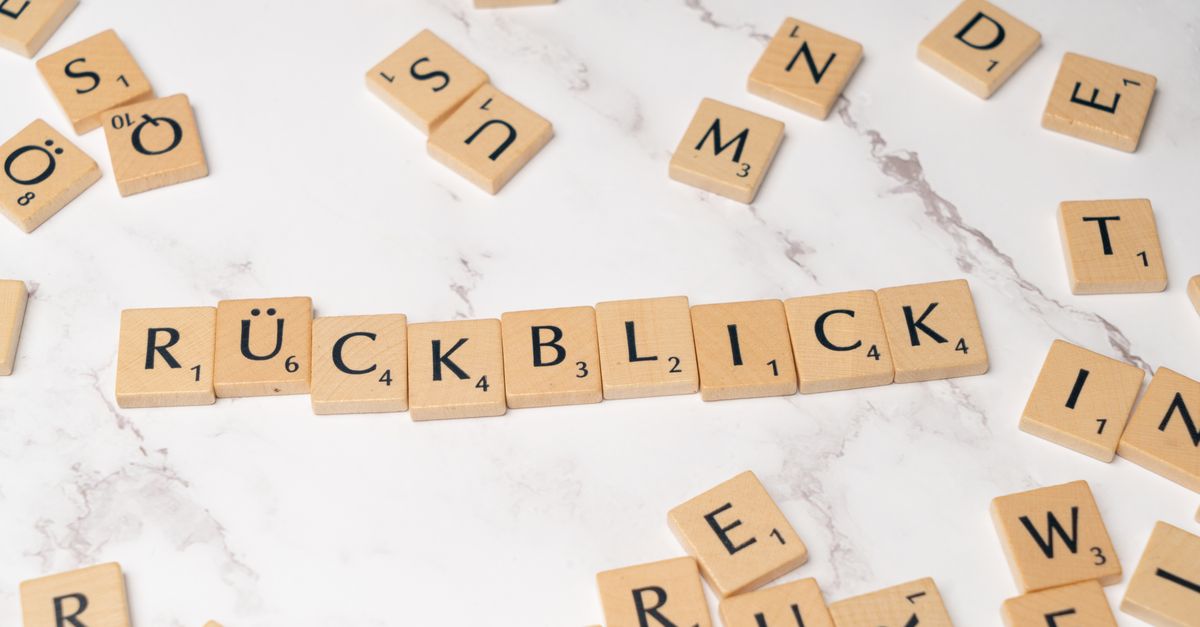
Why Meaningful Sentences Beat Random Word Lists
When a target item carries meaning, the brain can lean on at least four extra cues that a random word list does not offer: syntactic role, lexical category, collocational fit, and event plausibility. A sentence like "people arrange postcards before a trip" lets the reader predict the verb from the object, predict the object from the verb, and reject nonsense fillers that would not fit the routine being described. A random word list that reorders the same surface tokens, such as "trip arrange postcard before people," has weaker collocational fit and a less cohesive mental image, so recall accuracy drops even though the exposure time was identical.
The advantage is not subtle. Verbal learning studies have repeatedly shown that meaningful material is recalled at roughly twice the rate of nonsense material, and that the difference holds even when list length and exposure time are held constant. Three mechanisms drive the gap:
- Semantic encoding: meaningful sentences activate related concepts, so each word serves as a cue for the next.
- Chunking: words group into clauses and phrases, so the working memory load per item drops.
- Distinctiveness: a coherent story is harder to confuse with other studied material than an arbitrary word string.
That is why a sentence-level game produces cleaner, more interpretable error patterns than a free-recall word list. Each missed or substituted token can be read against the sentence's grammar instead of against an opaque string, which makes the meaningful vs random word recall contrast visible at the token level rather than hidden inside a single score.
How Sentence Memory Test Frames the Meaningful vs Random Recall Contrast
The Sentence Memory Test (eight audited English sentences with visible-time safeguards) is built so the meaningful side of the contrast is preserved in every round. Each of the eight targets is a complete original English sentence about a concrete everyday routine. Targets include people following a guide, arranging postcards, stacking boxes, mailing a parcel, renting bicycles, faxing a form, chopping carrots, and enjoying a concert. None of these are random word lists, and none are borrowed from a corpus, so the meaningful content is authored rather than sampled.
The tool never asks you to remember a randomized token list, so the random word recall side of the comparison is not part of this particular game. If you want that contrast in practice, you can run the sentence game first, then try any free word list recall activity on the web and compare the error counts by hand. The point of Sentence Memory Test is to give you a clean, reproducible meaningful condition with eight fixed targets and transparent word-level feedback, so the meaningful condition can be inspected on its own terms and contrasted with whatever random word recall route you choose to add.
Play One Round of Meaningful Recall in Eight Sentences
Each round follows the same reveal-hide-type-compare cycle, and the eight targets are fixed for the entire run. To play the meaningful recall route:
- Start a round and study the complete target during its six visible seconds, or press Hide as soon as you have seen enough.
- Type the sentence from recall into the text area and submit it for a word-level comparison.
- If the comparison is a perfect match, advance to the next target exactly once.
- If the comparison is a mismatch, inspect the word-level diff that lists matched, substituted, inserted, and missing tokens.
- Press Continue to reveal the same target again with a fresh visible token, retype, and resubmit.
- Repeat the reveal-retype loop until the same target matches, then move on.
- Work through all eight fixed targets in order and read the summary at the end.
- Use Restart to repeat the fixed eight-sentence route from scratch whenever you want another run.
Entry into a round is untimed, so typing speed never affects the score. Only what you remember, not how fast you type it, changes the result.
Reading the Word-Level Edit Feedback
After a mismatch, the tool shows a minimal token alignment rather than a single correct-versus-incorrect verdict. The alignment is computed with a dynamic-programming edit procedure that finds the smallest combined count of matches, substitutions, insertions, and deletions needed to turn your typed string into the target. That alignment matters because one omitted word should not make every later word appear wrong, and a repeated word has to stay aligned consistently across the sentence.
Before the alignment runs, your input and the target go through a narrow normalization pass in a fixed order. The order is: Unicode NFKC compatibility normalization, then lowercasing, then outer whitespace trimming, then collapsing repeated internal ASCII whitespace into single spaces, then ignoring one final period, question mark, or exclamation mark. The tool does not reorder words, does not silently delete interior punctuation, and does not substitute a synonym for a word you almost got. That narrow policy is what makes the diff interpretable: when the alignment says a token is missing, the token really is missing in your typed string.
| Edit type | What the diff shows | What it means for your recall |
|---|---|---|
| Match | Token printed in the matched slot | That word survived the study window and was typed correctly. |
| Substitution | Your token shown next to the target token | You remembered a word but produced a different one in that slot. |
| Insertion | Extra token in your typed string | You added a word the target did not contain. |
| Deletion | Target token with no partner | You missed that word entirely. |
Because the alignment is minimal, the labels above describe exactly what the dynamic-programming pass produced, not an approximate paraphrase. That is what lets you read the meaningful vs random word recall contrast at the token level: a meaningful condition with grammar cues shows clustering near matches, while a random word list would scatter substitutions and deletions across the whole sequence.
What Points, Errors, and Token Edits Tell You
The summary screen reports four numbers: completed sentences, total mismatches, cumulative token edits, and points from the fixed route. Points start at 800, and a mismatched submission adds one error and costs up to 25 points, never below zero. A perfect match advances exactly once and does not subtract. Continue reveals the same sentence again with a fresh visible token, so a mismatch does not push you to a new target.
None of these numbers measure working memory capacity, intelligence, or language ability. The eight sentences are not normed, and the route has no norm group, so a 750-point finish in round one and a 750-point finish in round ten describe the same entertainment outcome, not two different cognitive profiles. Familiarity makes the repeated route easier across plays, which is itself a meaningful recall effect worth noticing.
| Summary field | Range or starting value | Direction of change on a mismatch |
|---|---|---|
| Completed sentences | 0 to 8 | Increases only on a perfect match. |
| Total mismatches | Counts submissions, not rounds | Increases by one for every mismatched submission. |
| Cumulative token edits | Sums substitutions, insertions, deletions across all mismatches | Increases by the edit count of the latest alignment. |
| Points | Starts at 800, never below 0 | Drops by up to 25 per mismatch. |
Notice that points move only on a mismatch, not on typing speed. That separation is deliberate: the meaningful vs random word recall comparison should not be contaminated by reaction-time noise from the typing step.
Visibility Safeguards That Keep Each Round Honest
The six-second reveal window is guarded in two directions. First, the deadline is a monotonic browser time, not a timer callback that can drift or fire late, so the visible window ends at the documented instant. Second, if the document becomes hidden during the study phase, the round pauses and preserves only the remaining visible time. Opening the shared boss screen is detected at the document boundary and pauses the same way. After either pause, Resume creates a fresh deadline when the page becomes visible again, so hidden time never counts as extra viewing time.
Held keys, duplicate clicks, old-round events, and input after completion cannot mutate the game. A backward timestamp, a stale timeout, or an old interaction token is rejected. Only the system pause may preserve remaining visible time, so the meaningful recall window is the same length for a focused player and for a player who glances away once. That is what makes the meaningful vs random word recall contrast visible at the diff level rather than buried under unequal study time across rounds.
Where This Leaves the Meaningful vs Random Recall Question
If you want to see the meaningful condition on its own, the Sentence Memory Test is one of the cleanest browser routes available: eight fixed original English sentences, six visible seconds each, transparent word-level diff, no ability interpretation. If you want the contrasting random condition, run the eight sentences first, then try a free random word list tool of your choice and compare the per-token error rates by hand. The eight targets cover everyday actions rather than abstract nouns, so the meaningful content has the kind of event plausibility that gives meaningful recall its biggest edge over random word recall.
For readers who also want the timing side of the same idea, the immediate vs delayed sentence recall walkthrough covers how the same sentence game behaves when the gap between study and recall changes. Together the two routes sketch the full meaningful vs random word recall picture without leaving the browser.
Related reading: Sentence Scramble vs Word Scramble: Key Differences.