Matching shapes online is solved with a five-pair browser puzzle that awards exactly 200 points per correct silhouette and totals 1,000 points when all five are matched. The board contains five original SVG forms — Arch, Diamond, Hexagon, Chevron, and Capsule — rendered locally rather than imported as images, emoji, or external artwork, so every piece stays visually consistent across shuffles. Each source piece has exactly one equivalent target silhouette identified by the same shape ID, which means the puzzle has a deterministic route that can be audited by independent tests rather than relying on hidden odds. The same task is reachable through pointer drag, two-step click, and position-based keyboard input because all three input methods call one underlying reducer, so a run can be completed entirely from a phone, a desktop mouse, or a physical keyboard without learning a separate control scheme. The default starting layout places sources as Arch, Diamond, Hexagon, Chevron, Capsule and silhouettes as Hexagon, Capsule, Diamond, Arch, Chevron — a deliberate order mismatch that keeps the puzzle playable without giving the answer away at a glance. To start a run, open the Shape Matching Game, choose any source, and steer it toward its matching silhouette using whichever input method your device supports.
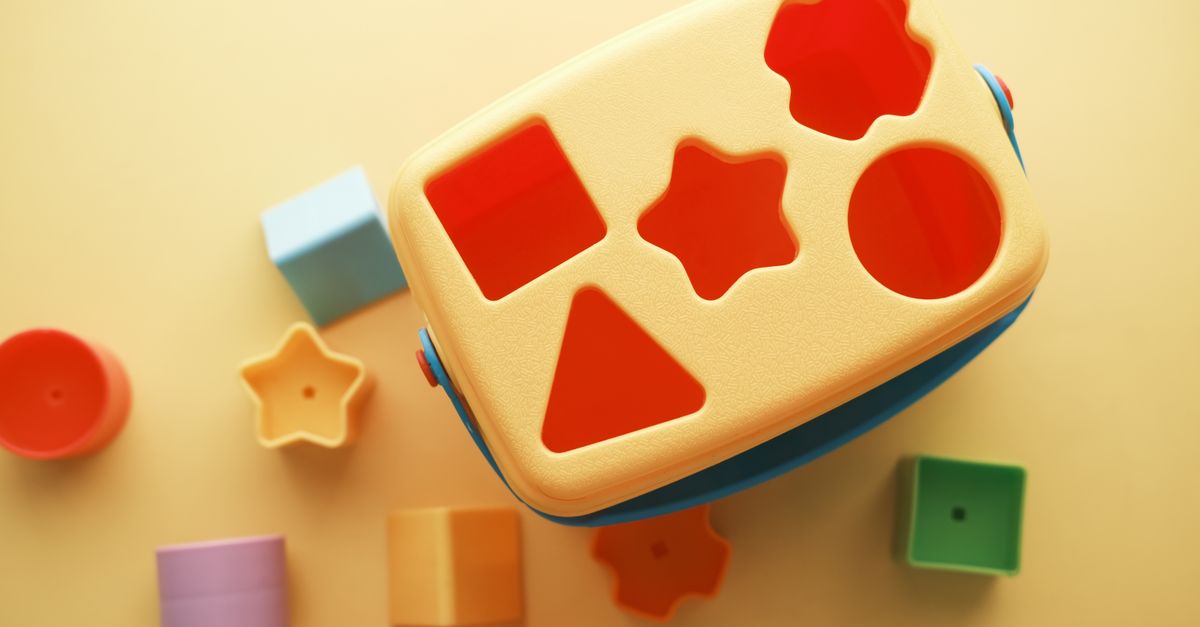
What the Shape Matching Game Board Contains
The puzzle is intentionally small: one source column, one target column, and five same-ID pairs that close out the board. Because the geometry is rendered as local SVG and CSS tokens, every shape keeps the same outline from shuffle to shuffle, so the only thing that changes between runs is the column positions. There is no imported image set, no emoji library, no model, and no external dataset feeding the board. The five pieces are abstract geometric forms — Arch, Diamond, Hexagon, Chevron, and Capsule — and they do not encode any developmental standard, cultural symbol system, or classification claim. That scope matters for the rule: each source has exactly one equivalent silhouette, and that pair is the only legal match on the board.
| Source piece | Equivalent silhouette ID | Default source position | Default silhouette position |
|---|---|---|---|
| Arch | Arch | 1 (left column, top) | 9 (right column, fourth) |
| Diamond | Diamond | 2 | 8 |
| Hexagon | Hexagon | 3 | 6 |
| Chevron | Chevron | 4 | 0 |
| Capsule | Capsule | 5 | 7 |
The position columns in the table refer to the default layout, not a rearranged board after Shuffle. The deliberate mismatch between source order (Arch, Diamond, Hexagon, Chevron, Capsule) and silhouette order (Hexagon, Capsule, Diamond, Arch, Chevron) is part of the design: it keeps the puzzle solvable while preserving a literal verification route that an external test can re-derive from the disclosed shape IDs.
How to Play Shape Matching Game
- Open the Shape Matching Game in your browser so the source column appears on the left and the silhouette column appears on the right.
- Pick one source piece using drag (press on it and release over a silhouette), click (select the piece, then select its silhouette), or keyboard keys 1 through 5 for the five source positions.
- Pick the matching silhouette by releasing the pointer over it, clicking the same-ID silhouette, or pressing 6, 7, 8, 9, or 0 for the five target positions.
- Watch the score increase by 200 and both cells become unavailable; the current selection clears automatically so the next pair starts from a neutral state.
- Repeat for the remaining four pairs until the score reads exactly 1,000 and the board is empty.
Drag, Click, and Keyboard Routes Share One Rule
Three input methods converge on the same reducer, which is why the game does not need separate logic for mouse, touch, and keyboard players. Pointer users press a source and release it over a silhouette. The interaction uses pointer events and a target hit test rather than HTML5 drag-and-drop, so touch and mouse share the same logic and there is no desktop-only dependency to work around on a phone or tablet. Click users follow a two-step flow: choose a piece first, then choose its silhouette. Keyboard users can press 1 through 5 to select any of the five visible source positions and 6, 7, 8, 9, or 0 to select any of the five visible target positions, in the order the columns are currently laid out after any shuffles.
Because the same rule backs all three routes, the game cannot drift between input methods. A pair that scores 200 points with drag will score 200 points with click or keyboard, and the same atomic no-ops apply across every route: unknown IDs, already matched sources, already matched silhouettes, and reselecting the current piece cannot change score, matched count, or error count. That consistency is what lets a single audit describe the puzzle's behavior without having to reason about which input method produced each step.
Scoring, Mistakes, and Terminal States
A successful pair awards 200 points, removes that pair from further play, and clears the current selection. Five successful pairs therefore total exactly 1,000 points. Wrong matches are handled with a single recoverable mistake rule: a source paired with a different target counts as one mistake. The source-target signature is stored, so repeating that identical wrong pair is a strict no-op and the second click on the same wrong pair does not add another mistake. A second distinct wrong target — meaning a different source-to-target combination than the first — closes the layout and ends the run.
| Event | Effect on score | Effect on matched count | Effect on error count or run state |
|---|---|---|---|
| Correct same-ID pair | +200 | +1 | Unchanged |
| First distinct wrong pair | Unchanged | Unchanged | +1 recoverable mistake |
| Repeat of the same wrong pair | Unchanged | Unchanged | Unchanged (no-op) |
| Second distinct wrong pair | Unchanged | Unchanged | Run ends (deadlock) |
| Atomic no-op (unknown ID, matched item, reselect) | Unchanged | Unchanged | Unchanged |
| Fifth correct pair | Final total 1,000 | 5 | Board enters terminal state |
When the board is finished — either by completing all five pairs or by triggering a deadlock on a second distinct wrong target — sources, targets, and shuffle all disable. Reducer guards preserve that terminal state even if an action is invoked programmatically, so a completed or deadlocked board cannot be silently rewound by stray clicks, key presses, or queued events.
Shuffle, Restart, and Reproducibility
Shuffle is an explicit user action. It applies a pure seeded Fisher-Yates permutation to both columns, with an injectable random source that keeps the result deterministic for any chosen seed. It never triggers implicitly during render or as a side effect of an interaction; if you want a fresh permutation, you have to ask for it. The shuffle changes positions only — never pair identities and never scoring — so the underlying same-ID mapping stays intact from one shuffle to the next.
Independent tests audit eight seeds for exact reproducibility, confirming each layout still contains five unique source IDs, five unique target IDs, and a complete route to 1,000. The default layout ID stays visible so you always know which starting position you are working from, and the same audit logic proves that any reachable permutation of those IDs still terminates. Restart restores the current layout with no pairs, no selection, no score, and no mistakes — it does not run Shuffle. To generate a fresh unplayed layout, choose Shuffle instead.
Accessibility, Controls, and Local Processing
Every interaction in the Shape Matching Game runs locally in the browser. There is no account, no upload, no camera access, no personal image, no API call, no AI classification step, and no new runtime dependency added for this game. The pieces are abstract and do not represent any specific child-development, vision, motor, education, employment, or cognitive assessment. The score records only the completion state of the disclosed five pairs, and the best score is stored locally on the device rather than synced to a server.
The shared game shell supplies Restart, best-score storage, status, on-screen keyboard guidance, and a Boss Key that can be activated any time during play. Touch players can rely on the pointer-driven hit test, keyboard players can complete the run using only 1 through 5 and 6 through 0, and click players can use the two-step flow on any device that supports a pointer. If you enjoy deterministic single-page puzzles built around one-to-one piece-to-silhouette logic, the Shape Matching Game pairs naturally with the Shadow Matching Game, where the same one-piece-to-one-silhouette mapping applies across five different original objects and an audited 1,000-point finish.
If you're weighing options, Angle Launch Physics Game: Hit 5 Targets for 1,000 Points covers this in detail.
If you're weighing options, 3D Memory Game: Track One Point Across Five Rounds covers this in detail.