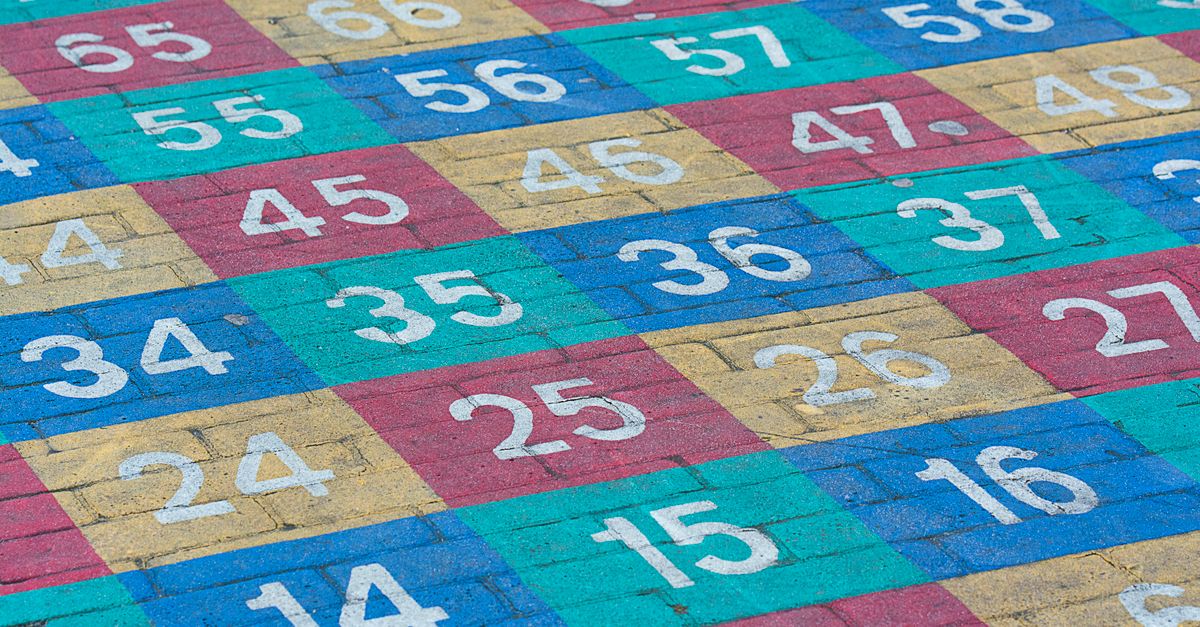
A strict find the numbers game asks players to locate hidden digits in ascending order from 1 upward. The Hidden Numbers Game is a browser-based take on that format with five original Canvas scenes, audited pointer hits, a progressive keyboard scanner, and an exact maximum score of 1,000. Every board is drawn locally from lines, rectangles, ellipses, and circles, with no external artwork, no copied illustration, and no puzzle-book scene reused. Each scene holds a fixed set of numbers in unique cells of a five-column by four-row logical grid, and a board clears only after its entire sequence is found in order. Because spotting a later number first does not bypass the required next step, the puzzle rewards patience over racing. The game runs entirely in the browser, requires no account, never downloads an image, and never uploads player data, so the entire five-board route can be completed once the page is loaded. Try the Hidden Numbers Game to do this in your browser.
What "Find the Numbers Game" Means in This Browser Version
The phrase "find the numbers game" covers a broad genre where players locate digits hidden inside illustrations or photographs. The Hidden Numbers Game narrows that genre to a fixed, sequential version: every visible digit belongs to a published sequence, and the only value accepted at any moment is the next number in that sequence. A scene never accepts a later number just because the player happened to spot it first, and the "Find next" panel always names the single value the board will currently accept. This single rule is the core of the puzzle and the reason boards feel disciplined rather than scattered.
Underneath the search surface, the game is built as a deterministic puzzle. The five boards are fixed fixtures, and each number occupies one fixed cell in a five-by-four logical scan grid. The production fixture stores an opaque word ID, the visible value, and the cell, and the IDs are scrambled rather than arranged as 1, 2, 3, and so on. Because the only playable order comes from the numbers painted on the scene and the instruction to proceed upward from 1, no shortcut inside the file exposes the answer sequence.
The Five Original Boards From 1 to 8
The Hidden Numbers Game ships with five authored boards that progress from a small count to a denser grid. The progression is intentional: each scene adds visible numbers and tightens the layout, so the search grows more demanding without changing the underlying rule. The five scenes are Transit Blueprint, Archive Shelves, Garden Survey, Signal Console, and Machine Room.
| Board | Setting | Range searched | Visual style |
|---|---|---|---|
| Transit Blueprint | Route lines around junctions | 1 to 4 | Abstract geometric routes |
| Archive Shelves | Labeled-looking bays | 1 to 5 | Panel divided into shelf rows |
| Garden Survey | Paths and oval beds | 1 to 6 | Curved garden geometry |
| Signal Console | Rails, dials, bars | 1 to 7 | Signal control shapes |
| Machine Room | Gauges and channels | 1 to 8 | Denser gauge grid |
Every board shares the same input model and the same strict order rule. The only thing that changes is the count of numbers and the visual setting, so once a player learns the format, the rest of the run is a matter of careful searching across denser scenes. If you want to confirm that none of these scenes borrow from a published find-the-numbers illustration, see our guide on whether Hidden Numbers Game scenes are copied from a book.
How to Play the Find the Numbers Game
The full run is short enough to learn in a single sitting. The trick is to read the "Find next" panel before every tap, because the panel always names the only number the board will currently accept.
- Open the first scene and read the "Find next" panel. It will display 1 as the only value currently accepted.
- Scan the scene visually and tap the digit 1, or focus the keyboard scanner and walk its five-by-four grid with the Arrow keys until it sits on the cell holding 1. Press Enter or Space to confirm.
- Watch the panel advance. It now shows 2, the only number the board will accept next. Repeat the same tap or keyboard selection.
- Keep stepping forward in strict ascending order. The board will not accept a later number spotted early, so resist the urge to "bank" an easy find for a future round.
- Clear the full sequence for the scene to bank 200 points and unlock the next board. Continue until all five scenes are complete.
- Finish all five boards to record the exact maximum score of 1,000. Restart returns the game to its exact opening state if you want to run it again.
The full five-board route is the only path to the maximum score. Because score does not depend on speed, browser timing, device performance, pointer precision, or input method, you can pause between searches, use browser zoom, or move through the grid slowly without losing points.
Touch Targets and the Keyboard Scanner
Pointer and touch input are built around audited Canvas geometry. Every press is converted from the displayed canvas size into the fixed 360-by-240 logical coordinate system, and the game then finds the nearest unfinished number within a 26-pixel logical radius, which gives a 52-pixel logical hit diameter. That diameter is designed to stay practical when the board scales down on a phone, so mobile taps remain forgiving without making the puzzle trivial. Empty space and an out-of-sequence number use the same deterministic error system as keyboard selections, so a stray tap costs the same as a wrong Arrow-key choice.
Keyboard play works through one real focus target rather than twenty hidden answer buttons. Arrow keys move a visible scanner outline through the five-by-four grid, and Enter or Space checks the current cell. The scanner's accessible label describes only the current row and column, whether the cell contains a visible number, and which number is required next, and it does not publish the full coordinate list. This design keeps the entire game operable without a pointer while avoiding a hidden DOM map of every answer.
| Input method | How a selection is made | What the player sees | Accessibility note |
|---|---|---|---|
| Mouse or touch tap | Tap a visible number; nearest unfinished mark within 26-pixel radius is accepted | The Canvas scene with painted digits | Hits are audited through the same selection function as keyboard picks |
| Keyboard scanner | Arrow keys move the cursor; Enter or Space selects the current cell | A visible scanner outline on a 5x4 grid | Label names the row, column, whether a number is present, and the next required value |
| Screen reader | Operates through the single scanner focus target | Audible cell description on focus | No hidden DOM map of all number positions |
The visual board is one Canvas element marked hidden from assistive technology because the scanner supplies the equivalent interactive description. Individual numbers are not separate DOM nodes, and there are no answer-bearing element IDs, per-number test IDs, coordinate data attributes, CSS classes named after correct values, or hidden solution lists. The Canvas pixels necessarily show the same scene that a sighted player searches, while the scanner provides progressive keyboard access instead of exposing every answer at once.
Scoring, Mistakes, and the 1,000-Point Finish
Each cleared board awards exactly 200 points, and completing all five fixed sequences gives the exact maximum score of 1,000. The scoring formula is simple: 200 points for every cleared board, with no time bonus, no reaction bonus, and no precision bonus. The game is explicitly untimed, so the score is a measure of completeness, not speed.
The mistake system is also deliberately forgiving. A failure is identified by combining the current scene with the selected logical cell, or with the quantized cell that contains an empty pointer press. Repeating the same unchanged wrong choice does not add another miss. A second distinct wrong location, however, closes the run. Correct scene completion clears any prior failure history before the next board loads, so a clean board always starts fresh.
When the run completes or hits a deadlock, pointer input, keyboard input, scoring, and scene transitions all freeze until Restart restores the exact opening state. Restart equality is part of the verified product contract, which means the same five-board route can be repeated with identical expectations every time you press the button.
What This Game Does Not Measure
The Hidden Numbers Game is recreational entertainment. It does not measure eyesight, visual attention, reaction time, concentration, cognition, intelligence, school readiness, workplace performance, neurological function, or any medical condition. The five authored boards have no external norms, no clinical calibration, no educational grading, no random difficulty model, and no meaning beyond this fixed puzzle. Treating the score as a personal ability score would read more into the fixture than it actually contains.
If you want a number-search routine that rewards careful scanning in strict order, the find the numbers game at Hidden Numbers Game offers five original scenes, two equivalent input methods, and a clean 1,000-point target that does not move no matter how slowly you play.