Collocation dictionaries and regular dictionaries answer two different questions about the same English word. A regular dictionary tells you what a word means, how it is spelled, and which part of speech it belongs to; a collocation dictionary tells you which other words native speakers typically pair that word with. Where a regular entry for "attention" ends with a definition and a few example sentences, a collocation entry lists the verbs, nouns, and adjectives that "attention" reliably shows up beside, such as "pay attention," "draw attention," or "catch attention." That difference is why the comparison "collocation dictionary vs regular dictionary" is not really a contest: each tool solves a different problem, and readers who only own one are missing half of how English actually works. Collocation Match is a browser game that rehearses the pairing side of English through eight fixed rounds, and it builds on the same idea the Cambridge grammar guide describes when it calls collocation "words that are commonly used together."
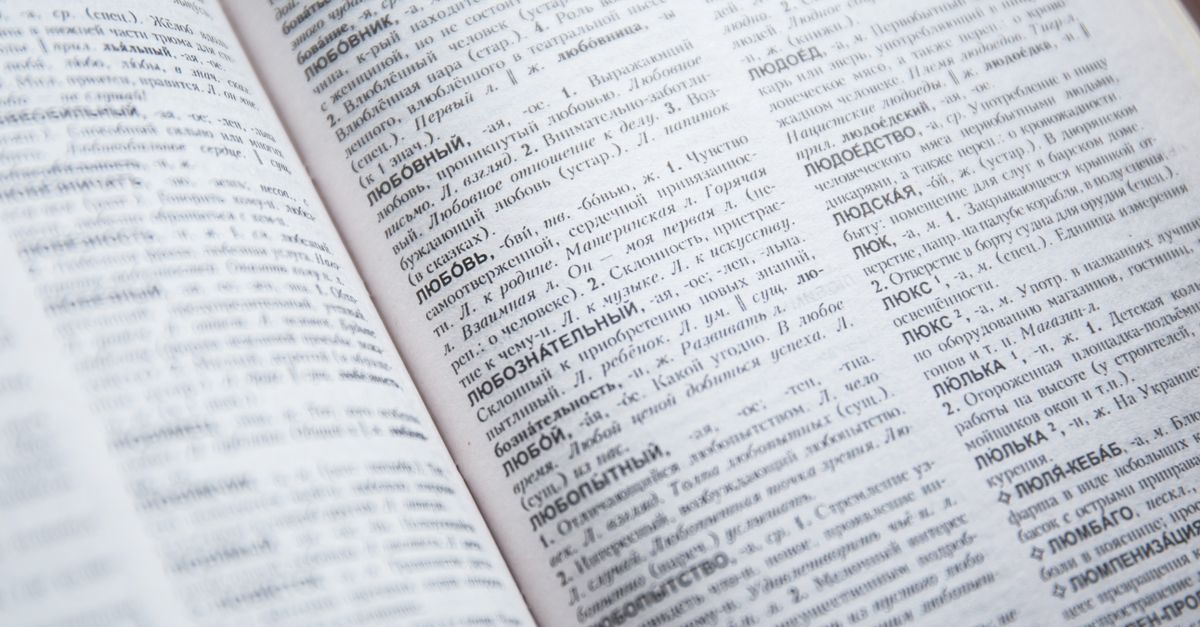
Regular Dictionary vs Collocation Dictionary: The Core Difference
The core split is the question each reference is built to answer. A regular dictionary asks "what does this word mean?" and answers with a definition, a pronunciation guide, and a few example sentences. A collocation dictionary asks "which words does this word normally appear beside?" and answers with graded lists of common partners. The Oxford collocation dictionary, for example, organizes entries by headword the way a regular dictionary does, but the bulk of each entry is a set of verb, noun, adjective, and adverb partners with usage notes. Readers coming from a regular-dictionary background sometimes expect fixed definitions inside a collocation volume and find the layout unfamiliar, because the entry is not really about the headword on its own but about the headword's working relationships in clauses.
In practice this means a regular dictionary can stand alone for spelling, meaning, and grammar. A collocation dictionary is meant to sit beside a regular dictionary rather than replace it. The two tools are complementary: the regular volume tells you what a word is, and the collocation volume tells you how the word tends to behave when native speakers put it to work. Owning only the first leaves the question of natural word combinations unanswered, which is exactly the gap that Collocation Match helps readers rehearse through a fixed eight-round route.
| Aspect | Regular Dictionary | Collocation Dictionary |
|---|---|---|
| Primary question | What does this word mean? | Which words pair naturally with this word? |
| Entry structure | Headword, definitions, examples | Headword, graded partner lists, contextual usage |
| Headword "attention" | Defines focus, concentration, special care | Lists pay attention, draw attention, catch attention |
| Output format | Definitions, glosses, etymology | Partner lists with frequency and register labels |
| Best for | Spelling, meaning, grammar | Choosing natural word combinations in sentences |
What a Collocation Dictionary Teaches That a Regular One Doesn't
A regular dictionary does a competent job with isolated words, but it rarely tells you which companions a word prefers. Native speakers say "pay heed" or "take heed," not "give heed," and a regular entry for "heed" usually stops at the bare definition. A collocation entry would list the verbs that pair with "heed" and call out which ones appear most often in modern prose. The same pattern shows up in catch a glimpse, which speakers reach for almost every time they want to talk about seeing something briefly; the regular dictionary confirms that "glimpse" means a quick look, but only a collocation resource highlights that "catch" is the verb the construction calls for.
When Collocation Match shows a complement and four verb choices, it is rehearsing exactly that pairing knowledge. The route target is the verb that forms the disclosed source-backed phrase, and the distractors are other verbs that might look possible to a learner reasoning from regular dictionary definitions alone. That is why simply knowing the meaning of each verb is not enough: the game tests which verb the construction pairs with, on the model suggested by the Cambridge grammar page on collocation, which describes the topic as words that are commonly used together.
How to Play Collocation Match in Eight Rounds
The whole tool is one fixed route, eight rounds long, with private local scoring kept in your own browser.
- Open Collocation Match and read the displayed complement along with the four numbered verb choices.
- Pick the verb that forms the disclosed source-backed target by clicking the button or pressing the matching 1, 2, 3, or 4 key.
- Finish all eight matches and read the error and point totals in the result panel that appears afterwards.
A correct choice advances exactly one round. A wrong choice adds one error and keeps the same round visible so you can try again without losing your place. Repeated key presses, clicks from earlier rounds, and inputs after completion are no-ops, so the score reflects exactly the matches you accepted in the current session. The spreadsheet-style boss screen blocks Start, answer, and Restart mutations until it is closed, which keeps an unseen key press from scoring a hidden phrase.
Inside the Eight-Round Fixed Route
The route draws every entry from Princeton WordNet 3.1 and from Cambridge phrase pages that confirm each exact pairing, and the page names all eight targets in advance through the on-screen evidence fixture.
| Shown complement | Pairing verb | Source-backed phrase |
|---|---|---|
| heed | pay | pay heed |
| a glimpse | catch | catch a glimpse |
| a breath | take | take a breath |
| sense | make | make sense |
| birth | give | give birth |
| a blank | draw | draw a blank |
| pace | keep | keep pace |
| a look | have | have a look |
Because all four answer options are verbs, the visible shape of the choice does not reveal which verb completes the intended phrase. The browser stores no phrase data of its own beyond the eight disclosed entries, and every accepted answer is locked to the round token in front of you so stale inputs cannot score hidden questions. If you would like to read Cambridge's entry for a specific phrase such as draw a blank, the dictionary page covers the standard usage and serves as a useful cross-check after a round.
Why Collocation Match Is Practice, Not a Test
Eight phrases are too narrow to support a CEFR grade, a vocabulary measurement, or any clinical reading, and the page never claims otherwise. There is no norm group, no time pressure, and no placement protocol. Points are a transparent product rule, not a score published by WordNet or Cambridge, and each error simply reduces the route total until you reach a readable final number. The shared browser shell may remember a best-points value locally, but no phrase choices, identifiers, profiles, or scores are sent to a server.
This framing matters because collocation is genuinely contextual knowledge. A small fixed puzzle can verify only the literal pairings it lists, so Collocation Match is best read as an auditable phrase-matching exercise for readers who want to rehearse the eight listed pairings. The full route is fixed and Restart repeats the same verified route, so familiarity will change performance and should never be interpreted as standardized improvement. If you are after formal language evaluation, an appropriate qualified educational service is the right next step rather than this entertainment exercise.
Limits of a Four-Choice Phrase Game
A four-choice browser game can only verify the exact pairings it lists, and the page makes that boundary explicit. The disclosed target is the answer, but a different verb may form another valid expression in a different sentence, dialect, tense, or context, and the tool never claims that every distractor is universally ungrammatical. It also stays inside its fixed table: inflected alternatives and regional variants are outside its scope, and the route cannot parse arbitrary writing. The page does not test spelling, pronunciation, free composition, fluency, or every possible collocation.
That disclosure is what separates Collocation Match from a general vocabulary quiz. Phrase knowledge is contextual, while a four-choice format can only confirm the literal route entries. Treating the puzzle as a single tour through eight verified phrases, with the result panel as a recreational summary rather than a proficiency report, keeps expectations accurate and lets the tool stay narrow enough to audit end to end. The eight phrases can support a clear match exercise but not a clinical, professional, or educational interpretation, which is why the page steers readers who need those services elsewhere.
For a deeper look, see Literal vs Idiomatic Phrasal Verbs: 8 Contexts to Test.
For a deeper look, see Semantic vs Thematic Odd One Out: A Pinned-Sense Game.