Yes — you can play the Visual Memory Test directly in your browser without downloading, installing, or signing up for anything, and the entire game runs as a single client-side page on this site.
The Visual Memory Test is built around five product-authored 4-by-4 patterns that stay fixed from one visit to the next, so every browser session starts from the same deterministic opening layout and works toward the same final 1,000-point result. There is no installer, no packaged file, no companion mobile app, no remote score service, and no account requirement. The page only needs JavaScript and a modern browser tab; the game shell, the grid, the buttons, and the reveal and hide controls are all part of the same HTML the server already delivered. Patterns never change between visits, so if you closed the tab last week and come back today, the first round marks the same offset pair of cells it marked before. This guide walks through what that browser-only experience actually contains, how the five rounds play out, which controls the page exposes for mouse, touch, and keyboard players, and which promises the page deliberately does not make about your memory, eyes, or ability.
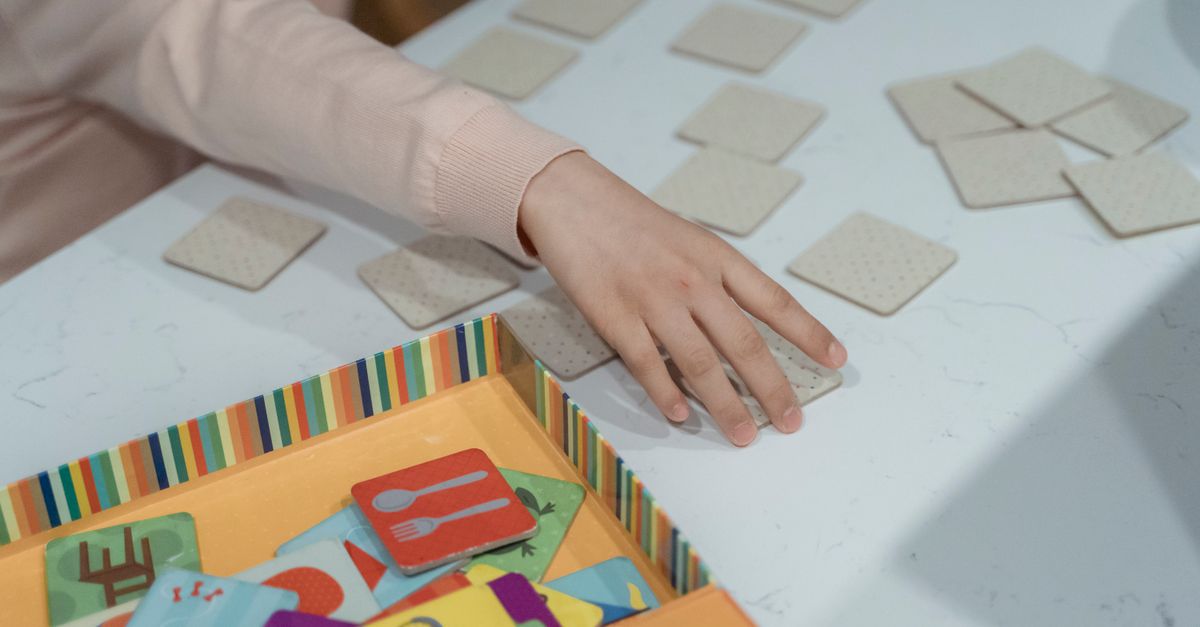
What the Browser Version Actually Contains
The "no download" promise is more than a label on the button: the page is built from the same shared GameShell, ToolButton, typography, spacing, border, focus, status, and color tokens used across the games section, and it adds no package, no remote image, no audio file, no animation loop, no server route, no account requirement, and no custom color system on top. That keeps the file small, keeps loading close to instant, and keeps the page bookmarkable as a single destination you can revisit any time you want a short recall exercise. Because the game never calls a remote question service or a paid API, your network connection only matters while the page itself is loading; once the grid is on screen, the patterns, the rules, and the scoring all run locally in your browser tab.
The five rounds are stored as fixed cell indices on a four-by-four board, in this exact order: round one marks an offset pair, round two marks a descending three-cell path, round three marks the four corner cells, round four marks an offset cross of five cells, and round five marks a stepped arrangement of six cells. That increasing workload is what defines the run — each round asks for one more recalled position than the one before it, and a successful submission on every round sets the score to exactly 1,000. Best score is saved locally through the shared game shell when browser storage is available, and nothing about your patterns, attempts, or results is uploaded, so your run never leaves the device unless you choose to share a screenshot.
How to Play Visual Memory Test Online in Your Browser
The full browser session follows a short, explicit route with the same pattern of preview, hide, recall, and submit on every round. Here is the exact sequence the page expects, with the inputs you can use at each step.
- Open the Visual Memory Test page in any modern desktop or mobile browser. You will land directly on round one with its preview pattern already visible.
- Study the marked cells in preview for as long as you want. There is no countdown; the marked cells use the site's accent treatment while empty cells remain neutral, so the target stays clearly readable.
- Choose the Hide pattern button to replace the preview with an empty four-by-four recall grid. The same row and column labels appear, and a board cursor appears if you are using a keyboard.
- Recreate the pattern by tapping cells directly, clicking them with a pointer, or moving with the Arrow keys and pressing Space or Enter to toggle the focused cell. Each selection visibly fills the cell, and selecting a filled cell again toggles it off. The Clear selection button removes every selected cell while keeping you in recall mode.
- Choose Submit recall. If the selected cell set exactly matches the round's fixed target, the score advances by 200 and the next preview appears. Order does not matter, but positions and count must match exactly. If the set does not match, the selection is cleared, preview returns, and the page notes that one final attempt remains on this round.
- Repeat steps 2 through 5 for rounds two through five. The fifth correct submission sets the final score to exactly 1,000 and the page enters a frozen completion state.
- Press the shared Restart control at any time, or after a second wrong submission deadlocks a run. Restart always returns to the same opening pattern and the same round order, so a second playthrough is auditable against the first.
Mouse, Touch, and Keyboard — All Three Work
The grid is laid out so a player never has to choose between input devices. Pointer and touch users can select any cell directly on the board; the four columns stay consistent on narrow screens; and the board scales inside its container without dropping controls. Keyboard users move a single visible cursor with the Arrow keys and toggle the focused cell with Space or Enter, so anyone who cannot use a mouse — or simply prefers not to — has the same access to all five patterns. Native button focus and activation are preserved, so on-screen readers can announce each control, and row and column labels identify each position for assistive technology rather than relying on subtle color differences alone.
Two extra shortcuts sit on top of the standard controls. The shared Restart control starts a fresh run from the same opening pattern, which is the only reliable way to clear a deadlocked state. Pressing Escape twice opens the standard boss-key spreadsheet view, which keeps the page reachable from a quick tab while you step away. The Escape combination works identically across mouse, touch, and keyboard setups, so you never have to switch devices just to leave the screen.
For players who want a complete keyboard walkthrough of the same five rounds, the companion guide Complete Pattern Recall Without a Mouse: 5 Rounds to 1,000 covers the move-by-move cursor path round by round.
Scoring, Errors, and Restart — How a 1,000-Point Run Stays Stable
The scoring rule is the smallest part of the contract and also the most explicit. Every correct submission advances the score by exactly 200 points, no matter how long preview took, no matter how many reveals you used, and no matter whether you tapped or typed your answers in. Errors do not create negative values, do not produce hidden deductions, do not apply time bonuses, and do not feed into any claim about mental performance. Completing all five rounds adds the per-round scores (200 + 200 + 200 + 200 + 200 = 1,000 points) and locks the final state, after which pattern, selection, submission, and cursor actions are all blocked so the result cannot be corrupted by stray input. That frozen end state is also what an automated browser check would assert if you wanted to verify the run yourself.
| Round | Cells Marked | Layout Description | Points Awarded |
|---|---|---|---|
| 1 | 2 | Offset pair | 200 |
| 2 | 3 | Descending path | 200 |
| 3 | 4 | Corner cells | 200 |
| 4 | 5 | Offset cross | 200 |
| 5 | 6 | Stepped arrangement | 200 |
| Total | 20 | All five complete | 1,000 |
The error rule is just as explicit. A first incorrect submission clears your selection, returns to preview of the same target, and shows a one-attempt-left notice. A second incorrect submission on the same round ends the run in a deadlock: the target is left visible, all four action types — pattern, selection, submission, and cursor — are frozen, and only the shared Restart control remains responsive. This deterministic cleanup prevents stale marks from leaking into a second attempt, and means the only ways to finish a run are a clean sweep of all five rounds or a Restart that sends you back to round one.
What the Browser Version Does Not Promise
The page uses the familiar phrase "visual memory test" to describe the activity format, but it is not a standardized cognitive, eyesight, attention, neurological, educational, or clinical assessment. It does not diagnose any condition, does not estimate intelligence, does not measure visual acuity, does not compare your score with any population, and does not convert the result into a percentile. The 1,000-point outcome only records progress through these five disclosed product fixtures, and the increasing familiarity you may feel on later sessions is an expected property of deterministic practice — the layouts never change — rather than evidence about your memory outside the game. Because hiding is manual rather than automatic, reduced-motion users and slower input devices never have to race an animation or a countdown to use the page.
For that reason, the page is best treated as a casual practice result. If you need a benchmark, an evaluation, or a comparison with anyone else, look elsewhere; the deliverable here is a transparent rule set, a frozen end state, and a fixed route you can replay any number of times without installing anything. The related games on the site cover pair matching, pattern completion, spatial shading, and path connection without turning this page into a benchmark, so you can move between them with the same browser tab and the same no-download convenience whenever you want a different casual challenge.