Your first Saturn return is the astronomical moment when transiting Saturn's apparent geocentric true ecliptic of date longitude returns to the exact zodiac degree and sign it occupied at your birth, an event that most people experience between their late twenties and early thirties because Saturn takes roughly twenty-nine and a half Earth years to orbit the Sun once. During this window, which often spans about two and a half to three years from the first station through the last exact pass, cultural astrology commonly describes a marked shift in responsibility, structure, and life direction, and the exact dates of every crossing can only be pinned down from a documented birth date, birth clock time, and the signed UTC offset for the place and day you arrived, which is precisely the workflow the Saturn Return Calculator is built to handle. The tool works entirely in your browser, locks the natal longitude first, then lists every later exact crossing of that pinned value inside the supported life window, including the multi-pass clusters that appear when Saturn stations and reverses across your natal degree.
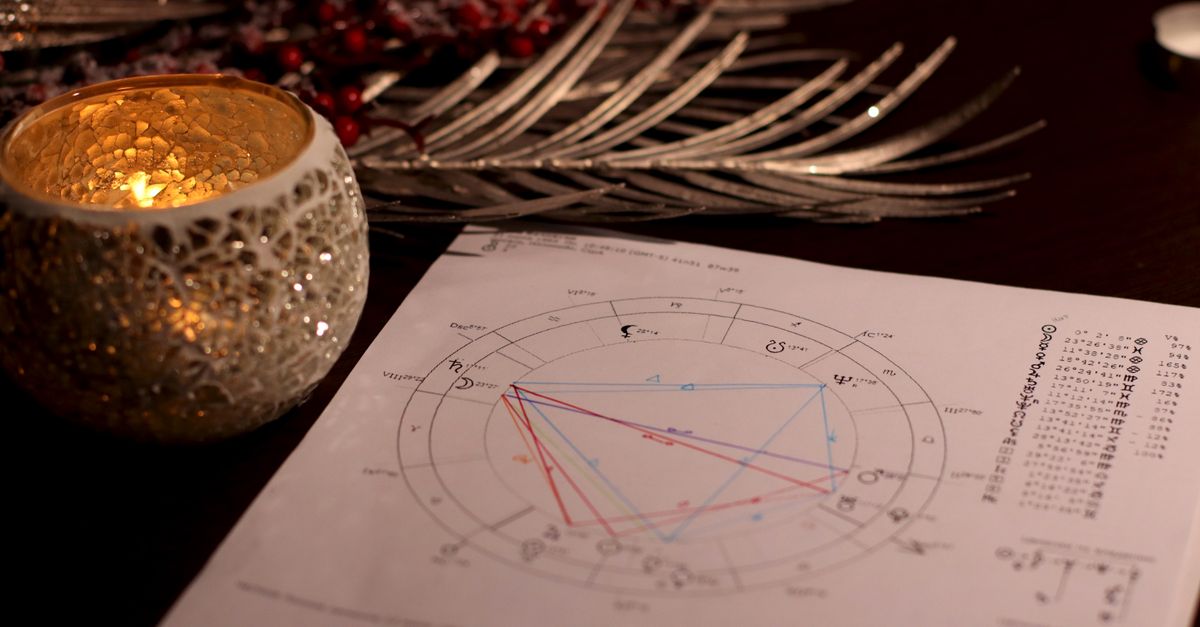
The First Saturn Return in Astronomical Terms
The geocentric framing matters here: the longitude is measured from Earth's center rather than from your birthplace on the surface, which is why the tool does not ask for a city, a latitude, or a longitude. What it locks first is a single number, your natal Saturn longitude, computed once from your documented birth moment with the offline Astronomy Engine 2.1.19 adapter. Every later pass is then a check for when transiting Saturn's apparent geocentric true ecliptic of date matches that same number to within the dual-official tolerance used in the evidence package. Because the tropical zodiac is a Western convention that divides the ecliptic into twelve equal thirty-degree sectors starting at Aries zero, a one-degree shift near a sign boundary can change the printed label even though the underlying crossing instant barely moves, and the calculator warns within five hundredths of a degree of any boundary for exactly that reason.
| What the calculator accepts as input | What it does not compute or require |
|---|---|
| Birth date in Gregorian form | Birthplace, latitude, or longitude |
| Birth clock time | Ascendant or house cusps |
| Signed UTC offset from –12:00 through +14:00, including non-whole-hour values | Aspects to other planets or midpoints |
| Normalization into one proleptic UTC-like instant | Topocentric (surface-relative) sky position |
| Supported window: normalized UTC instants between 1700 and 2100 inclusive | Forecast of career, relationship, or health outcomes |
The expected comparison values used to verify the adapter are not generated from Astronomy Engine itself; they are produced from NASA JPL Horizons using observer quantity 31 and from the IMCCE Miriade ephemcc service running the INPOP theory, and any circular difference larger than five thousandths of a degree fails the dual-official gate before a release is considered sound.
Why "Around Age 28" Is Too Rough a Guess
Age-based heuristics are tempting because Saturn's orbital period is fixed, but they ignore two things that determine the actual dates. The first is the position of your natal Saturn on the ecliptic, which sets where on its own orbit transiting Saturn has to be before it lines up with you, and the second is the timing of Saturn's retrograde loop each year, which decides whether the planet crosses your natal degree once, twice, or three times during a single return. Two people born on the same day in different years can therefore have first returns several calendar years apart, and two people born in the same year can have first returns in different calendar months. The only way to remove that uncertainty is to feed a documented birth moment into a longitude-crossing tool rather than to estimate from age alone.
For readers who want to compare what a second return looks like against the first, the First vs Second Saturn Return: Timing and Exact Dates guide shows how the same workflow surfaces both windows from the same natal value.
Finding Your Exact First-Return Dates From a Birth Moment
The four inputs the calculator needs are designed to map one wall-clock moment onto one unambiguous instant, and each one fails the form if it cannot be parsed cleanly. The workflow is short enough to walk through before you touch the keyboard.
- Enter the birth date in the Gregorian format the form expects.
- Enter the birth clock time exactly as recorded on the document you trust.
- Enter the documented UTC offset for that place and date as a signed value from –12:00 through +14:00, including non-whole-hour offsets such as –03:30 or +05:45 where they apply.
- Search to list every exact natal-longitude crossing inside the supported window; the calculator returns each pass in chronological order, including multi-pass clusters, without uploading anything.
The offset step is the one most often guessed, and it is the one that most often moves a printed crossing by hours. A wall-clock time on its own does not identify one instant: two places on the same calendar date can share a clock reading but sit hours apart in UTC, so the form refuses to invent an offset and rejects any combination that normalizes outside 1700 through 2100. For dates before modern standard time was adopted, the value you type is a proleptic UTC-like estimate based on your own convention, and the result carries that same uncertainty, which is worth knowing before you read any single printed date as if it were exact history.
Why One Return Can Produce Three Exact Dates
Saturn slows, stops, and reverses for roughly four and a half months each year as it moves through what astronomers call its retrograde station. When the natal longitude lies inside that stationary arc, transiting Saturn can cross the same degree going direct, then back across it retrograde, then forward across it again after the second station, producing a three-pass cluster that age-based estimates flatten to a single point. The calculator is built to detect that geometry: it probes apparent longitude on a twelve-hour grid, flags residual zero crossings while explicitly rejecting antipode wraps that would otherwise look like returns, and then binary-refines each crossing to the instant the apparent longitude sits within tolerance of your natal value.
For readers who want a closer read on what each individual pass feels like in cultural practice, the What a Saturn Return Feels Like at Each Exact Pass guide walks through the three-pass shape in plain language and pairs each crossing with the themes that tend to surface around it.
What People Typically Notice Around the Exact Passes
Cultural sources written about first Saturn returns describe a familiar arc: a build-up phase in which old structures start to feel too tight, a peak that often coincides with the most exact crossing, and a settling that follows the final pass. The recurring themes in those sources include career changes, the formalizing or ending of significant relationships, decisions about where to live, and a sharper sense of which responsibilities are actually yours and which belong to someone else. The calculator does not predict any of those themes; it only confirms that an astronomical crossing happened at the printed instant. Treating the result as entertainment and cultural reference, rather than as a forecast, keeps the read honest and keeps the printed dates from being asked to carry weight the longitude cannot justify.
Knowing Where the Calculator Stops
A few limits are worth stating up front so the result is read in the right frame. The tool does not compute an Ascendant, house cusps, aspects, midpoints, or a topocentric position, because all of those depend on a place on Earth's surface rather than on Earth's center, and a place is never an input here. The tool does not fetch data from a server at runtime, does not request your location, does not open a network socket, and runs without uploading anything. The supported window is 1700 through 2100 inclusive, so results outside those normalized UTC years are rejected at the form level rather than silently estimated. The dual-official tolerance is five thousandths of a degree in longitude, which means the printed instant can drift a fraction of a degree from a different ephemeris but should not disagree by days. Everything you see is entertainment and cultural astronomy, and the right way to use it is as a precise astronomical anchor that you then read through whatever cultural lens you find meaningful.