A free online tarot reading is a structured reflection, and this tool presents three unique upright cards for Past, Present, and Future. Unlike a reading delivered by a remote reader, this version uses a reproducible browser process: you supply a non-sensitive seed, prepare the draw, and reveal each card deliberately.
For beginners, it is important to separate the mechanics of a card draw from claims about prediction. This tool genuinely selects a repeatable set of cards, but it then offers symbolic themes and conditional questions for self-reflection. A card is not presented as proof of what happened, a fixed future, or a guaranteed outcome.
Here, “free” means you can use the reading without creating an account or supplying personal information. The tool asks for no personal question, name, birth date, relationship detail, email address, or third-party reading service. Its purpose is entertainment and reflection rather than factual forecasting.
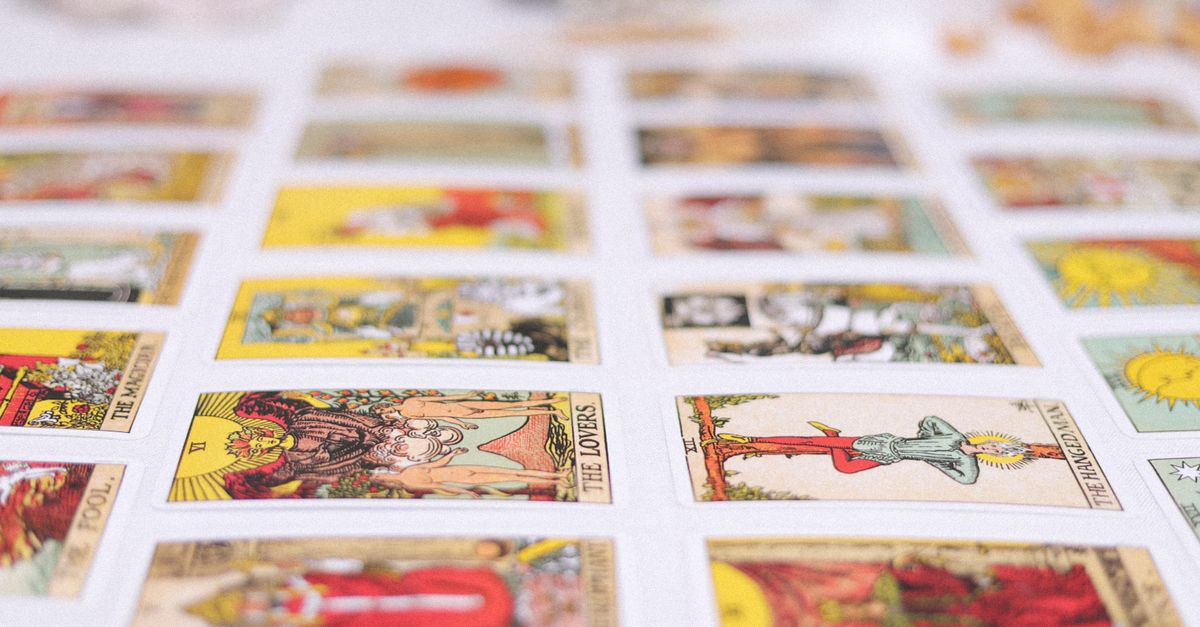
What free means in this tarot tool
Free access does not turn symbolic cards into a scientifically accurate forecast. The practical value of this version comes from its transparency: it states what it uses, how it selects the cards, what appears when you click each control, and what remains outside the page.
The complete catalogue contains 78 cards: 22 Major Arcana cards and 56 Minor Arcana cards. The Minor Arcana includes all four traditional suits—Wands, Cups, Swords, and Pentacles—with 14 cards in each suit. Every card is upright, meaning reversed versions are outside this tool’s scope. It uses text and CSS rather than loading or reproducing a commercial card image.
That distinction helps set expectations. The tool can provide a consistent prompt for examining past, present, and possible future patterns. It cannot verify that a particular card accurately describes your life, and reproducibility confirms the selection process rather than the supernatural meaning of a draw.
What the three positions ask
The Past, Present, and Future labels organize the reflection. They do not divide your life into a known timeline or turn the third card into a promised prediction.
| Position | What the prompt examines | A useful reflection question |
|---|---|---|
| Past | How the selected card’s themes shaped what came before. | Where can I recognize this theme in an earlier experience or decision? |
| Present | Where those same themes may be appearing now. | What current behavior or circumstance fits this theme? |
| Future | How the themes might develop if current patterns continue. | If this pattern persists, what would a next step look like? |
The Future prompt is deliberately conditional. It says to consider how themes might develop if current patterns continue, rather than announcing that an event will occur. That wording makes the spread more suitable for journaling, planning, and thoughtful discussion than for demanding definite answers.
How the draw stays repeatable
You can enter a short non-sensitive label, such as morning reflection, or generate a local 128-bit hexadecimal seed with Web Crypto. The seed acts as the input to the draw. It is not a secret password and should not contain information you would not want copied or shared.
Before drawing, the browser normalizes the seed. It applies Unicode NFKC normalization, removes surrounding spaces, collapses repeated Unicode whitespace into one ASCII space, and converts the result to lowercase. Compatible forms can therefore produce the same reading. For example, differences in capitalization or repeated spacing do not create an unrelated draw.
For every catalogue entry, the browser calculates a SHA-256 digest from the UTF-8 string containing tarot-v1, a NUL separator, the normalized seed, another NUL separator, and that card’s unique ID. The 78 digest byte strings are sorted in lexical order, with the canonical catalogue index breaking a digest tie. The first three ranked entries become the three cards. Since every card is ranked only once, the result contains three unique identities.
The browser performs this hashing with the Web Crypto digest operation described in MDN’s SubtleCrypto.digest documentation. SHA-256 itself is defined in NIST FIPS 180-4. These references explain the reproducibility mechanism; they do not validate supernatural interpretation.
The catalogue order is fixed: Major Arcana first, followed by Wands, Cups, Swords, and Pentacles. Each Minor suit contains Ace, Two through Ten, Page, Knight, Queen, and King. This complete structure matters because the selection process ranks every listed card rather than drawing from a shortened Major Arcana-only deck.
Prepare and read the three cards
- Open the Tarot Card Reading tool. Decide whether you want to type your own short, non-sensitive seed or generate a local 128-bit hexadecimal seed.
- Enter the seed or use the generation control, then choose Prepare reading. The browser selects the three cards and prepares them for the fixed Past, Present, and Future sequence.
- Check that all three cards are still face down. At this stage, the unrevealed card identities do not appear in the rendered page; their titles, IDs, suits, ranks, indices, and themes remain hidden until a deliberate reveal.
- Choose Reveal for the Past card. Read its position, Major Arcana or suit and rank, title, reflection sentence, and themes. Keyboard focus moves to the newly visible card so the revealed panel is immediately available to screen-reader and keyboard users.
- Continue in order, revealing Present and then Future. Each reveal advances the same fixed sequence, allowing you to pause after a card before deciding what it means to you.
- Write down the themes or questions that stand out. Copy the displayed seed if you want to reproduce the same draw later. Choose Start over when you want to clear the input, prepared seed, selected cards, reveal count, messages, and errors from the current tab.
Using the prompts as reflection
Start with the printed theme phrase rather than a story you have already decided the card must support. Each card has a concise original theme description informed by A. E. Waite’s public-domain text, but the wording in the tool is short and modern. Treat it as a lens for noticing patterns, not as a verdict.
For Past, look backward for examples that fit the theme. That might mean a recurring response, a previous decision, or the influence of something you have already recognized. For Present, focus on current evidence rather than a hoped-for outcome. For Future, ask what continuing the present pattern would mean in practice. The third card can then remain a conditional scenario instead of becoming a fixed prediction.
The tool does not accept a personal question, so it is not designed as a yes-or-no oracle. If you want to use it for structured journaling, record what you notice, what fits your actual circumstances, and what practical action follows from the reflection. If a theme feels important, look for several examples or treat it as a temporary prompt rather than a one-card conclusion.
Readers who want to extend the experience into a regular learning routine can follow the companion guide to study tarot card reading with a seeded draw. Reproducibility is particularly useful for comparing your interpretation across attempts, because the same normalized seed keeps the selected cards stable.
Privacy, limits, and browser behavior
The tool’s privacy model is unusually narrow and can be stated directly:
- One input: The only input is the reproducible seed. The tool does not ask for a personal question, identity details, birth information, relationship details, email address, or account credentials.
- Local processing: The widget makes no fetch request and uses no cookies, localStorage, sessionStorage, IndexedDB, analytics, remote images, model calls, or third-party reading services.
- Current-tab state: The seed and draw remain in the current tab. Preparing a reading stores the three selected IDs in current component memory, while Start over clears the tab’s input, prepared seed, selected IDs, reveal count, messages, and errors.
- Protected reveals: Before a card is revealed, its identity and themes do not appear in DOM text, ARIA labels, data attributes, class names, or inline styles. This prevents accidental disclosure in the rendered interface.
- Visible limitation: The protection is not a security boundary against deliberate client-side inspection. Someone who examines the client bundle or React memory may discover unrevealed information, just as they could inspect other code running in their own browser.
- Explicit failures: If secure random generation or the SHA-256 API fails, the tool displays an error rather than quietly replacing the process with a weak random fallback.
The interface uses native form controls, visible focus, and interactive targets of at least 44 pixels. The three cards stack vertically on mobile and move into three columns on a sufficiently wide screen. These features make the reveal sequence easier to navigate without changing what the tool claims.
Because the draw is not persisted, copy the displayed seed before clearing the tab if you want a reproducible record. A copied seed remains in whatever location you choose to paste it; the tool itself does not retain it after Start over.
Where the reading fits
| Use case | What this tool provides |
|---|---|
| Short self-reflection | Three themed prompts organized around Past, Present, and Future. |
| Studying card selection | A repeatable seed and documented SHA-256 ranking across the full catalogue. |
| Journaling or discussion | Conditional questions that can be answered from your own observations. |
| Predicting a specific event | Not supported; no card is presented as guaranteed or fixed by fate. |
| Medical, mental-health, legal, financial, safety, or crisis guidance | Outside the tool’s scope; use appropriate professional support instead. |
The tool is best understood as a small, verifiable reflection exercise. “Free” describes access without personal data, while the seed explains how the same three upright cards can be reproduced. The reading’s value comes from the questions you bring to those symbols—not from a claim that the browser can see the future.
If you're weighing options, Common Mistakes With Celtic Cross Tarot Spread Positions covers this in detail.