An online tarot reading for beginners can draw three unique upright cards from the full 78-card catalogue, then reveal Past, Present, and Future one at a time for self-reflection.
The Tarot Card Reading tool runs in your browser. You enter a non-sensitive seed, prepare the draw, and reveal each card yourself; it does not request a personal question, name, birth date, relationship details, email address, or account.
Use it as a structured reflection exercise rather than a forecast. The result can be reproduced, but reproducibility does not make the cards predictors of events.
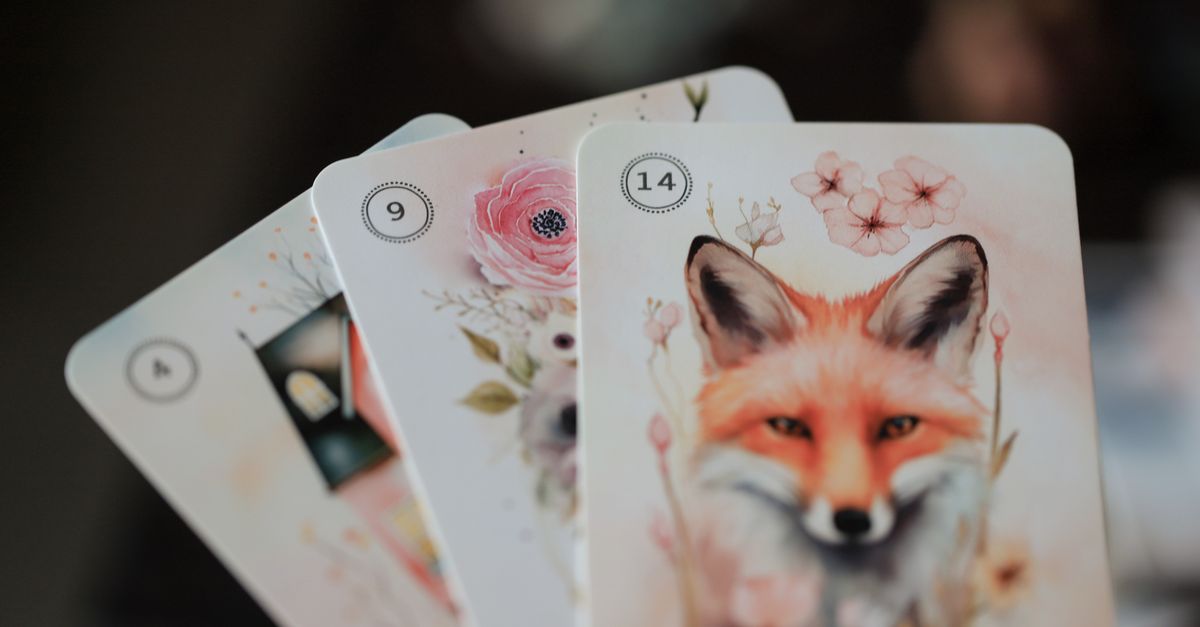
What This Beginner Tarot Reading Contains
The catalogue includes 22 Major Arcana cards and 56 Minor Arcana cards across Wands, Cups, Swords, and Pentacles. Each Minor suit contains Ace, Two through Ten, Page, Knight, Queen, and King. Every catalogue entry has a unique identity and a concise original theme phrase. The experience uses text and CSS, includes upright cards only, and does not load or reproduce commercial card art.
| Position | What the prompt asks | Beginner-friendly use |
|---|---|---|
| Past | How did this card's themes shape what came before? | Review a completed experience, earlier choice, or recurring pattern. |
| Present | Where might these themes be appearing now? | Check current behavior, circumstances, and opportunities for reflection. |
| Future | If current patterns continue, how might these themes develop? | Explore a conditional possibility rather than a promised event. |
Each card remains face down until you deliberately reveal it. Once visible, its panel identifies the position, arcana or suit and rank, card title, conditional reflection sentence, and themes.
Prepare and Reveal Your First Reading
- Open the Tarot Card Reading tool and locate the seed field. A seed can be any short, non-sensitive label that helps you identify the draw; it is not a personal question.
- Enter a seed such as first-lesson, or generate a local 128-bit hexadecimal seed. Do not include sensitive information. If secure random generation or SHA-256 processing fails, the page presents an explicit error rather than falling back to weak randomness.
- Choose Prepare reading. The browser normalizes the seed, ranks the complete catalogue, and holds the three selected IDs in current component memory while keeping every card face down.
- Choose Reveal for Past. The first card's position, details, conditional sentence, and themes appear, and keyboard focus moves to the newly visible card.
- Choose Reveal for Present and Future in that fixed order. Each card is unique and upright, so the reading combines three distinct catalogue entries rather than repeating one card.
- Copy the displayed seed before choosing Start over if you want to reproduce the draw. Start over clears the input, prepared seed, selected IDs, reveal count, messages, and errors from the current tab.
How to Interpret the Three Cards
A beginner does not need to force a dramatic answer from each card. Read the exact theme and conditional sentence displayed with the card, connect them to a concrete situation, and treat the result as a question to consider. This approach also prevents a Major Arcana theme from being mistaken for a guaranteed outcome.
Past: Find a remembered example
The Past position asks you to consider how the card's themes shaped what came before. Think of one completed situation in which the theme may have influenced a choice, reaction, or lesson. Use the wording shown by the tool rather than assuming that every tarot guide assigns identical meanings to a card.
Present: Look for current evidence
The Present position asks where the same themes may be appearing now. Examine recent decisions, habits, conversations, or circumstances that resemble the Past pattern. The card can organize your attention, but it does not prove that a particular interpretation is objectively correct.
Future: Keep the possibility conditional
The Future position uses explicitly conditional language: if current patterns continue, notice how the themes might develop. Write down what would support that continuation and identify an action you could take now. Avoid turning the prompt into “this will happen”; the position is designed to explore a possible direction, not fix the future.
Reading the positions in order creates a simple narrative: review the earlier pattern, observe its present expression, and consider how it might evolve. That structure makes the reading more useful for reflection than treating the three cards as disconnected predictions.
Why the Seed Makes the Draw Repeatable
The seed is normalized before selection. Unicode NFKC is applied, surrounding spaces are trimmed, repeated Unicode whitespace becomes one ASCII space, and the result is lowercased. Case changes and the specified whitespace variations therefore do not create a different draw, while other seed characters still affect the input.
For every catalogue ID, the browser calculates SHA-256 over a UTF-8 string made of tarot-v1, a null separator, the normalized seed, another null separator, and the card ID. It sorts the 78 digest byte strings, uses the canonical index as a tie-breaker for an practically impossible collision, and selects the first three. Because every catalogue entry is ranked once, the selected cards are unique.
The hash runs through native browser cryptographic facilities. MDN's SubtleCrypto.digest documentation describes the browser digest API, while NIST FIPS 180-4 specifies the SHA-256 standard used for the digest.
Copying the displayed seed gives you a reproducible starting point: entering it again selects the same three cards. This makes it easy to revisit a reading or compare interpretations without preserving personal notes. It demonstrates deterministic card selection, not supernatural accuracy or certainty about the future.
Limits to Know Before Reading
Several boundaries are important for anyone using this as a beginner exercise:
- The deck is upright-only, so reversed-card meanings are outside its stated scope.
- The Future card is conditional and does not announce a guaranteed, fixed, or fated event.
- The reading does not diagnose problems or replace medical, mental-health, legal, financial, safety, crisis, or other professional advice.
- The interface contains text and CSS rather than commercial tarot card images.
- The seed is the only requested input; there is no personal-question or account step.
Processing remains in the current tab. The widget makes no fetch request and does not use cookies, localStorage, sessionStorage, IndexedDB, analytics, remote images, model calls, or third-party reading services. The seed and draw are neither persisted nor transmitted.
Before a reveal, an unrevealed card's identity does not appear in rendered page text, ARIA labels, data attributes, class names, or inline styles. This prevents accidental disclosure, not deliberate client-side reverse engineering: someone who inspects the client bundle or React memory may still find the selected data.
A Simple Beginner Reflection Routine
Once the cards are visible, give each position one written paragraph. The goal is to notice patterns rather than manufacture a definitive story.
- Choose a broad subject to reflect on, such as a routine, goal, or relationship, while keeping personal details outside the tool.
- Read the card title and theme, then paraphrase the displayed prompt in your own words.
- For Past, name one remembered example that connects with the theme.
- For Present, point to current evidence that supports or complicates that theme.
- For Future, complete the sentence “If this pattern continues, I may notice…” and choose one practical action.
For more card-study practice, continue with learning tarot card reading through a three-card draw. Keep your written notes separately: the seed reproduces the cards, but the tool does not retain your personal reflections.