A seeded three-card tarot reading is a browser-based reflection that draws three unique upright cards from a complete 78-card catalogue (22 Major Arcana plus 56 Minor Arcana across Wands, Cups, Swords, and Pentacles) using native SHA-256 over a versioned string of "tarot-v1", a NUL byte, your normalized seed, another NUL byte, and each card ID, then reveals Past, Present, and Future prompts one at a time without sending your question, name, birth date, or account anywhere. The draw runs entirely on your device, the seed and result stay inside the current tab, and the same seed reproduces the same three cards because the algorithm is documented and deterministic. If you typed "how to tarot card reading reddit" because you wanted to ask a forum for a quick interpretation, this page offers a faster, more private alternative that does not require you to describe your situation to strangers or wait for replies.
Reddit is full of tarot communities where users post photos of spreads, ask for interpretations, and trade deck recommendations. That community is useful when you want discussion, but it is a poor fit when you want a single private draw, a reproducible seed you can return to later, or a reading that does not ask for personal details. The Tarot Card Reading tool exists for that second scenario: it gives you a structured Past-Present-Future prompt with a complete 78-card catalogue, upright-only orientation, conditional language, and full reproducibility from a short non-sensitive string.
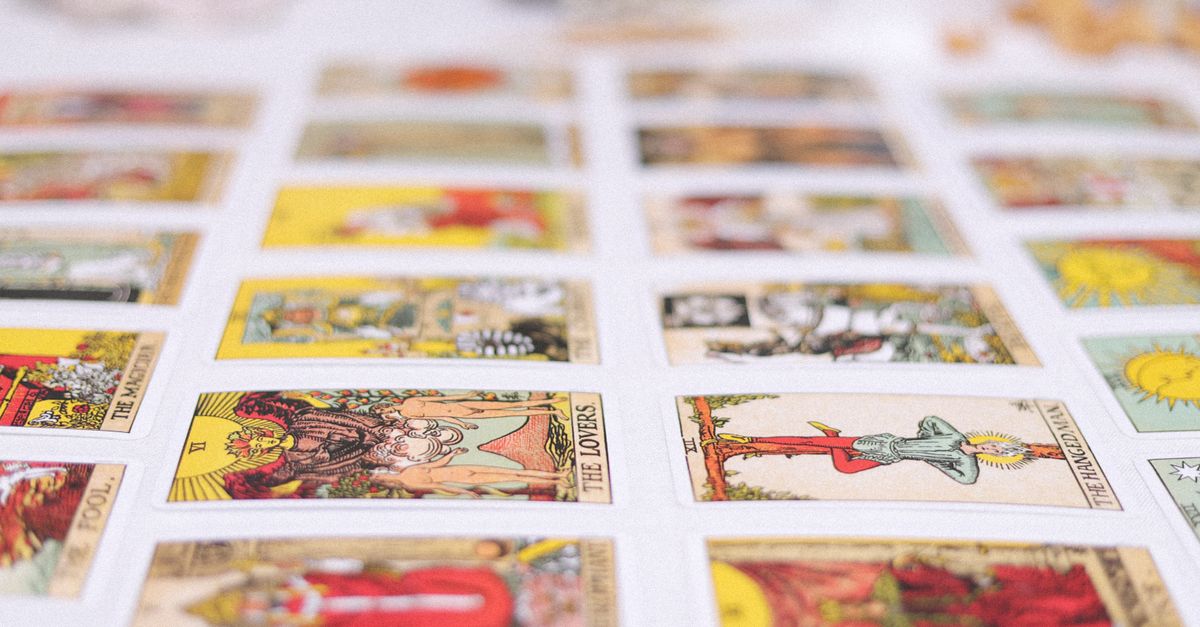
Why Reddit Searchers Often End Up at a Seeded Tool Instead
When people search "how to tarot card reading reddit", they are usually trying to solve one of three jobs. They want to know whether a posted spread looks normal, they want a stranger to interpret a hand they already drew, or they want a quick answer without committing to a deck purchase. A seeded local draw answers the third job directly and supports the first two indirectly: because the draw is reproducible from a short string, you can share that seed in a thread and ask others what they would read in the same three cards, which keeps your real situation out of the post.
The other reason a Reddit search ends here is privacy. Public tarot threads often ask the original poster to share relationship details, job titles, or specific worries so the reader can tailor the interpretation. The Tarot Card Reading tool does not ask for any of that. The only input is a reproducible seed, and the page makes no fetch request, uses no cookies, localStorage, sessionStorage, IndexedDB, analytics, remote images, model calls, or third-party reading services. The seed and draw remain in the current tab only, so you can clear them with Start over or by closing the tab.
What a Seeded Tarot Reading Actually Does
Seeding replaces randomness with determinism. Instead of relying on JavaScript's Math.random, which most browsers do not seed in a reproducible way, the tool uses native SHA-256, the same cryptographic primitive standardized in NIST FIPS 180-4 and exposed in modern browsers through the SubtleCrypto.digest API. For each of the 78 canonical cards, the browser hashes a UTF-8 string containing the literal "tarot-v1", a NUL separator, your normalized seed, another NUL separator, and the card's unique ID. It then sorts the 78 digest byte strings lexically, breaks ties with the canonical index, and selects the first three. Because every catalogue entry is ranked exactly once, the three cards are guaranteed unique.
The canonical order is Major Arcana 0 through 21, then Wands, Cups, Swords, and Pentacles. Each Minor suit contains Ace, Two through Ten, Page, Knight, Queen, and King, giving the documented four-times-14 structure that any independent full 78-card catalogue can verify. Every card carries a unique ID, a title, and a concise original theme phrase informed by A. E. Waite's public-domain text, which the page does not copy at length.
How to Run a Reading Step by Step
- Open the Tarot Card Reading tool in your browser tab.
- Decide on a short non-sensitive label, such as a hobby keyword or a phrase you can recognize later, and enter it in the seed field. The page applies Unicode NFKC normalization, trims surrounding space, collapses repeated Unicode whitespace to one ASCII space, and lowercases the result, so equivalent compatible forms produce the same draw.
- If you do not want to invent a label, click the local seed option to generate a 128-bit hexadecimal string using Web Crypto. This keeps the seed private because it never leaves your tab.
- Choose Prepare reading. The browser hashes every canonical card against your normalized seed, sorts the digests, and stores the top three IDs in current component memory. The page does not yet reveal which cards they are.
- Click Reveal for the Past position. The card's position, arcana or suit and rank, title, conditional reflection sentence, and themes appear, and keyboard focus moves to the newly visible card. Its identity was not in the DOM text, ARIA labels, data attributes, class names, or inline styles before this step.
- Click Reveal for the Present, then Reveal for the Future. The three positions are revealed in this fixed order and not in any other order.
- Copy the displayed seed if you want to reproduce the same draw later or share it in a thread, or choose Start over to clear the input, prepared seed, selected IDs, reveal count, messages, and errors.
How Seed Normalization Makes Reproducibility Work
Normalization is the rule that turns "Café", "cafe", and " CAFÉ " into the same seed. The tool applies Unicode NFKC first, which folds compatibility characters into their canonical forms, then trims surrounding whitespace, collapses runs of Unicode whitespace to a single ASCII space, and lowercases. After that, a stable seed string is fed into the SHA-256 step described above. A separate random or SHA-256 API failure produces an explicit error rather than a weak fallback, so a draw either completes deterministically or it does not run at all.
Practically, this means you can publish a seed like "monday-coffee" in a Reddit comment and any reader who pastes the same normalized form into the tool will see the same three cards on the same positions. If you want to study a single spread over several sessions, the seed removes the need to screenshot the page; you can rebuild the reading from text alone.
Reading the Three Positions
The three positions are fixed and labelled as Past, Present, and Future. Past asks you to consider how a card's themes shaped what came before. Present asks where those themes may be appearing now. Future uses explicitly conditional language: if current patterns continue, notice how the themes might develop. The page calls the whole exercise a reflection rather than a prediction and never claims an event will happen, is guaranteed, or is fixed by fate.
| Position | What it asks | Language used |
|---|---|---|
| Past | How did this card's themes shape what came before? | Reflective, open-ended |
| Present | Where might these themes be appearing now? | Observational, conditional |
| Future | If current patterns continue, how might these themes develop? | Hypothetical, "if" framing |
The cards themselves are upright only. There is no reversed orientation, no image of a card face, and no commercial artwork. Theme phrases are concise and sourced from the public-domain Pictorial Key to the Tarot rather than modern copyrighted guides.
Tarot Card Reading vs a Reddit Thread
Both routes produce three cards and an interpretation. They differ on reproducibility, privacy, and the kind of reflection each invites. The table below compares the two on the points that matter when you decide whether to post or to draw privately.
| Dimension | Reddit thread | Tarot Card Reading tool |
|---|---|---|
| Personal details shared | Often requires context for readers to respond | None; only a non-sensitive seed is collected |
| Reproducibility | Depends on a photo of the spread | Same normalized seed always yields the same three cards |
| Card catalogue | Varies by deck and reader | Complete 78 cards, Major 0-21 plus four suits of fourteen |
| Orientation | Reader's choice, often reversed allowed | Upright only, no reversed state |
| Predictive claims | Depends on the reader | None; prompts are conditional reflections only |
| Time to first card | Minutes to hours while waiting for replies | Local computation; cards appear as you click Reveal |
| Persistence | Thread is searchable and public | Seed and draw stay in the current tab only |
If you want the discussion that only a community provides, you can still post the seed you used and ask readers what they would say about the resulting three cards. The seed is enough for any reader using the same tool to reconstruct the exact spread without seeing your personal situation.
Tips for Getting the Most From a Seeded Draw
Pick a seed that is memorable but non-sensitive, such as a hobby name, a date in ISO form, or a short phrase you can type again later. Avoid seeds that contain real names, exact birth dates, account identifiers, or anything you would not want stored in a screenshot. Because the seed drives every card selection, you can also use the seed itself as a journal tag: one seed per reflection topic lets you return to the same spread later and compare how your reading has changed.
If you plan to share the draw in a thread, copy the seed first, run the reading, and reveal all three positions before you paste anything. That way the post contains only the seed and the cards, never a half-revealed layout. For privacy, prefer the locally generated 128-bit hexadecimal seed over a typed phrase: it has no meaning outside the draw and cannot be guessed by anyone reading the thread.
Finally, treat the reflection as entertainment and self-reflection, not as medical, mental-health, legal, financial, safety, crisis, or any other professional advice. The conditional prompts are designed to invite observation about patterns, not to declare outcomes. If a topic feels urgent, take the conditional wording seriously and talk to a qualified professional instead of letting a card decide the next step.
Related reading: How to Choose Celtic Cross Tarot Spread Positions.
Related reading: I Ching Reading Online for Beginners: First Cast Guide.