The moon phase soulmate test has no published accuracy, no peer-reviewed validation, and no documented basis in serious astrological practice. It is a social-media overlay that reads a single labeled birth-phase category for each person, then pairs categories into seven fixed relationship labels such as "soulmate" or "enemy." The categories are not produced from a measured outcome, are not calibrated against any reference dataset, and are not reproducible in any way that an astronomer, a statistician, or a traditional astrology school would recognize as a compatibility method. The viral trend treats the Moon phase at birth as if it were a personality trait, then assigns that trait a partner role, which is a different claim from what astronomy or astrology historically studies. If you want a defensible birth-moon phase for any purpose — trend participation, journal writing, astrology study, or simple curiosity — the right move is to compute the actual geocentric Moon-Sun ecliptic-longitude difference at the documented birth instant and read the result against the four primary phase definitions published by the United States Naval Observatory.
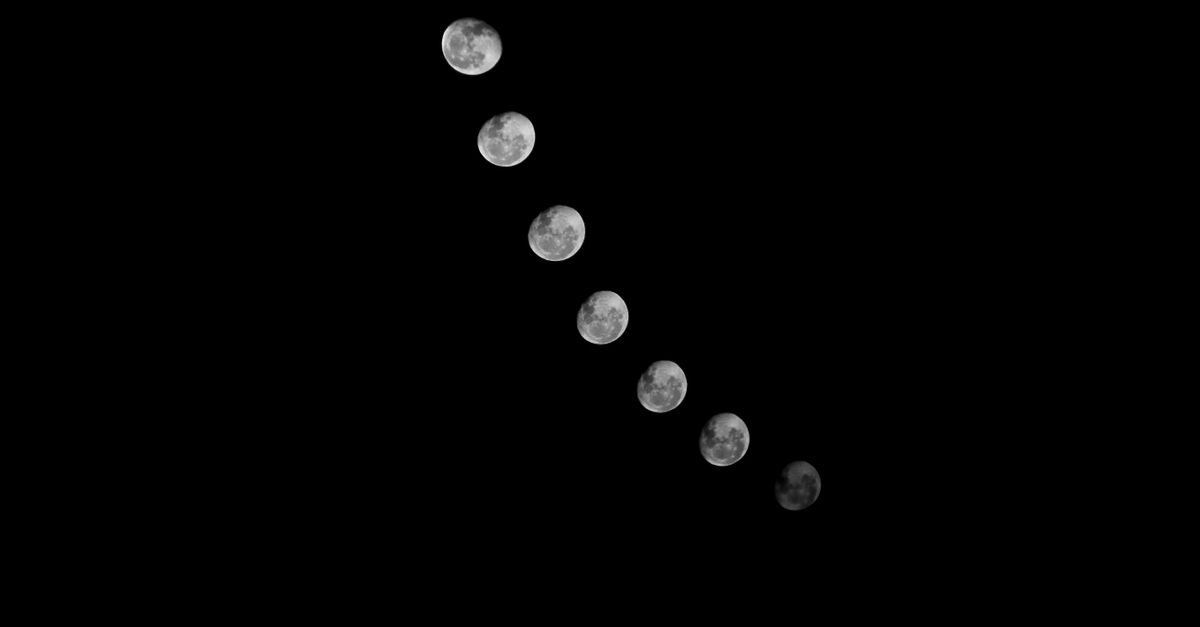
What the Viral Test Actually Compares
The trend typically asks two people to enter their birthdays, sometimes with a rough birth time, and produces a "moon phase soulmate" pairing from a short list of fixed labels. The list commonly includes seven phrases such as "soulmate," "best friend," "storm," "enemy," and similar. Each phrase is drawn from a static lookup table that maps one of eight broad moon-phase labels to a fixed relational outcome.
Three things are worth noticing about that process. First, there is no measurement of any actual relationship quality behind the lookup, so "accuracy" in the usual sense has nothing to be tested against. Second, the same two birth dates will produce the same label for every pair of people who share them, which means the output is a deterministic function of birth dates, not a personalized compatibility reading. Third, the eight-category band that drives the lookup is itself a product convention, not an astronomical category, and a different convention will give a different label even when the underlying birth instant is identical.
That last point matters because the test markets itself on the authority of "the Moon's phase at your birth," but the authority it leans on is the eight-stage display, not the four primary astronomical phases. Switching from an eight-band model to the four primary definitions published by the United States Naval Observatory can change the label a person sees.
Where the Trend Stops Matching Serious Astrology
Serious astrological practice treats the Moon as a placement that is read for temperament, instinct, and felt needs, not as a personality test that predicts who a person should date. Birth moon phase is used in some older systems, including the Hellenistic phase models that pair birth phase with the lunar mansion or with the Moon's relationship to the Sun. Those systems read the lunar phase symbolically against the Sun-Moon relationship, not against a partner's birthday, and they do not assign a soulmate verdict from a TikTok label.
A second gap is in the input. The viral test usually accepts only a birthday and sometimes an approximate birth time. A defensible reading of the Moon at birth needs the geocentric Moon-Sun angular separation at the documented birth instant, which is sensitive to the actual clock time and the offset that applied on that date. A midnight-versus-noon reading can shift the Moon across a quarter boundary in some cases, and a wrong offset can shift it across a primary phase, as explained in Does Timezone Change Birthday Moon Phase? Yes, Here's How. The Birthday Moon Phase Calculator is built around that exact problem: it resolves a supplied local birth date, clock time, and documented UTC or UTC-equivalent offset to one auditable proleptic UTC-like instant, so the input side of the comparison can be tested rather than guessed.
A third gap is interpretive. The test treats the moon phase as a personality score. The calculator, by contract, does not infer personality, compatibility, luck, fate, or life advice from a birth phase. It returns an angle, an illumination, and a label, and leaves the interpretation to the reader.
What an Accurate Birth Moon Phase Means in Astronomy
In astronomy the birth Moon phase is a number, not a label. It is the geocentric ecliptic-longitude difference between the Moon and the Sun, measured at the birth instant. Four values of that angle define the four primary phases used by the United States Naval Observatory and by NASA: 0° is the New Moon, 90° is First Quarter, 180° is Full Moon, and 270° is Last Quarter.
The illuminated fraction is also a function of that same angle. The geometric relation is:
illuminated fraction = (1 − cos(angle)) ÷ 2
For an angle of 135°, this gives (1 − cos 135°) ÷ 2 = (1 − (−0.7071)) ÷ 2 = 1.7071 ÷ 2, which is roughly 0.8536, or about 85% illuminated. That value falls between First Quarter and Full Moon, in what most astronomy summaries call a Waxing Gibbous position.
The same instant can also be placed in one of eight equal-width display bands. The Birthday Moon Phase Calculator places the New Moon band from 337.5° across 0° to 22.5°, then Waxing Crescent, First Quarter, Waxing Gibbous, Full Moon, Waning Gibbous, Last Quarter, and Waning Crescent, each occupying a disclosed 45° slice. These bands are a product display convention, not an official USNO or NASA classification, and the calculator discloses that fact rather than presenting the eight-stage names as if they were astronomical categories.
| Primary phase | Moon–Sun angle | Approximate illumination |
|---|---|---|
| New Moon | 0° | 0% |
| First Quarter | 90° | 50% |
| Full Moon | 180° | 100% |
| Last Quarter | 270° | 50% |
The table is the four-point astronomical definition. Anything you see as a finer split, including the typical eight-band breakdown, is built on top of it.
Getting a Verified Birth Moon Phase
If you want a number you can defend rather than a label to argue over, the practical path is to compute the actual geocentric Moon-Sun angle at the documented birth instant. The Birthday Moon Phase Calculator does this in three deliberate steps, each of which exists because the previous shortcut failed somewhere.
- Enter the local birth date, the clock time at the place of birth, and the documented UTC or UTC-equivalent offset that applied at that moment, then run the calculation. The offset must be entered explicitly because the browser's current offset cannot reliably reconstruct historical daylight-saving or political time-zone rules, and the calculator uses deterministic civil-time arithmetic instead of parsing a free-form date string.
- If the time is genuinely unknown, switch deliberately to the unknown-time mode and read its Phase-boundary approximation warning. That mode anchors on local noon, checks the start and end of the local day for a different broad label, and looks for any New Moon, First Quarter, Full Moon, or Last Quarter event inside the offset-defined local day. If the broad label differs at the day's endpoints, both possibilities are shown rather than noon being presented as definitive.
- Review the normalized UTC instant, the Moon-Sun angle, the illuminated fraction, the eight-stage display band, and the nearby primary events together. The result page keeps both the entered local time and the normalized calculation time visible so the conversion step is auditable.
Three input rules deserve attention before you run the calculator. The birth date, clock time, and documented UTC offset must each be valid. The normalized calculation instant must land inside the supported window of 1700 through 2100; instants outside that window are rejected before the astronomy calculation runs. Early dates, before standard time zones existed, produce a proleptic UTC-like estimate rather than a promise that modern UTC applied at the moment, and the entered convention remains visible in the result.
How the Calculation Is Validated Against USNO
Accuracy here is tested rather than asserted. The calculator pins the Astronomy Engine 2.1.19 package behind a narrow local adapter, so the geocentric phase angle, the illuminated fraction, and the surrounding 0°, 90°, 180°, and 270° primary events are all run locally. Twelve literal minute-resolution events drawn from the United States Naval Observatory service cover all four primary phases, a leap year, year rollovers, and the 1700 and 2100 boundaries. The implementation must find every one of those events within two minutes of the published USNO fixture.
That test is the closest thing to a published accuracy figure in this space. It does not say anything about relationship outcomes, soulmate prediction, or personality compatibility, because the calculator does not attempt to compute those things. It only says that the astronomical quantity it advertises — the geocentric Moon-Sun angle and the nearby primary events — agrees with the official USNO reference within a two-minute tolerance on a fixed twelve-event panel. NASA is used to cross-check the familiar phase terminology and the physical explanation, and neither official service is called when a visitor uses the page.
The same constraint explains why no birth data is uploaded. The result is computed locally, no birth input is stored, and once the page assets are loaded the result works without a network connection. A trend that asks for two birthdays and returns a soulmate label cannot make that claim, because its whole point is to compare two people and that requires at least some data movement.
Reading Your Result Without Overclaiming
The honest reading of a verified angle, illumination, and primary event list is descriptive, not predictive. It tells you where the Moon sat in its synodic cycle at the documented birth instant, what fraction of the disk was illuminated as seen from Earth's center, and which quarter or boundary the instant sat nearest. It also tells you the local time you entered, the normalized calculation time, and the offset that was used to convert between them.
That is the limit of the inference that astronomy supports. Whether that lunar position is meaningful to you is a separate question, and serious astrological schools handle it with their own symbolic frameworks rather than with a soulmate lookup. The viral test conflates the two by skipping the descriptive step and jumping to a relational label, which is why it cannot be evaluated for accuracy in the usual sense — there is no measured reference against which to test it.
If the goal is to participate in the trend with a defensible birth phase, the cleanest move is to use the calculator to get the verified angle and illumination for yourself, share the astronomical facts rather than the trend label, and let the reader decide what they mean. If the goal is to debunk the trend, the same calculator gives you the numbers a critic can quote. The astronomy does not need a soulmate verdict to be useful.