A Jupiter sign is the Western tropical zodiac sign assigned to Jupiter's apparent geocentric longitude at a specified moment, with each sign covering 30 degrees.
In traditional Western astrology, this placement is read as symbolic shorthand for the style or area of a person's growth, opportunity, confidence, generosity, learning, belief, or prosperity. Those associations belong to cultural astrology rather than scientific personality research. A reproducible answer also requires the correct recorded moment, an explicit time offset, and a clearly defined zodiac system.
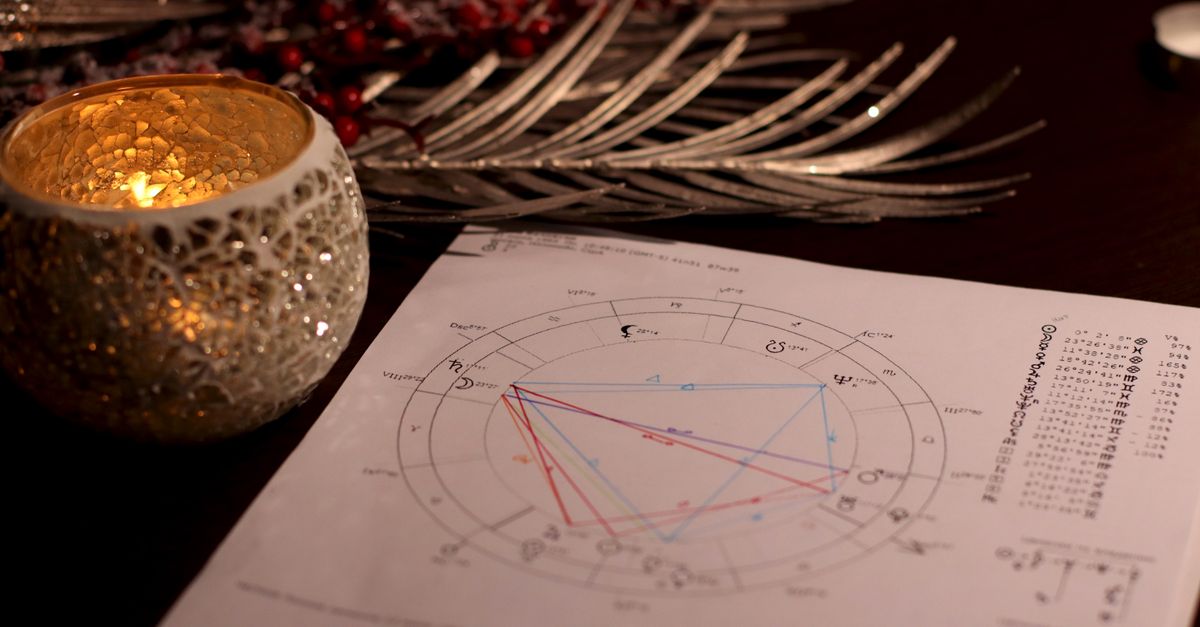
What Jupiter Sign Meaning Traditionally Covers
“Jupiter sign meaning” usually combines a cultural question with a positional question. The cultural question asks which themes astrologers associate with Jupiter in Aries, Taurus, Gemini, and the other signs. The positional question asks which sign sector contained Jupiter at the relevant moment. Keeping those layers separate makes it easier to understand the traditional symbolism without presenting it as a fact about wealth, personality, health, or future events.
In a natal chart, Jupiter's sign is only one part of a larger interpretive system. Houses describe areas of life, while aspects describe relationships between chart placements. To understand where the sign sits within that hierarchy, see Interpreting Jupiter: Sign Before Houses and Aspects. The calculator discussed here intentionally stops before houses, aspects, and returns.
The Twelve Jupiter Sign Meanings at a Glance
The Western tropical system divides a normalized longitude from 0° through less than 360° into twelve equal, half-open 30-degree sectors, beginning with Aries at 0°. These are astrological conventions, not the irregular boundaries of the astronomical constellations.
| Normalized longitude interval | Western tropical sign | Common astrological theme, not a prediction |
|---|---|---|
| 0° ≤ λ < 30° | Aries | Initiative, courage, and bold action |
| 30° ≤ λ < 60° | Taurus | Stability, material security, and tangible growth |
| 60° ≤ λ < 90° | Gemini | Learning, communication, and varied interests |
| 90° ≤ λ < 120° | Cancer | Care, emotional security, and nurturing |
| 120° ≤ λ < 150° | Leo | Creativity, confidence, generosity, and self-expression |
| 150° ≤ λ < 180° | Virgo | Refinement, practical skill, and service |
| 180° ≤ λ < 210° | Libra | Cooperation, fairness, and relationship harmony |
| 210° ≤ λ < 240° | Scorpio | Depth, transformation, power, and shared resources |
| 240° ≤ λ < 270° | Sagittarius | Exploration, belief, and wider learning |
| 270° ≤ λ < 300° | Capricorn | Discipline, responsibility, and long-term progress |
| 300° ≤ λ < 330° | Aquarius | Innovation, community, and ideals |
| 330° ≤ λ < 360° | Pisces | Compassion, imagination, and spirituality |
Read these themes as vocabulary rather than a checklist of traits. A Sagittarius label, for example, provides a cultural starting point for discussing expansion through exploration, study, or a broader worldview; it does not guarantee travel, academic success, or good fortune. The table neither ranks the signs nor assigns a luck, personality, or opportunity score.
How a Jupiter Sign Is Calculated
After the local civil fields and signed offset are validated, the calculator resolves them into one proleptic UTC-like instant. It calculates Jupiter's apparent Earth-center vector, corrects it for light-travel time and aberration, converts the result to true ecliptic longitude of date, and normalizes the angle from 0° through less than 360°. The mapping rule divides that angle into 30° sectors, with Aries designated as sector one.
The calculation is geocentric, meaning the observer position is fixed at Earth's center. That choice explains why a birthplace is unnecessary for this narrow result: the offset identifies the instant, while local houses and an Ascendant are outside the tool's scope. The calculation is also tropical rather than sidereal; it does not attempt to apply astronomical constellation boundaries.
The pinned offline implementation uses Astronomy Engine 2.1.19 source. Eight literal official cases cover 1700, 2100, and both sides of the 120°, 150°, and 180° boundaries. The implementation is required to remain within 0.005° of both NASA JPL Horizons, the primary reference for the apparent Earth-center position, and IMCCE Miriade with INPOP, which provides an independent cross-check. These reference services are validation fixtures rather than runtime dependencies. The bounded verification does not establish professional ephemeris status, second-level precision, navigation suitability, or decision-grade certainty.
Enter a Reproducible Moment
- Open the Jupiter Sign Calculator and enter the local Gregorian date and clock time shown by the source record.
- Enter the signed, documented UTC or UTC-equivalent offset for that moment. The accepted range is -12:00 through +14:00, and non-whole-hour offsets are supported. The calculator does not infer daylight-saving or political time-zone history.
- Select Calculate to view Jupiter's apparent geocentric longitude, Western tropical sector, entered fields, normalized calculation time, sector degree, and any boundary flag.
- If the result is close to a sector boundary, verify the source record and entered offset before using the cultural label. Keep the normalized instant with any saved result so the same input convention can be reproduced.
The supported resolved-instant range is 1700 through 2100 inclusive. Impossible dates, clock times, offsets, or resolved instants outside that range are rejected rather than silently corrected. Historical civil time remains a genuine limitation: before standard time zones, local mean time may not have a reliable equivalent in a modern zone offset. Results for such early entries are therefore labeled proleptic UTC-like estimates governed by the convention entered.
The distinction between the local fields and the normalized instant matters. The entered fields preserve the original civil convention, while the normalized instant shows the actual point used by the ephemeris calculation. Neither should be rounded or silently substituted before attempting to reproduce a result.
Read the Output and Boundary Warning
The calculator exposes each part of the positional answer separately, so the cultural label does not conceal the underlying calculation.
| Displayed field | What it represents |
|---|---|
| Entered fields | The original local date, clock time, and offset convention retained for display |
| Normalized calculation time | The proleptic UTC-like instant resolved from the entered fields |
| Apparent geocentric longitude | Jupiter's normalized apparent position on the true ecliptic of date |
| Western tropical sector | The disclosed 30-degree cultural zodiac label |
| Sector degree | The position within the selected 30-degree sector |
| Boundary flag | An advisory warning when the result is within 0.05° of a sector edge |
The boundary flag is informational and does not prevent the result from appearing. Near an edge, however, uncertainty in the recorded time, entered offset, or ephemeris convention can change the displayed sign. Jupiter moves more slowly than the Moon or Mercury, but an uncertain historical instant can still matter at an exact sector edge. Verify the record and offset rather than treating the label as decision guidance.
Where This Calculator Stops
This tool answers one positional question: which disclosed Western tropical sector contains Jupiter's calculated longitude at the supplied instant. It calculates no chart houses, aspects, Jupiter returns, topocentric direction, or local horizon event. A full chart may require a city to resolve time conventions and derive houses or an Ascendant; this page instead requires the documented numeric offset and deliberately omits those additions.
No location permission, coordinates, account, upload, or runtime astronomy service is involved. The calculation is performed offline, and no entered date, time, or offset is sent to the validation services. The absence of a birthplace is therefore a deliberate property of the geocentric calculation, not an incomplete input form.
The final output is a reproducible astronomical longitude with a plainly documented cultural label. It is not financial guidance, life advice, or a promise of good fortune. Astrology is not a scientific personality assessment and should not guide medical, legal, financial, safety, employment, or relationship decisions. For cultural interest and entertainment, use the sign table to understand the traditional vocabulary while keeping the calculated longitude, limitations, and boundary status in view.
For a deeper look, see Mars Sign Motivation Style: A Calculation-First Guide.