A Saturn return is an exact timestamp, not a fixed multi-year event, because it occurs when Saturn’s apparent geocentric longitude exactly matches its longitude at your birth.
Saturn takes roughly 29.5 years to orbit the Sun, so a first return is often described as happening in the late twenties and later returns are spaced by approximately the same cycle. Those age estimates provide orientation, not your exact date. Also, returning to the same zodiac sign is a looser description than an exact longitude return: a sign covers a 30-degree sector, while the calculation locks onto the precise natal longitude.
That distinction is the key to answering “how long is my Saturn return.” An exact return is one astronomical crossing. A broader astrological period, felt experience, or predicted life stage is a different concept and is not measured by this tool.
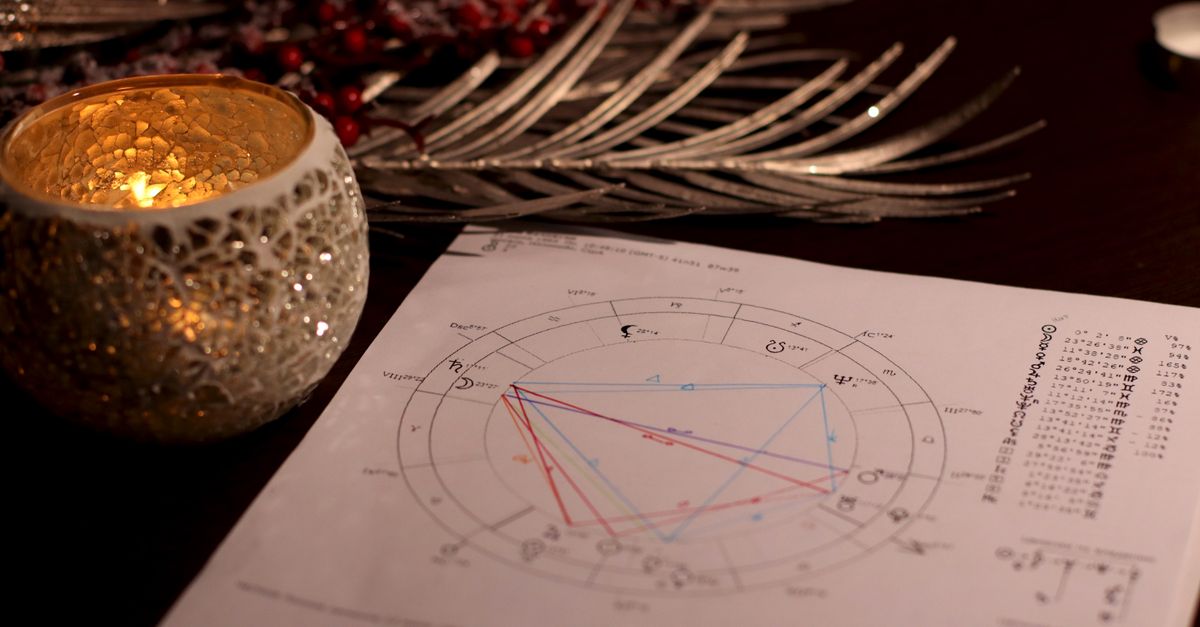
Three meanings of “how long”
The wording can refer to several different things. Some readers want to know how many years remain until the next exact crossing. Others want the interval between returns or want to understand why one return may be represented by several dates. The clearest answer comes from separating these questions before entering the birth information.
| Question | What the calculator reports | Important limit |
|---|---|---|
| How long until the first return? | The first later date on which apparent geocentric Saturn longitude equals the natal longitude. | A standard age or 29.5-year estimate is not substituted for the computed crossing. |
| How long between returns? | The sequence of later exact longitude crossings available within the supported life window. | The dates are astronomical events, not labels for life stages. |
| How long does one return last? | Each exact pass is listed as its own timestamp, including repeated retrograde passes. | No subjective start or end date is assigned to the group. |
| What is the exact event? | A single crossing instant for comparison with the natal longitude. | It supplies no house, aspect, midpoints, or topocentric interpretation. |
For a side-by-side distinction between a calculated crossing and a broader astrological window, see Saturn return exact date versus window explained.
Why one return can have several dates
Saturn’s apparent motion is not always a simple, uninterrupted trip forward. It can stop, reverse direction, and later resume its previous motion. When those changes of direction occur around the natal longitude, Saturn may cross that exact longitude more than once.
Each equality is a separate pass. A three-date result does not mean that the calculator selected one correct date and duplicated it. It means that Saturn reached the natal longitude, turned, and reached it again during the relevant motion pattern. The calculator retains every crossing instead of choosing a preferred date.
This is also why a cluster of exact dates should not automatically be converted into a claimed duration. The dates describe astronomical coincidences. Any wider period of influence is an interpretive astrological framework rather than a measured interval generated by the tool.
Find the exact passes
The Saturn Return Calculator follows a direct four-step workflow. It calculates inside the visitor’s browser without uploading the entered information or opening a runtime network socket.
- Enter the birth date. Use the Gregorian date recorded for the birth moment. The form rejects impossible dates.
- Enter the birth clock time. Supply the recorded local clock time rather than a current time or an invented approximation.
- Enter the documented UTC offset. The offset must be signed and fall between -12:00 and +14:00, inclusive. Non-whole-hour offsets are accepted.
- Search to list every exact natal-longitude crossing inside the supported life window. The result can contain one pass or a multi-pass cluster, depending on the recorded birth moment and Saturn’s motion.
The output should be read as a chronological set of exact pass timestamps. It is not an age-based list, and a three-pass cluster should not be treated as a tool-generated claim that the “real” return lasts from the first date to the last.
Get the birth instant right
A wall-clock time does not identify a unique instant without the offset that applied at that place and date. For example, a birth time recorded during daylight-saving time requires the offset actually associated with daylight time on that date, not the location’s standard-time offset.
Worked input example: a recorded clock time of 14:30 with a documented offset of +02:00 normalizes as 14:30 − 02:00 = 12:30 UTC-like time on the same calendar date. This example demonstrates input normalization only; it is not a Saturn-return result.
- Use the offset documented for the birth date and clock time, rather than assuming the current offset still applies.
- The calculator does not silently reconstruct historical political time zones or daylight-saving transitions.
- For early dates, results should be understood as proleptic UTC-like estimates based on the offset convention entered by the visitor.
- Malformed offsets, impossible clock times, and normalized instants outside 1700 through 2100 are rejected.
These limits are essential because even a valid date and clock time can represent a different instant when the offset is wrong. Reproducibility starts with a documented birth moment rather than an estimated age.
Read the result in context
This is a geocentric calculation, meaning that Earth is the observer’s center for the longitude comparison. Geographic latitude, longitude, elevation, GPS coordinates, and IP-based location are not inputs. You therefore do not need to search for a birthplace field when using the supported workflow.
The observer convention matters when checking astronomical evidence. Sources such as NASA JPL Horizons’ observer-center settings document the role of the coordinate center in such comparisons. A topocentric position would instead depend on an observing location and follows a different geometric contract.
For the same reason, the calculator does not produce an Ascendant, house cusps, aspects, midpoints, or a topocentric sky position. It also does not predict life stages or personal outcomes. Its results are intended for entertainment and cultural astronomy, so the defensible conclusion is limited to the astronomical crossing dates.
Know the calculation limits
The tool first locks the natal Saturn longitude and then searches for later equalities. Internally, it samples for residual zero crossings, rejects antipode-wrap cases, and binary-refines each pass using a 12-hour longitude motion probe. That process is why its results are calculated crossings rather than entries copied from a generic age chart.
The ephemeris contract is the apparent Earth-center true ecliptic of the date. The browser implementation is pinned to Astronomy Engine 2.1.19, while the expected comparison values were independently produced from NASA JPL Horizons observer quantity 31 and IMCCE Miriade using the INPOP theory. The browser engine is the implementation under test, not the source of its own expected evidence.
A circular difference greater than 0.005 degrees fails the dual-official comparison gate. Published values should consequently be treated as astronomical estimates bounded by that verification tolerance, not as claims of absolute civil-calendar precision.
Put together, the shortest accurate answer is this: Saturn’s roughly 29.5-year orbit tells you where to look, while the exact return is the timestamp when apparent geocentric longitude repeats the natal value. If that longitude is crossed in several passes, the calculator shows each one rather than converting the group into a subjective duration. Use the returned dates instead of a generic age or an assumed start and end date.
Related reading: Saturn Sign and Boundaries: Meaning and Sign Limits.