Saturn's role in your birth chart is to mark the themes of discipline, time, structure, and the slow lessons that build a mature adult life. Its importance comes from the principle it represents: where Saturn sits is where you are asked to take responsibility, accept limits, and build something that lasts rather than be handed it for free. In practice, that importance is read from several layered coordinates — sign, house, and the aspects Saturn makes to other planets — but the sign is the first layer most readers and most chart calculators start with. Once you know the tropical sign Saturn occupied at your birth moment, you can begin to translate that broad principle into the concrete themes the rest of the chart will describe, from career pressure points to relationship boundaries. This is also why a Saturn sign calculation needs to be precise: near a boundary, a difference of minutes in the clock, one offset step, or a slightly different ephemeris can flip the printed label, which is why a verified offline calculator warns inside five hundredths of a degree of an edge.
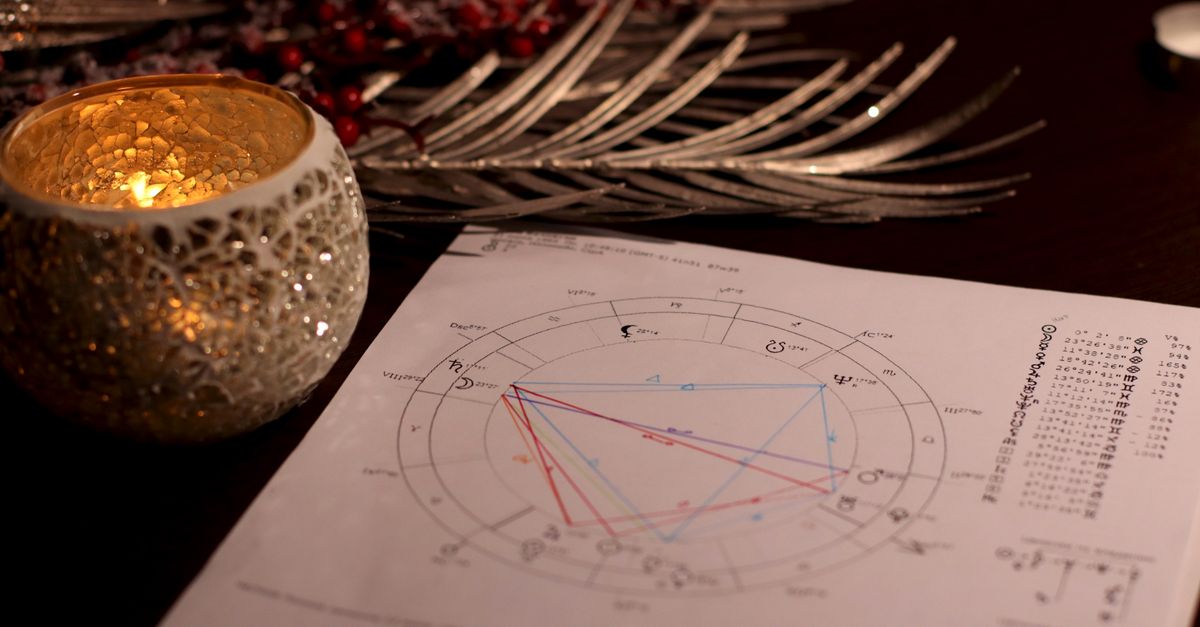
What Saturn Represents in a Birth Chart
In Western tropical astrology, Saturn is the principle that links a chart to time, structure, limits, and the slow accumulation of experience. It is usually described as a pressure point rather than a personality trait: where Saturn sits is where you are asked to do the work that does not feel easy and that pays off only over years. Readers who look at Saturn usually look for the themes of discipline, responsibility, restraint, earned mastery, and the friction that comes from accepting that some things cannot be rushed.
This is why most chart-reading guides treat Saturn's position as foundational, even when the Sun and Moon receive more attention. Saturn is what turns an abstract personality reading into a question about time: how long a project takes, what kind of commitment a relationship asks for, where a boundary has to be drawn, and which habits have to be rebuilt slowly rather than fixed in a single push. Saturn also moves much more slowly than the Sun, the Moon, Mercury, Venus, or Mars, which is why one Saturn sign can sit on top of an entire birth-year cohort while the faster planets are scattered across signs even within a single classroom. The placement therefore tends to describe background conditions and shared lessons more than it describes individual personality.
Why Your Saturn Sign Is the First Layer to Calculate
The sign a planet occupies is the broadest coordinate in a chart, and it is also the most reproducible. It does not need an exact birth city, a house system, or a particular astrological school. For Saturn specifically, the sign is the layer that takes the least interpretation: Saturn in Capricorn reads differently from Saturn in Pisces, and that difference does not depend on which house system you choose. Starting with the sign gives you a verified label you can build on; starting with any later layer first usually produces a reading that cannot be independently checked.
For that reason, calculating your Saturn sign is a sensible first task even when you plan to read the rest of the chart later. Once the sign is known, the house and the aspects only make sense if the sign is already pinned down, because if the sign itself is wrong, every later layer inherits that error. The Saturn Sign Calculator is built around that single reproducible step, and it returns the tropical sector, the raw geocentric longitude in degrees, the degree within the sector, and the normalized instant used for the math.
How to Calculate Your Saturn Sign with the Saturn Sign Calculator
The Saturn Sign Calculator turns four inputs into one tropical sign reading, and each input has a specific purpose. To calculate your Saturn sign, follow these steps.
- Enter the local date of birth in the date field, using the documented civil calendar date for that place (for example, 14 March 1990).
- Enter the local clock time as it was recorded on the birth document. Do not round it to the nearest hour and do not convert it in your head.
- Enter the documented UTC offset for that moment, formatted as a signed value such as +00:00, -05:00, or +05:30. Non-whole-hour offsets are accepted.
- Select Calculate to see Saturn's tropical sector (sign label), the geocentric longitude in degrees, the degree within that sector, and the normalized UTC instant the calculator actually used.
The form rejects impossible Gregorian dates, impossible clock times, malformed offsets, and normalized instants outside the supported 1700 through 2100 UTC window, so a date that lands outside that range will surface an error rather than a guess. The calculator does not ask for a city, a latitude, or a longitude, because a geocentric tropical longitude has no geographic input by definition — the observer origin is the center of the Earth.
Reading the Tropical Sign, Longitude, and Boundary Warning
Four values come back from a calculation, and each one answers a different question. The tropical sector is the named sign on a Western twelve-sign wheel that starts at 0° Aries and divides 360° into twelve equal 30° half-open sectors. The geocentric longitude is the raw number in degrees along the ecliptic of date, which is the value any external reference ephemeris will publish. The degree within the sector tells you how far into the sign Saturn was, counted from 0° at the sector start. The normalized instant is the UTC date and time the calculator used after combining your local fields with the offset you typed, and it is the instant you should quote if you want to cross-check the result against a separate source.
Within 0.05° of a sector edge, the calculator displays a boundary warning. That warning exists because a difference of a few minutes in the clock, one offset step, or a different ephemeris implementation can flip the printed label near a cusp. When the warning fires, treat the sign label as the less stable of the four numbers and use the raw longitude instead, then round or re-check only after you have decided which ephemeris convention you trust. The expected reference values the calculator is gated against were authored from NASA JPL Horizons (observer quantity 31) and independently from IMCCE Miriade on the INPOP theory; the calculator itself runs an offline Astronomy Engine 2.1.19 adapter, and circular differences larger than five thousandths of a degree fail the dual-official gate.
How the Saturn Sign Calculator Compares With Other Planet Tools
Saturn is one of the classical planets covered by the same Lizely planet-sign workflow. The same narrow geocentric adapter, the same offline browser execution, and the same tropical labelling rules are reused for the inner and outer planets, so visitors can compare classical placements without mixing coordinate frames or house systems.
| Tool | Body computed | Tropical sector | Offline in browser | Birthplace required |
|---|---|---|---|---|
| Mercury Sign Calculator | Mercury | Yes | Yes | No |
| Venus Sign Calculator | Venus | Yes | Yes | No |
| Mars Sign Calculator | Mars | Yes | Yes | No |
| Jupiter Sign Calculator | Jupiter | Yes | Yes | No |
| Saturn Sign Calculator | Saturn | Yes | Yes | No |
Saturn moves the slowest among the five classical planets listed here, so the Saturn sign tends to stay the same across an entire birth-year cohort, while Mercury flips signs several times a year and the Moon does so roughly every two and a half days. If you want a single chart with two or more placements, running each planet tool with the same date, time, and offset is the cleanest way to build that picture without mixing coordinate frames or conventions.
What a Saturn Sign Reading Cannot Tell You
A geocentric tropical Saturn sign is a single coordinate, and the calculator is deliberately limited to that coordinate. It will not produce an Ascendant, a house cusp, an aspect list, a midpoint, or a topocentric sky position, because each of those products needs a place and a different geometric contract. The sign label also comes from a Western tropical convention that divides the ecliptic into twelve equal 30° sectors starting at 0° Aries; those sector names are cultural labels, not IAU constellation outlines, so the sign you see is not the same thing as the astronomical constellation Saturn was in front of on that date.
Early-date results are read as proleptic UTC-like estimates based on the offset you typed. Before modern standard time zones, local mean time does not always map cleanly onto a present-day UTC offset, and Lizely never silently reconstructs historical political zone databases or daylight-saving transitions. The reading is offered as entertainment and cultural astronomy, not medical, legal, financial, safety, employment, or relationship advice. If you want the next layer — for example, the house Saturn falls in, or how the sign differs from the house as an input — the Saturn Sign vs Saturn House input differences guide walks through those choices.
If you're weighing options, Venus Sign vs Sun Sign: How Each Calculation Differs covers this in detail.