Saturn's house in a Western birth chart cannot be determined without an exact birth time and a birthplace — the twelve houses depend on the precise local horizon at the moment of birth, and no online tool can reconstruct that missing data. This is the honest limitation at the heart of the search "Saturn house without birth time": the house system needs both where you were born and the exact clock time, and a date-only birth certificate simply does not contain those numbers. The good news is that Saturn's sign works in a completely different way. A Saturn sign depends on Saturn's apparent geocentric ecliptic longitude at the documented moment, not on the local horizon, so it can be calculated from a birth date, a clock time, and a documented UTC offset alone. That distinction is what makes a Saturn sign calculator useful for readers who only have a date on their record, and it is also what separates a sign from a house in any astrological software. If you want the house, you must recover the missing time. If you want the sign, the Saturn Sign Calculator can run offline in your browser from the numbers you already have.
Why the house is impossible without a birth time
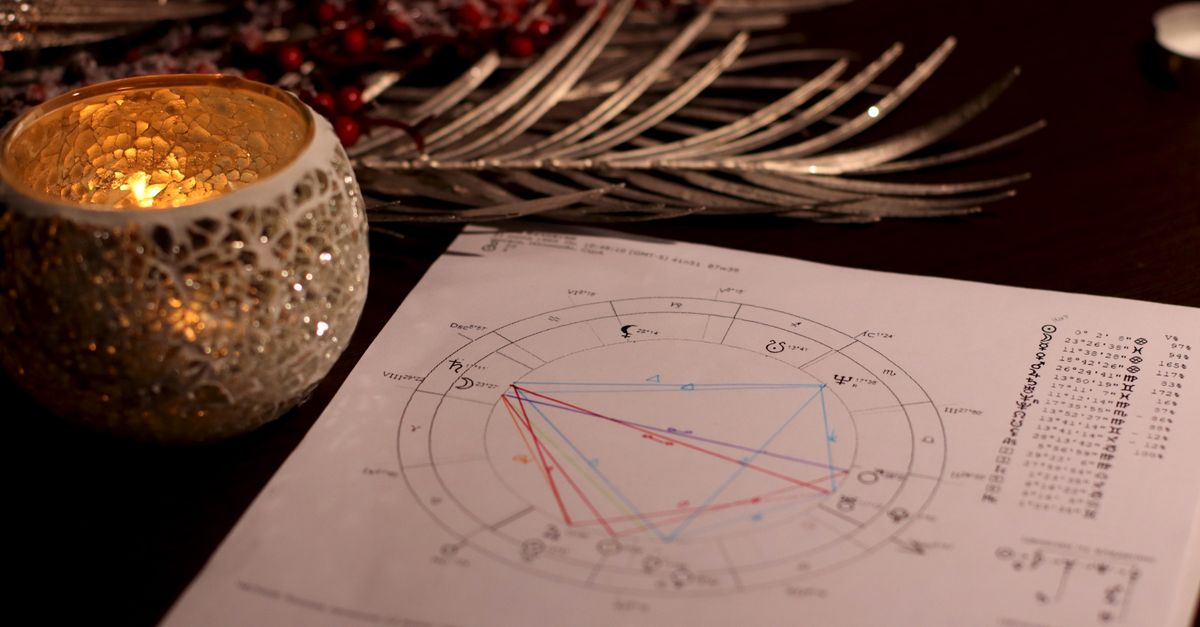
The twelve houses of a Western birth chart are anchored to the local horizon. Each house cusp marks where the ecliptic crosses the horizon, the meridian, or specific intermediate divisions of the sky as seen from one location at one exact instant. The Ascendant, the cusp of the first house, is simply the eastern horizon's intersection with the ecliptic at the precise moment of birth — change the time by even twenty minutes and the entire house layout rotates. Change the latitude and longitude and the wheel tilts differently. Without both numbers, no part of the system can be reconstructed, and that is why every reputable astrologer will tell you that the "house" of any planet requires at minimum an accurate birth time and a place.
Even systems that look simpler, like whole-sign houses, still depend on the Ascendant to anchor which sign begins the first house. And the Ascendant moves roughly one degree every four minutes of clock time, so a one-hour uncertainty swings the Ascendant through about fifteen degrees — enough to push any planet from one house to another or even to a neighbouring sign. There is no shortcut around this geometry.
This is the core limitation behind the search "Saturn house without birth time." The honest answer is that a Saturn house cannot honestly be reported without the time. The next step, then, is to look at what a Saturn chart can still tell you when only a date is available.
What a Saturn sign calculator can do instead
A Saturn sign, by contrast, depends on Saturn's apparent geocentric ecliptic longitude at the documented moment. Because that longitude is measured from the centre of the Earth rather than from the local horizon, it does not depend on where on Earth the moment occurred. As long as you know the exact instant — and you can express that instant from a documented date, clock time, and UTC offset — you can compute Saturn's sign.
The Saturn Sign Calculator does exactly that. It keeps the entire calculation inside your browser, runs the pinned Astronomy Engine 2.1.19 adapter with aberration enabled, and reports Saturn's tropical sector, its longitude within that sector, and the normalized instant it actually used. Nothing is uploaded, no network socket is opened at runtime, and the calculation can be repeated offline. The implementation has been compared against NASA JPL Horizons (using observer quantity 31) and the IMCCE Miriade ephemcc service, and any circular difference larger than five thousandths of a degree fails the dual-official gate. The same Earth-centred observer contract that JPL uses for geocentric output is what makes that comparison meaningful.
How to find your Saturn sign in four steps
- Enter the local date in the form's date field using the calendar date from the birth record, for example 1971-03-23.
- Enter the local clock time shown on that record — such as 07:42 or 19:15 — as a wall-clock value, not as a UTC value.
- Enter the documented UTC offset for that place and date, such as +00:00, -05:00, or +05:30. The form accepts signed offsets from -12:00 through +14:00, including non-whole-hour values, and rejects malformed entries.
- Press Calculate to see Saturn's tropical sector, its longitude within that sector, the degree within the sector, and the normalized calculation instant the tool actually used.
If the date, time, and offset together describe an impossible instant — for example February 30, a 25:00 clock, or a normalized year outside the supported 1700–2100 UTC range — the form refuses to calculate rather than guess.
Reading the output: sectors, degrees, and boundaries
The tropical label printed by the calculator divides the ecliptic into twelve equal thirty-degree sectors beginning at 0° with Aries. These are Western tropical cultural labels, not IAU constellation outlines, and the exact sector boundaries the tool uses are:
| Longitude range (tropical) | Label |
|---|---|
| 0° – 30° | Aries |
| 30° – 60° | Taurus |
| 60° – 90° | Gemini |
| 90° – 120° | Cancer |
| 120° – 150° | Leo |
| 150° – 180° | Virgo |
| 180° – 210° | Libra |
| 210° – 240° | Scorpio |
| 240° – 270° | Sagittarius |
| 270° – 300° | Capricorn |
| 300° – 330° | Aquarius |
| 330° – 360° | Pisces |
When Saturn's longitude sits within five hundredths of a degree (0.05°) of either edge of a sector, the calculator prints an explicit boundary warning. That warning matters: a slightly different UTC offset, a different ephemeris version, or a slightly different time can flip the label from one sign to the next. Treat any sign that prints the warning as a probable-but-not-final answer and double-check the offset before drawing conclusions.
Picking the right UTC offset when the date is older or the record is vague
The form requires an explicit signed offset because a wall-clock date and time do not by themselves identify a single instant. Before modern standard time zones were adopted, local mean time did not map cleanly onto any present-day UTC offset, and the calculator does not silently reconstruct historical political zone databases or daylight-saving transitions. For dates before roughly the late nineteenth century, the offset you type should be read as a proleptic UTC-like estimate based on the convention you supply, and the same result must be compared against the same convention on the historical side.
If your birth record only carries a date — "23 March 1971" — and no clock time at all, the form still needs a placeholder time and offset to normalize. The tool will compute, but the resulting Saturn sign carries the same uncertainty as the time you typed. For most of the twentieth century and the twenty-first century, a documented IANA zone and standard offset such as -05:00 (US Eastern standard) or +01:00 (Central European standard) produces a stable answer that sits well outside the 0.05° boundary warning. Very old dates — before 1700 — fall outside the supported UTC year range and are rejected before any calculation runs.
What the calculator refuses to add
Because the calculator is scoped to a single geocentric contract, it does not generate an Ascendant, house cusps, aspects, midpoints, or a topocentric sky position — those products need a place and a different geometric contract. The tool also does not fetch your location from GPS or IP, does not ask for a birthplace, and does not run a personality or fortune prediction on top of the printed longitude. The output is an offline astronomical number with a tropical cultural label, framed as entertainment and cultural astronomy rather than medical, legal, financial, safety, employment, or relationship advice. Operators publishing the result are expected to disclose the entertainment framing next to the number and to keep any derived interpretive content outside the automatic article queue.
For readers comparing classical planets without mixing house systems, the same narrow geocentric adapter is reused across the related Mercury, Venus, Mars, and Jupiter calculators on Lizely, so a Saturn result sits cleanly beside the others without any hidden house assumption. The guide Saturn Sign vs Saturn House: Input Differences That Matter walks through the same distinction in more detail and is a useful next read when only a birth date is on hand.
If you're weighing options, Plan the Steps for Using a Tarot Birth Card Calculator covers this in detail.