Chinese lucky numbers for 2026 refer to three Mandarin digits whose sounds carry widely reported cultural associations: 8 with prosperity, 9 with longevity, and 4 with death. The Chinese Lucky Numbers analyzer counts how many times these three digits appear inside any short text string up to 64 characters and shows the 1-based position of each occurrence, while treating 0, 1, 2, 3, 5, 6, and 7 as neutral because this tool deliberately limits itself to those three source-backed claims. The analyzer gives no luck score, ranks nothing, and offers no prediction about what 2026 holds for a phone number, a date, an address, or a price. A count of two 8s and one 4 in a string is just that — a count — because the associations are language customs whose strength varies by region, dialect, generation, and personal practice. Everything below explains what those three digits represent, how to run the count, how to read the positions, and what the analyzer is intentionally not built to do.
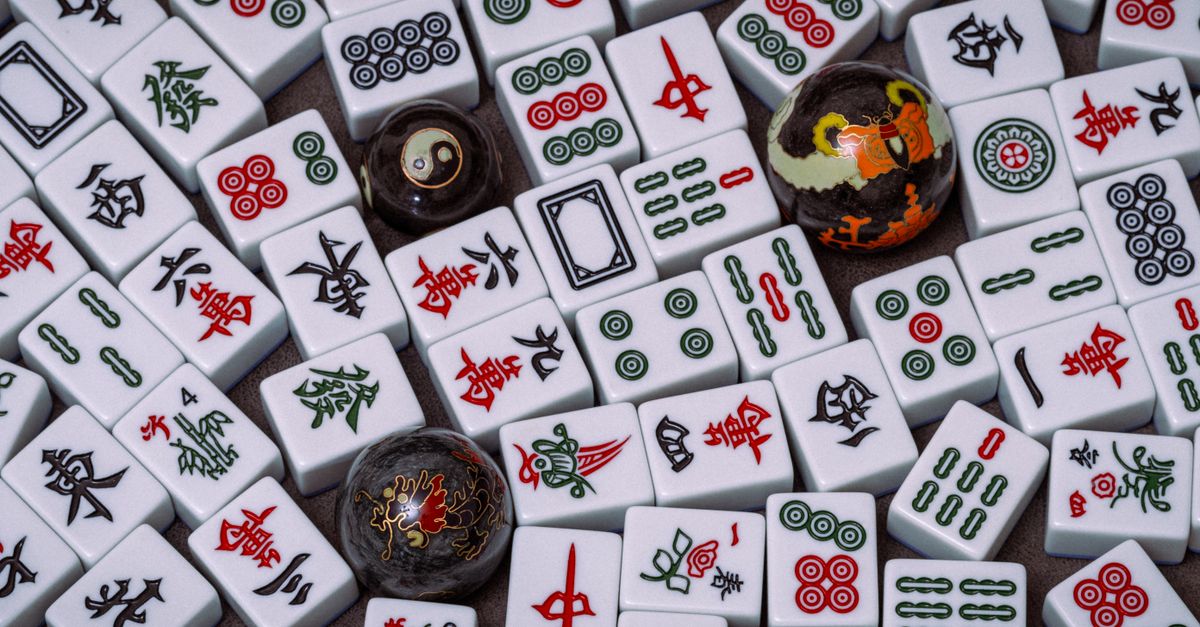
Chinese Lucky Numbers in 2026: A Cultural Reference, Not a Prediction
People searching for "Chinese lucky numbers 2026" usually want one of two things: a quick lookup of which digits are considered auspicious in Mandarin culture for the new year, or a practical way to inspect a number they already have — a phone number, a date, an address, a price, a vehicle plate, or a business name — and see whether the culturally discussed digits 8, 9, and 4 appear inside it. The Chinese Lucky Numbers analyzer serves the second need with precision: it accepts a short string, normalizes fullwidth digits, retains only the digits, and reports how many times 8, 9, and 4 appear along with the 1-based position of each one. It does not generate a "lucky number for 2026" out of thin air, because the three associations it references are language customs whose strength varies by region, dialect, community, generation, and personal practice, as noted by sources describing Chinese number culture.
The year 2026 is the Year of the Horse in the Chinese zodiac, and like every year it carries its own calendar dates that naturally contain the digits 8, 9, and 4 in some combinations. That alone is a useful prompt for running the analyzer on a specific date such as 2026-08-19 or a string like 20260819 to see where the three reference digits land. The cultural discussion of 8, 9, and 4 remains the same in 2026 as in any other year, because the associations come from Mandarin pronunciation rather than from the calendar itself.
What 8, 9, and 4 Represent in Mandarin Sound Associations
Digit 8 is commonly associated with prosperity or wealth because its pronunciation, bā, resembles fā, the syllable used in expressions such as fā cái meaning to become prosperous. Digit 9 is often linked to longevity or to something long-lasting through the sound relationship between jiǔ (nine) and jiǔ (long-lasting). Digit 4 is frequently avoided because sì can sound similar to sǐ, the Mandarin word for death, which is why the number 4 is sometimes omitted from floor labels, product lines, and addresses in regions where the custom is strong. The Malaysian Management Journal paper on number beliefs and pronunciation documents these patterns across Mandarin-speaking communities, and the Carnegie Mellon everyday-life overview of Chinese culture describes how the customs surface in ordinary commercial and personal decisions.
These are language-based customs, not physical properties of the digits. The Chinese Lucky Numbers reference cards describe the associations with cautious wording such as "associated" and "commonly avoided" rather than declaring a digit to be universally lucky or unlucky, which is the only honest framing for a tool that limits itself to three source-backed claims.
| Digit | Mandarin syllable | Reported association | Wording used by the analyzer |
|---|---|---|---|
| 8 | bā | Prosperity or wealth (sounds like fā in fā cái) | Associated with prosperity |
| 9 | jiǔ | Longevity or something long-lasting (jiǔ sound link) | Associated with longevity |
| 4 | sì | Death (sounds like sǐ) | Commonly avoided |
| 0, 1, 2, 3, 5, 6, 7 | — | Not classified by this tool | Neutral / unclassified |
How to Count 8, 9, and 4 in Any Digit String
The analyzer is deliberately small, which is what makes it trustworthy for a reader who only wants the cultural reference points and a clean count. Running it takes a few short steps.
- Read the three reference cards displayed above the input field. Each card lists one digit, its pronunciation, and the cautious association; a small note reminds the reader that language, region, and personal practice vary.
- Type or paste up to 64 characters into the input field. The string can be a pure digit sequence such as 8498, a date like 2026-08-19, a phone number with separators, or a short line of text with digits embedded.
- Press Analyze digits. The widget normalizes any fullwidth digits (0 through 9) to their ASCII equivalents, removes every non-digit character, retains only the digits, and reports the count and 1-based position of every 8, 9, and 4 inside that retained sequence.
- Read the result cards, which show three labeled lines — one each for 8, 9, and 4 — with the count and a comma-separated list of positions such as "1, 4" or an explicit "none."
- Press Clear to wipe the input field and the result cards whenever a new string is needed; Clear removes the data from current-tab memory so the next entry starts blank.
Strings without any digit after normalization produce an error rather than a fabricated interpretation, because the analyzer refuses to invent a count for an empty digit sequence.
Reading the Counts and Positions the Analyzer Returns
The result for the string 8498 is a good worked illustration. The analyzer normalizes the four characters to themselves (none are fullwidth), retains only the digits in their original order — 8, 4, 9, 8 — and records 1-based positions within that retained sequence. The count for 8 is two, with positions 1 and 4. The count for 4 is one, at position 2. The count for 9 is one, at position 3. The remaining digits 0, 1, 2, 3, 5, 6, and 7 do not appear in this string, so each of those is left out of the result entirely.
Positions are anchored to the retained digit sequence, not to the original characters. If the original input had been "(84) 98" with a space and parentheses, the analyzer would still remove the non-digit characters first and then count 1, 2, 3, 4 across the four retained digits. This behavior is important because many real-world inputs — phone numbers, dates, prices, vehicle plates — contain separators and that difference would otherwise mislead a reader who assumes the position reflects the original layout.
What the Analyzer Deliberately Does Not Do
The product contract is explicit about the boundaries. There is no combined luck score, no ranking, no premium advice, and no prediction. The analyzer does not rank phone numbers, addresses, prices, account identifiers, vehicle plates, dates, or business names. It does not recommend paying extra for a digit, does not state that repeated 8s will change wealth or health, and does not infer a personal meaning from where a digit appeared. A count of two 8s in 28928 is exactly two 8s, nothing more.
Other digits — 0, 1, 2, 3, 5, 6, and 7 — are grouped as neutral or unclassified within this tool. That label is a boundary statement, not a claim about a culture: it means this deliberately small product has not classified those digits under its three-source-backed claims, so a partial reference table is not allowed to pretend to be a complete cultural authority. Anyone reading a count of zero 8s in a string should not infer that the string is therefore good or bad; neutrality is a scope statement, not a verdict.
Processing is also local. The widget makes no fetch call, performs no upload, sends no analytics request, writes nothing to localStorage or sessionStorage, and requires no account. Users should still avoid pasting sensitive identifiers — account numbers, card numbers, full addresses — into any browser field because anyone who can see or control the device can view the current value.
Practical Uses for Counting These Digits in 2026
A reader who wants to inspect a date such as 2026-09-08 for the three reference digits can paste it into the analyzer and immediately see where each 8, 9, and 4 sits inside the retained sequence. The same approach works for a phone number being considered for a 2026 launch, a price the reader is about to quote, or a four-digit code tied to a personal milestone. The output is descriptive only — three counts and three position lists — and the cultural reading is left to the reader, because the strength of the 8, 9, and 4 associations varies widely across Mandarin, Cantonese, Hokkien, and other dialects and across generations within the same family.
For readers who also want the broader Chinese cultural context for 2026 — such as the zodiac animal of the year or the element it carries — the site's Chinese Zodiac by Year Chart maps Gregorian years to the 12-animal cycle with the Lunar New Year boundary visible. The Chinese Lucky Numbers analyzer stays narrow on purpose: it counts what it claims to count, refuses to score what it does not, and keeps every input inside the current tab so the result is a quick reference point rather than a recommendation.
If you're weighing options, Calculate Chinese Zodiac Sign From a Birth Year covers this in detail.