A chart ruler calculator does not calculate your Ascendant and does not interpret your birth chart; it returns the modern and traditional ruling planet for an Ascendant sign you already know. Calculating a rising sign from scratch requires a birth date, an exact birth time, a location, the time zone in effect at that location, and astronomical data such as an ephemeris or planetary algorithm. Producing a birth-chart interpretation adds house cusps, planetary placements, aspect lines, and a layer of meaning on top of those placements. None of those inputs are accepted by this calculator, and none of those outputs are produced by it. What you actually get is a faithful reproduction of a twelve-entry sourced table that names a chart ruler for any of the twelve Western zodiac signs. The chart ruler convention itself comes from the older idea that the planet which rules the Ascendant sign holds special importance in the chart, and modern and traditional astrology disagree on three of the twelve assignments. So the tool's value lies in faithfully reporting that convention, not in extending the calculation further. The rest of this article maps exactly what the calculator covers, what it refuses to do, and where its boundaries come from.
What the Chart Ruler Calculator Is Designed to Do
The Chart Ruler Calculator solves one specific lookup: which planet rules the Ascendant sign under each of the two dominant Western astrology conventions. Modern rulership follows the familiar pattern most general horoscope columns reference, while traditional rulership preserves the older correspondences used before the outer planets were integrated into the system. The two conventions agree on nine of the twelve signs, and they diverge on three: Scorpio, Aquarius, and Pisces. Because the divergence is real, the tool deliberately shows both columns rather than collapsing them into one answer, and it states explicitly whether the two systems agree or differ for the sign you selected.
The output is a cultural reference, not a measurement or a prediction. The lookup returns the ruler pair and a textual agreement label; it does not infer anything about your character, compatibility, health, finances, relationships, or career, and it does not assign meaning to which ruler is "stronger" in your life. If you came here expecting a chart interpretation, that is the boundary the calculator refuses to cross, and the next sections return to that boundary from several angles.
How to Use the Chart Ruler Calculator
The full workflow runs in the browser and stays inside a single selector. Each step below is part of the verified operating procedure:
- Choose an Ascendant sign you already know. The selector lists the twelve Western signs in order. The tool does not derive your Ascendant from a birth date, a birth time, or a location, so if you do not yet know your rising sign, this step has to happen elsewhere first.
- Compare the modern and traditional ruler fields for that sign. Read the modern ruler column and the traditional ruler column side by side. For most signs, the same planet appears in both columns; for Scorpio, Aquarius, and Pisces, the two columns name different planets.
- Read the agreement note. The interface labels whether the two conventions agree or differ for the selected sign rather than blending the results. This is a convention check, not a personal reading.
- Select another sign to inspect a different sourced row. The selection lives in ordinary component state, so nothing is written to localStorage or sessionStorage, sent to a server, or shared with a third-party astrology service. You can cycle through all twelve signs without a network round trip.
That is the entire workflow. There is no account, no save state, no interpretation layer, and no prediction step. The calculator's narrow design is part of how it stays auditable: every cell of the table can be traced to the same two reference publications linked further down.
What the Tool Does Not Calculate or Interpret
The boundaries matter because several nearby tools answer different questions, and search results often mix them up. The Chart Ruler Calculator does not:
- Calculate your Ascendant or rising sign from a birth date, time, and location
- Determine the houses, house cusps, or planetary placements in your chart
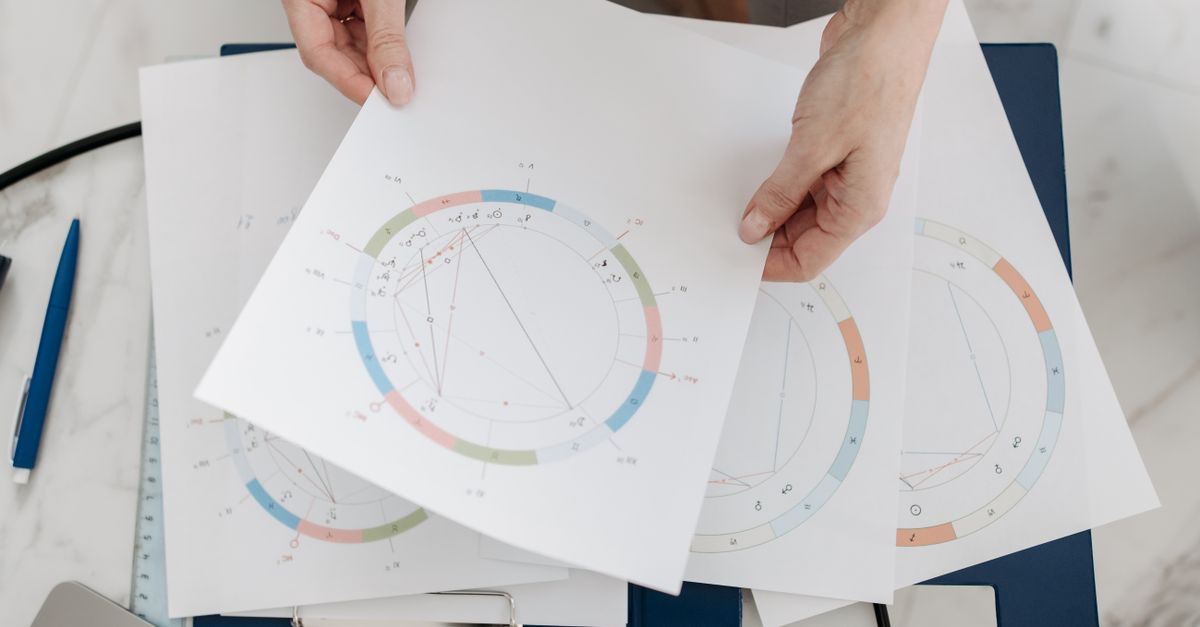
- Generate a natal chart, a birth-chart wheel, or any aspect grid
- Interpret personality traits, life themes, strengths, weaknesses, or future events
- Compare two charts for relationship or compatibility purposes
- Identify which planet currently transits a particular house
- Accept, store, or transmit any personal details such as your name, birthday, or birthplace
Each of those tasks requires inputs and calculations outside this lookup. A rising-sign calculation, for instance, depends on the exact moment and location of birth and the time zone in effect at that location, and it produces a sign that shifts roughly every two hours, which is why an Ascendant is genuinely one of the harder pieces of a chart to pin down. A natal chart adds planetary positions for the Sun, Moon, Mercury, Venus, Mars, Jupiter, Saturn, Uranus, Neptune, and Pluto across twelve houses and signs. None of that pipeline is part of the calculator. If your real interest is finding your rising sign, our guide on figuring out your chart ruler without a full birth chart explains the broader workflow and where this calculator sits inside it.
Modern vs Traditional Rulers at a Glance
Below is a sign-by-sign comparison cross-checked between Astrodienst Astrowiki — Domicile and AstroLibrary — Sign Rulers and Ruling Planets. The convention match column states whether the modern and traditional rulers are identical for that sign or whether the two systems diverge.
| Ascendant Sign | Modern Ruler | Traditional Ruler | Convention Match |
|---|---|---|---|
| Aries | Mars | Mars | Agree |
| Taurus | Venus | Venus | Agree |
| Gemini | Mercury | Mercury | Agree |
| Cancer | Moon | Moon | Agree |
| Leo | Sun | Sun | Agree |
| Virgo | Mercury | Mercury | Agree |
| Libra | Venus | Venus | Agree |
| Scorpio | Pluto | Mars | Differ |
| Sagittarius | Jupiter | Jupiter | Agree |
| Capricorn | Saturn | Saturn | Agree |
| Aquarius | Uranus | Saturn | Differ |
| Pisces | Neptune | Jupiter | Differ |
The twelve-entry table assigns Mars to Aries, Venus to Taurus, Mercury to Gemini, the Moon to Cancer, the Sun to Leo, Mercury to Virgo, and Venus to Libra in both systems. Modern rulership then assigns Pluto to Scorpio, Uranus to Aquarius, and Neptune to Pisces, while the traditional system keeps Mars, Saturn, and Jupiter for those three signs. Jupiter rules Sagittarius and Saturn rules Capricorn in both displayed systems. Showing both columns matters because modern and traditional astrology do not use one identical ruler set, and a result that silently reports only Pluto, Uranus, or Neptune would hide a real convention choice. The interface therefore labels each output rather than blending the systems, and it says explicitly when the two columns agree or differ.
For a longer discussion of how those three divergences affect chart reading, the Chart Ruler modern vs traditional rulers guide walks through the same disagreement in more detail.
Why the Calculator Does Not Try to Do More
Keeping the tool narrow is a deliberate product choice, not a missing feature. Calculating an accurate Ascendant requires astronomical data that the simple twelve-entry table does not attempt to perform. Producing a meaningful natal-chart interpretation would require a parser for planetary positions, house systems, and aspect patterns, and none of that fits a single Ascendant-input lookup. Blending modern and traditional rulership into one column would hide the disagreement and quietly favor one school of thought over another, which would distort the convention itself.
A second reason for the narrow scope is privacy. Because the calculator never asks for a birth date, an exact birth time, a birthplace, or a name, there is nothing to store, nothing to send to a server, and nothing to share with a third-party astrology service. All work runs in the browser. The selection lives in ordinary component state rather than localStorage or sessionStorage, so changing the Ascendant does not persist between visits. This is also why a tool that promises to "calculate your Ascendant" cannot be the same tool as a chart-ruler lookup: the inputs differ, the dependencies differ, and the privacy footprint differs.
A third reason is traceability. The complete table is represented in tested product data rather than inferred from a short personality description, and the same twelve assignments can be checked against the two public references linked above. Once the calculator started inferring meaning beyond the source, that traceability would break, and the table would no longer be a clean cultural reference.
When You Need a Different Tool
If your real goal is to find your Ascendant, you need a tool that accepts your date of birth, your exact birth time, your birthplace, and an awareness of time-zone rules. None of those inputs are part of this calculator. If your real goal is a full birth chart, you need house cusps, planetary longitudes, and aspect lines calculated from ephemeris data, and an interpretive layer that turns those placements into themes. Again, none of that pipeline lives inside the calculator.
The Chart Ruler Calculator fits a narrower and earlier step in that workflow: once your Ascendant is established elsewhere, this tool tells you which planet rules it under each convention. That step is reproducible, sourced, and free of personal data, and that is why the calculator stops at the ruler lookup.
A nearby Zodiac Sign Calculator handles a different, simpler month-and-day convention for the Sun sign and should not be confused with a rising-sign calculation. If you want to confirm whether a particular Western sign is cardinal, fixed, or mutable, that belongs to a different lookup as well. The rule of thumb is simple: if the answer requires a moment in time, this is not the tool. If the answer is a sourced twelve-entry classification, this is the tool.
Quick Reference: Chart Ruler Calculator vs Adjacent Tools
A short comparison helps separate this calculator from the tools that share keywords but solve different problems.
| Tool | Required Input | Output | Calculates Ascendant? | Interprets Chart? |
|---|---|---|---|---|
| Chart Ruler Calculator | Ascendant sign you already know | Modern and traditional rulers plus agreement label | No | No |
| Zodiac Sign Calculator (Sun sign) | Month and day | Sun sign from the month-and-day convention | No | No |
| Full natal-chart tools | Birth date, exact time, and location | House cusps, planetary placements, aspect grid, interpretation | Yes | Yes |
| Modality and Element lookups | Known Western sign | Cardinal, fixed, or mutable group; fire, earth, air, or water group | No | No |
Mixing these up is one of the most common sources of confusion in beginner astrology workflows, which is exactly why the Chart Ruler Calculator labels its inputs and outputs so plainly. If a calculator promises to "find your rising sign from your birthday," that is a different tool with different inputs, different dependencies, and a different privacy footprint. Reading the labels carefully is the fastest way to choose the right one for the specific question you actually need answered.