Tip amount is the dollar value of a gratuity calculated as a percentage of a bill, and the standard formula is bill amount multiplied by tip percentage divided by 100. For example, a $60 check at 18% produces a tip of $10.80, for a total of $70.80. This single equation — tip = bill × (rate ÷ 100) — covers almost every tipping situation, from restaurant meals to taxi rides to hair salon visits, and the only variables that change are the bill size and the chosen rate.
People search for how to calculate tip amount for a range of reasons: splitting a dinner between four friends, deciding whether to tip on the pre-tax or post-tax subtotal, or comparing what 15% looks like versus 20% on the same check. The math itself is straightforward, but doing it accurately under time pressure, with a phone in one hand and a wallet in the other, is where most people slip. A small rounding error on a large group dinner can leave someone short by several dollars, and a misread percentage can swing the gratuity by $5 or more. Knowing the formula gives you a mental anchor; using a dedicated tool removes the friction entirely.
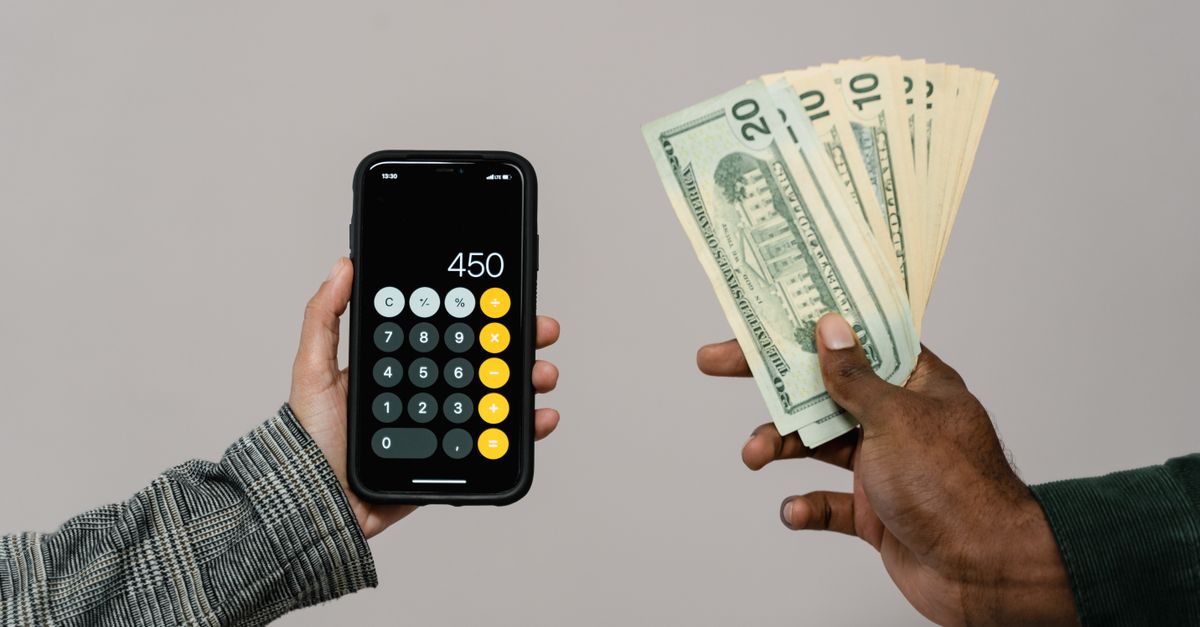
The Tip Formula and What Each Variable Means
At its core, tip calculation is a single multiplication. The formula is:
Tip = Bill × (Tip Percentage ÷ 100)
From there, two derived values matter in almost every real-world situation:
- Total with tip: Bill + Tip
- Per-person share: (Bill + Tip) ÷ Number of People
The bill is the base amount before gratuity; for restaurant meals this is typically the post-tax subtotal shown on the check. The tip percentage is a chosen rate, with U.S. restaurant norms ranging from 15% for adequate service up to 25% for exceptional service, and 18% often cited as a sensible default for good service. The number of people is the count of diners splitting the bill, which only matters when you want a per-person breakdown. These three inputs — bill, percentage, and head count — are the only numbers you ever need.
Standard Tip Percentages and When to Use Each
Tipping customs vary by service type and country, but a few benchmarks hold up across most U.S. dining contexts:
| Service Quality or Situation | Typical Tip Rate |
|---|---|
| Adequate service, simple order | 15% |
| Good service, standard restaurant meal | 18% |
| Excellent service, attentive staff | 20% |
| Outstanding service, large party, special occasion | 22–25% |
| Buffet or counter service (tip jar) | 10% |
| Delivery (food brought to your door) | 15–20% |
| Barista or bartender per drink | $1–2 per drink, or 15–20% on tab |
These ranges reflect widely accepted U.S. practice rather than any single legal standard. Outside the restaurant industry, rules differ: hotel housekeeping often falls in the $2 to $5 per night range regardless of bill size, taxi drivers are typically tipped 15%, and hair salon stylists commonly receive 20%. The tool at Tip Calculator lets you type any custom percentage, so these non-standard rates are just as easy to handle as the common 15/18/20 presets.
Calculate and Split a Tip
The fastest path from bill to per-person amount runs through three inputs and one read. Here is the exact sequence using the Tip Calculator:
- Enter your bill amount in dollars. Type the post-tax subtotal from the check into the bill field. If you are tipping on the pre-tax subtotal instead, use that smaller number; the article linked at the bottom of this page covers the difference in detail.
- Choose a tip percentage. Tap one of the quick options — 10%, 15%, 18%, 20%, or 25% — or type a custom rate if your situation calls for something else, such as 22% for a large party or 12% for a casual lunch.
- Set the number of people splitting the bill. Enter the head count, including yourself. The calculator uses this only for the per-person breakdown; the total tip and total bill are unaffected.
- Read the results instantly. The tool displays the tip amount, the new total, and the per-person share all at once. No need to copy numbers into a separate app or do the division in your head.
- Adjust as needed. If one person ordered a $40 entrée while another had only an $8 appetizer, switch to an uneven-split mode (where supported) and enter each person's subtotal individually to keep the math fair.
This whole sequence takes well under a minute once you are familiar with the layout, and it removes every mental-math step that tends to go wrong under pressure.
How to Calculate Tip Amount by Hand
There are situations where you cannot pull out a phone — a noisy bar, a quick cab ride, a tip jar at a counter — and a few mental shortcuts make manual calculation quick and reliable. The classic 10% trick is the foundation: move the decimal point one place to the left. On a $60 bill, 10% is $6. From there, you can build any other rate:
- 15% = 10% + half of 10% → $6 + $3 = $9
- 18% = 10% + 5% + (another 3%) → $6 + $3 + $1.80 ≈ $10.80
- 20% = 10% doubled → $12
- 25% = 10% + 10% + 5% → $6 + $6 + $3 = $15
For a worked example, take a $74.50 bill at 20%. Ten percent is $7.45, so 20% doubles that to $14.90. The total with tip is $74.50 + $14.90 = $89.40, and split four ways that comes to $22.35 per person. If you would rather skip the mental steps entirely, the Tip Calculator handles the same arithmetic instantly and also works as a bill splitter when the group is uneven.
Tip on Pre-Tax or Post-Tax Subtotal?
This is one of the most common points of confusion, and the answer depends on where you are and what the bill looks like. In most U.S. full-service restaurants, the convention is to tip on the post-tax subtotal — the larger number at the bottom of the check — because the server handled the full transaction including the tax line. Tipping on the pre-tax subtotal produces a slightly smaller gratuity, and some diners prefer it on principle since the tax goes to the government rather than the restaurant.
For takeout, counter service, and many casual cafés, tipping on the pre-tax subtotal (or simply rounding up) is more common. When the check does not break out tax separately, the question is moot — use the total shown. A deeper walkthrough of pre-tax versus post-tax tipping, including examples with both methods, is covered in our guide on tip before or after tax.
Splitting the Bill Fairly
Even-split tipping is the easy case: divide the bill-plus-tip by the head count and each person pays the same amount. The trickier case is uneven splitting, where one person had a steak and another had a salad. The fairest method is to tip on each person's individual subtotal rather than the group total, which prevents the light eater from subsidizing the heavy tipper. Most digital tools, including the Tip Calculator, handle even splits as the default, but allow custom-amount entry for uneven cases.
When splitting unevenly without a tool, the workflow is: calculate each person's pre-tip subtotal, apply the tip percentage to each subtotal, then add the tip to each subtotal. For a four-person table where subtotals are $40, $28, $22, and $18 on a $108 pre-tax bill at 18%, the tips would be $7.20, $5.04, $3.96, and $3.24, producing individual totals of $47.20, $33.04, $25.96, and $21.24. Even-split would have charged each person ($108 + $19.44) ÷ 4 = $31.86, so the steak eater pays more under the fair method, which is the point.
Common Mistakes That Throw Off the Tip
A handful of recurring errors account for most tipping mistakes at restaurants:
- Tipping on the wrong base. Using the pre-tax subtotal when you meant to tip on post-tax, or vice versa, can shift the gratuity by 8–10% on top of the intended rate.
- Confusing 18% with 20%. On a $100 bill, the difference is $2 — small in isolation, larger over a year of regular dining out.
- Rounding the tip up too aggressively. Rounding $9.18 to $10 when you intended 18% effectively tips closer to 20%, which is fine if that was the goal but misleading if not.
- Forgetting to include drinks and extras. The check total already includes these, so as long as you are reading the right number from the receipt, the math handles them.
- Splitting before adding the tip. Dividing the bill by head count and then tipping only on your share under-tips the server when one person's portion is much larger.
Avoiding these pitfalls comes down to one habit: always look at the final subtotal on the receipt, pick the percentage you actually intend, and let the calculator do the rest.
Beyond Restaurants: Tipping in Other Contexts
The same formula applies everywhere tipping is expected, though the rates shift. For taxi and rideshare drivers, 15% to 20% is standard. For food delivery, 15% to 20% on the order total is typical, with a small bump in bad weather or for long distances. For hotel housekeeping, $2 to $5 per night is more useful than a percentage because the bill is not always visible. For spa services and hair salons, 20% is the prevailing rate. Baristas and bartenders are often tipped per drink rather than as a percentage of the tab.
For any of these situations, the Tip Calculator still works as long as you have a dollar amount and a chosen percentage. If you are trying to figure out what your monthly gratuity spending adds up to over a year, you can use our Savings Calculator or savings growth guide to model what that same amount would look like invested instead — a useful exercise for anyone reconsidering their tipping habits.
Quick Reference: Tip on Common Bill Amounts
The table below shows tip values at three standard rates for round-number bills. For exact figures on any other bill amount or rate, plug the numbers into the tool.
| Bill Amount | 15% Tip | 18% Tip | 20% Tip |
|---|---|---|---|
| $30 | $4.50 | $5.40 | $6.00 |
| $50 | $7.50 | $9.00 | $10.00 |
| $75 | $11.25 | $13.50 | $15.00 |
| $100 | $15.00 | $18.00 | $20.00 |
| $150 | $22.50 | $27.00 | $30.00 |
Once the percentage and the bill are in hand, the calculation is the same every time: multiply, add to the bill, and split if needed. With a reliable tool at your side, tip math stops being a thing you have to think about at the end of a meal.
For a deeper look, see Calculate Car Loan Interest Deduction for Your Tax Return.
For a deeper look, see How to Calculate Compound Interest for a Loan.