A browser diff checker is the file-level answer to the same compare-two-points question people ask Google Maps about different times: paste the original text on the left, the new version on the right, and read a line-by-line diff below the two boxes. Google Maps is the obvious tool when you want to know what time it is in another city, what the traffic looked like at 8 a.m. versus 6 p.m., or whether a place is open at 14:00 on a Sunday. Each of those questions is really "compare two values and tell me what is different." When the question shifts from geographic coordinates and clocks to a text document, source file, JSON payload, or config, the structure of the task is identical: a left input, a right input, and a delta between them. A free online diff checker built for that purpose highlights every added, removed, and unchanged line so you can scan a long file and immediately spot the edits that matter.
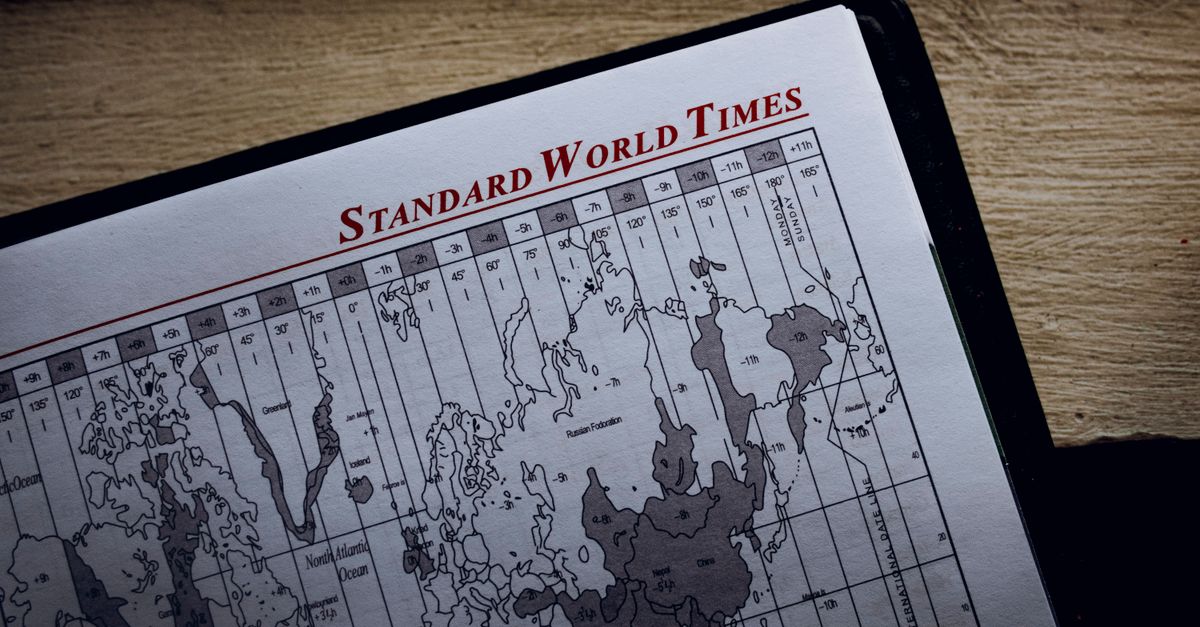
What People Actually Mean by Different Times on Google Maps
Searches for different times on Google Maps usually cluster into three practical buckets, and each one maps cleanly onto a compare-two-points task. First, time zone lookups: "what time is it in Tokyo when it is noon in Berlin" — a straight comparison of two clocks. Second, historical and predictive traffic: "what did this route look like at 7:30 a.m. on Tuesday versus 5:00 p.m. on Friday" — comparing two snapshots of the same road network. Third, opening hours and seasonal schedules: "is the museum open at 14:00 on a Sunday" — comparing one timestamp against an expected range.
The common thread is that the user already has two values (a "before" and an "after," or a "here" and a "there") and wants the delta. The interface changes — a map versus two text boxes — but the underlying operation is the same: align the two inputs, find what is shared, and report what is not.
Why Comparing Files Is the Same Idea
Once the question moves from maps to text, the "different times" framing fits even more naturally. A document version from yesterday and a document version from today are two points on a timeline, and "what changed" is exactly the same kind of question as "what time is it in two places." Tools built for that comparison have existed in software for decades: the Unix diff utility, Git's commit view, and the side-by-side comparisons in GitHub and GitLab all do the same job for code, and they all use the Longest Common Subsequence (LCS) algorithm, as documented on Wikipedia.
An online diff checker applies that same LCS approach to two text inputs you paste into a browser. The original version goes in the left box, the changed version goes in the right box, and the tool computes the longest run of lines shared between them in order. Every line inside that shared backbone is marked unchanged; every line outside it is marked added (with a leading +) or removed (with a leading -). That is the practical answer to "how do I check different times for my file," and it works for any plain text where a line is the meaningful unit of change.
How to Compare Two Versions of a File with Diff Checker
- Open the Diff Checker in your browser.
- Paste the original text into the left "Original" box.
- Paste the new version into the right "Changed" box.
- Read the line-by-line result below: lines marked with + were added, lines marked with - were removed, and the summary shows the total added, removed, and unchanged counts.
There is no submit button and no extra step — the comparison updates as you type, so editing either side recomputes the diff immediately. To start over, clear both boxes and the result clears with them. Because both inputs are processed locally in JavaScript, the comparison is private from the moment you press the first key.
Reading the Output: + / - Markers and Counts
The result area uses three visual states that stay readable at a glance and remain readable in plain-text notes and for color-blind users, because every change also carries a leading + or - sign on the line itself.
| Marker | Meaning | When you see it |
|---|---|---|
| + | Line added in the right (Changed) box | New content that does not exist in the Original |
| - | Line removed from the left (Original) box | Content that exists in the Original but not in the Changed version |
| (no marker) | Line unchanged | Identical text on both sides at that position |
The summary beside the result adds three running totals: added lines, removed lines, and unchanged lines. If you have edited one line in the middle of a long file, those totals tell you at a glance whether the rest of the document is still intact, and they make the size of the change obvious before you read a single line.
Practical Use Cases for a Browser Diff Checker
The same compare-two-points logic that handles Google Maps time questions handles a wide range of document tasks.
- Code review before committing: paste your last committed version on the left and your working copy on the right to see exactly which lines you are about to ship.
- Config and dotfile changes: check what a teammate or a deployment script modified in nginx.conf, package.json, or a Kubernetes manifest.
- Draft comparison for articles, contracts, and emails: catch silent rewording before sending.
- Verifying copy-paste integrity: confirm that a long block pasted from a terminal, log file, or chat did not drop or duplicate lines.
- Confirming two exported files match: diff the output of two build runs, two log dumps, or two CSV exports.
- Auditing templates: compare a blank template against a filled-in version to verify every required field was completed.
For developers working with Git, a deeper walkthrough of branch-level comparison is in How to Check the Difference Between Two Git Branches Online, and the Linux command-line equivalent is covered in How to Check the Difference Between Two Files in Linux.
Privacy, Limits, and How the Diff Is Computed
Browser diff tools that run entirely in JavaScript keep the two texts you paste on your own machine — there is no upload, no server roundtrip, and nothing to clear beyond closing the tab. That makes a client-side diff checker safe to use on private source code, internal configuration, unpublished drafts, and confidential documents where sending the bytes to a remote backend would be a non-starter.
Under the hood, the line-by-line comparison uses the LCS dynamic-programming algorithm, the same approach that powers Unix diff and the comparison view in Git. LCS finds the longest sequence of lines that appears in both versions in the same order; everything outside that shared backbone is reported as an addition or a deletion. The practical payoff is that a single edit in the middle of a long document is flagged as exactly that one line, instead of every line after it being marked as changed — the alignment stays anchored to the lines that actually match.
Two practical limits are worth knowing. First, this is a line-level diff, not a character-level one: if a single line changes by even one character, the entire old line shows as removed and the entire new line shows as added, so you can see both side by side and locate the exact edit manually. That is the right granularity for source code, configuration, logs, JSON, CSV, prose, and Markdown — anywhere the meaningful unit of change is a line. Second, the LCS comparison needs proportionally more memory as the inputs grow. For everyday files, code, and documents the comparison is effectively immediate and updates live as you type; for very large inputs (many thousands of lines) the browser needs proportionally more memory on your machine, so working with a smaller subset of the file is the cleaner option.