In Photoshop, RGB to CMYK is a working-space conversion: Image > Mode > CMYK Color remaps every pixel through your assigned CMYK profile (such as U.S. Web Coated SWOP v2 or FOGRA39), producing C, M, Y, K percentages you can hand to a printer — or skip the application entirely and use the naive formula K = 1 − max(R, G, B) in a browser tool for a quick estimate. The two paths reach the same four numbers, but only the in-app route keeps your file color-managed end to end. Opening an RGB file and switching color mode in Photoshop is the official Adobe workflow, and it gives a printer-ready file the moment you save. A browser calculator like the RGB to CMYK Converter delivers the raw percentages without needing the desktop app, which is useful when you only have an RGB value from a brand sheet, you're on a machine without Photoshop, or you want a sanity check before committing to a color mode change. Both routes use math — Photoshop's is shaped by an ICC profile tied to ink, paper, and press, while a browser tool's is the textbook conversion that ignores those variables. Knowing which approach matches the job is the difference between a flyer that prints on the first try and one that needs a reprint.
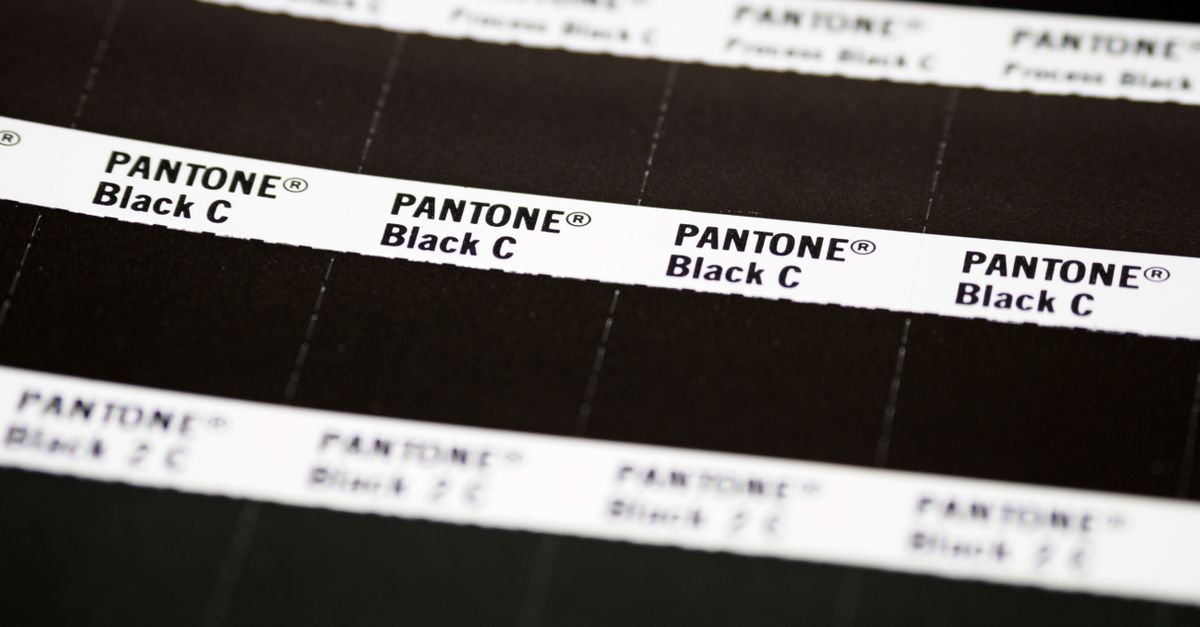
RGB on Screen, CMYK on Paper: How the Two Models Differ
RGB is an additive color model. Red, green, and blue light combine, and when all three channels sit at maximum intensity the result is white. Monitors, phones, TVs, and cameras all produce color this way, which is why an RGB value can describe a glowing neon green or a laser-bright blue that physically cannot exist on paper.
CMYK is subtractive. Cyan, magenta, yellow, and a black key plate are inks laid down on white paper that absorb light. Stack all four at full coverage and you move toward black, not white. The inversion is the reason a vivid RGB color often prints flat — the two systems cover overlapping but different portions of visible color, and any bright or highly saturated screen value that sits outside the CMYK gamut gets remapped to the closest reproducible ink mix. That gamut gap, not a conversion bug, is the real reason logos can shift between a website and a printed brochure.
The K channel exists for a practical reason. In theory cyan, magenta, and yellow mixed together make black, but the muddy result wastes ink, over-saturates the paper, and almost never reads as truly black. A dedicated black plate produces sharper text, dries faster, and costs less ink, which is why K is broken out as its own channel rather than mixed from the other three. Real printers use the K plate for every word of type on the page and let C, M, and Y carry the color information.
Converting RGB to CMYK Inside Photoshop
Photoshop offers two main routes for the conversion, and they behave differently.
The first is Image > Mode > CMYK Color. This permanently rewrites each pixel's color through the CMYK profile currently selected in Edit > Color Settings — typically something like U.S. Web Coated SWOP v2 or FOGRA39. After the switch, every pixel carries CMYK values, the file is flattened to four ink channels, and any RGB layers or effects that rely on additive blends may shift. This is the route most designers use when sending a finished file to a commercial printer.
The second is Edit > Convert to Profile. This opens a dialog where you pick a destination profile (the same family of SWOP, FOGRA, GRACoL, or Japan Color options) and choose a rendering intent — Perceptual, Relative Colorimetric, or Absolute Colorimetric. Rendering intent controls how out-of-gamut colors are pushed into the destination gamut: Perceptual usually gives the smoothest overall image, Relative Colorimetric preserves saturated colors at the cost of slight drift, and Absolute Colorimetric tries to keep spot colors exactly matched at the cost of clipping more of the surrounding image. Convert to Profile is the safer choice for soft-proofing because the change stays attached as metadata and you can revert later if the result disappoints.
Both paths leave you with a flattened CMYK file and a final C, M, Y, K percentage per channel. For day-to-day tasks like confirming a brand color won't shift wildly on paper or running a quick sanity check on a one-off flyer, the Image > Mode route is the cleanest workflow.
How to Convert RGB to CMYK in Three Steps With a Browser Tool
When you only have an RGB color in mind rather than an open Photoshop file, a browser calculator is faster than opening the full application. The RGB to CMYK Converter runs the textbook conversion locally and gives you CMYK, RGB, and HEX values at once.
- Enter your color as RGB (each channel 0–255) to see the equivalent CMYK percentages, or type CMYK percentages (0–100) to get RGB back.
- Read the CMYK, RGB, and HEX values and check the live color swatch preview to confirm you have the right color.
- Click Copy next to any format to grab the value for your design or print file.
The math behind the tool is the standard naive formula. From RGB, each channel is scaled from 0–255 to 0–1. K is set to 1 − max(R, G, B). If K equals 1 (the pure-black special case), C, M, and Y are forced to 0; otherwise C, M, and Y are each computed as (1 − channel − K) divided by (1 − K). All four values are then expressed as percentages from 0 to 100. Inputs outside those ranges are clamped, so the tool never returns a broken result. The inverse direction uses the matching formula: each CMYK percentage is plugged into R = 255 × (1 − C/100) × (1 − K/100), and the same shape for G and B.
What the Numbers Actually Mean
Working RGB to CMYK in three different environments gives three different sets of numbers, and knowing which is which protects your print job.
| Route | Inputs needed | Math engine | Best for |
|---|---|---|---|
| Photoshop — Image > Mode > CMYK Color | Open RGB document | ICC profile from Edit > Color Settings (SWOP, FOGRA39, GRACoL, Japan Color) | Final press-ready files |
| Photoshop — Edit > Convert to Profile | Open RGB document, chosen destination profile, rendering intent | Same ICC engine, but reversible as metadata | Soft-proofing before commit |
| Browser — RGB to CMYK Converter | RGB triplet (0–255) or CMYK percentages (0–100) | Standard naive formula (K = 1 − max) | Quick estimates, brand-sheet lookups |
Photoshop's numbers reflect an actual ink set on actual paper, so they are the ones to trust for production. The browser tool's output is the textbook conversion and ignores paper, ink, and dot gain. For understanding how the models relate or for a sanity check before opening the application, the browser route is plenty; for the file you send to a print shop, the in-app route is mandatory.
If you want to walk through the inverse — turning printer-supplied CMYK percentages back into an approximate screen color for previewing — the CMYK to RGB in Photoshop guide for screen previews covers that workflow step by step.
Worked Example: One Color Through the Naive Formula
Take R = 0, G = 153, B = 255 — a bright sky blue that comes from CSS hex #0099FF.
Step 1. Scale each channel to 0–1: R' = 0 / 255 = 0 G' = 153 / 255 = 0.6 B' = 255 / 255 = 1
Step 2. Compute K (the black key): K = 1 − max(0, 0.6, 1) = 1 − 1 = 0
Step 3. Because K is not 1, compute each colored ink: C = (1 − 0 − 0) / (1 − 0) = 1 M = (1 − 0.6 − 0) / (1 − 0) = 0.4 Y = (1 − 1 − 0) / (1 − 0) = 0
Step 4. Express as percentages: C = 100%, M = 40%, Y = 0%, K = 0%
That gives #0099FF as roughly C100 M40 Y0 K0. Plug those four numbers back into the RGB to CMYK Converter to confirm the round trip: typing 100, 40, 0, 0 in the CMYK fields returns RGB (0, 153, 255) and hex #0099FF, matching the original. Press output will land differently — a SWOP-converted version of the same RGB typically sits near C75 M30 Y0 K0, with the cyan dropping because real ink on coated stock builds more density than the naive model assumes. The direction holds: high cyan, low magenta, no yellow, no black; the magnitudes shift.
When RGB Cannot Survive a CMYK Conversion
Not every screen color makes the trip to paper. The CMYK ink set covers a smaller, duller portion of the visible spectrum than RGB light does, so any value that sits in the bright corners of the RGB cube — saturated neons, electric blues, vivid oranges, lime greens — gets remapped when forced into CMYK. Photoshop's rendering intent controls how aggressive that remapping is: Perceptual compresses the whole image toward printable gamut and tends to keep skin tones and overall feel intact; Relative Colorimetric clips out-of-gamut pixels to the nearest reproducible hue; Absolute Colorimetric preserves spot colors exactly but lets more of the surrounding image shift or clip.
The honest caveat: anything labeled "screen and print friendly" is approximate. A press proof printed on the stock your printer will actually use is the only way to confirm a critical brand color. Any brand-book swatch defined on screen by an outside studio should be re-checked against your printer's house profile before a brochure run goes out, and bright accents on packaging almost always need an early conversation with the printer rather than a late surprise in the proof.
Pre-Flight Checklist Before Sending the File
A short routine catches most color surprises before they reach the press.
- Confirm your working CMYK profile in Edit > Color Settings matches what your printer expects (SWOP, GRACoL, FOGRA, or a house profile they provided).
- Soft-proof in View > Proof Colors with the same destination profile and Paper White simulation on, so the monitor approximates the press.
- Run a physical proof on the actual stock when the job is brand-defining — business cards, packaging, large posters.
- For a single color or hex that just needs a sanity check, the RGB to CMYK Converter gives a starting CMYK in a few keystrokes; bring that into the Photoshop document and adjust by eye until the swatch matches the brand reference.
- Avoid RGB-only colors that sit clearly outside the CMYK gamut if the brand can flex; spot colors or a slightly muted alternative usually print more faithfully and survive reprint runs across different presses.
The combination of a quick browser estimate, a Photoshop working profile set to your printer's spec, and a physical proof for the run you care about covers most of the gap between a monitor's promise and a press's reality.
If you're weighing options, RGB to HEX for Accessible Color Contrast covers this in detail.