To measure curtain fabric for a window, multiply the track or pole width by the fullness ratio, divide by the fabric width and round up, then multiply the widths by the finished drop plus the hem and heading allowance.
That workflow gives you the number of fabric widths to cut, the cut length for each width, and an estimated total to buy. The Curtain Fabric Calculator performs the calculations live as you type and includes a 10% buying margin in its total-to-buy result. All calculations run entirely in your browser.
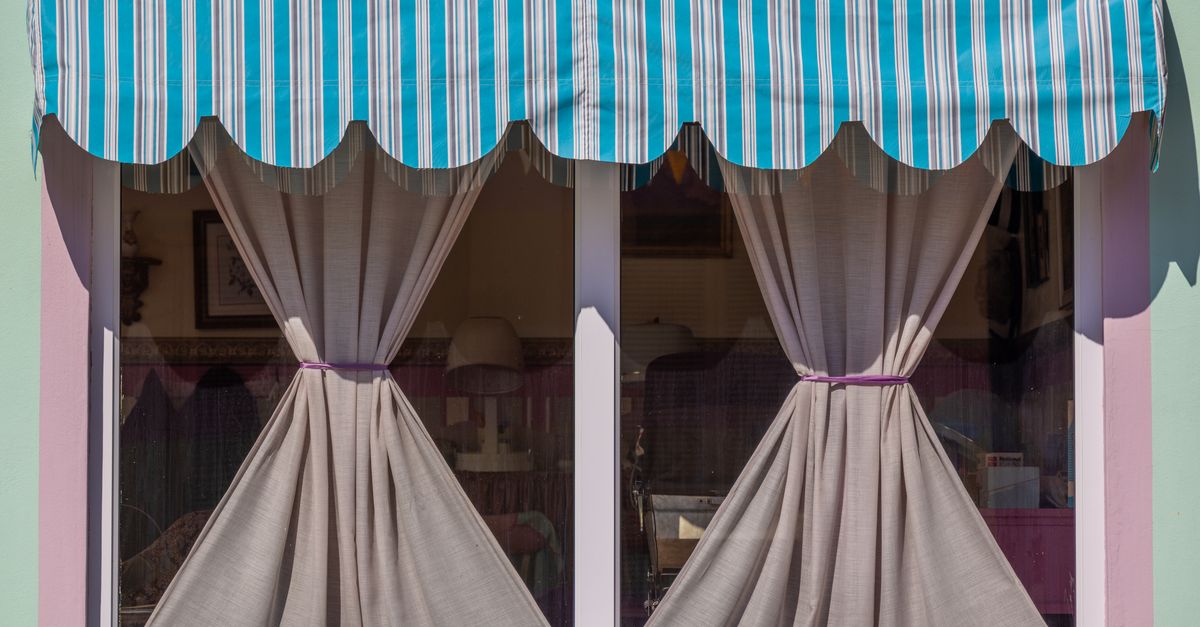
Measure the setup the fabric must cover
Start with the hanging setup rather than the width of the window glass. For a track, measure the full span that the curtains will cover. If the fitting extends beyond the window, use the complete track or pole width because the curtains must gather across that entire span.
| Measurement | What to enter or measure | Why it changes the fabric order |
|---|---|---|
| Track or pole width | The full hanging span | Sets the width that must be gathered |
| Finished curtain drop | The distance from the hook or track to the intended hem position | Sets the basic length of each curtain |
| Fullness ratio | A ratio chosen for the heading style | Determines how much fabric is needed across |
| Fabric width | The listed width of the fabric roll or piece | Determines how many full widths are needed |
| Hem and heading allowance | Extra length for turnings | Is added to the finished drop |
The finished drop is the visible distance from the hook or track down to where the bottom hem will sit, so decide on that hem position before measuring. Do not substitute the bare window width for the track or pole width unless those spans are the same. Measure the physical dimensions twice before ordering, especially if the fitting is fitted close to the wall or ceiling.
Choose fullness for the heading
Fullness describes how much fabric is gathered compared with the width of the track or pole. It is a matter of appearance and heading construction, not an extra measurement taken from the window. Use the ratio that corresponds to the heading you intend to make.
| Heading type or look | Typical ratio | Expected appearance |
|---|---|---|
| Pinch pleat or pencil pleat | 2 to 2.5 times | Full and gathered |
| Eyelet | 1.5 to 2 times | Fullness varies with the chosen ratio |
| Any heading below 1.5 times | Less than 1.5 times | Tends to look flat |
| Any heading above 2.5 times | More than 2.5 times | Generous but heavy |
These ranges offer a starting point rather than a one-size-fits-all rule. Pencil and pinch pleats generally need more gathered fabric than eyelet curtains, which are already drawn together by their rings. If your heading uses a specific construction, use its fullness guidance when it differs from the ranges above.
Calculate the fabric widths and cut length
The calculation consists of four linked values:
- Required gathered width: track or pole width multiplied by the fullness ratio.
- Fabric widths to cut: required gathered width divided by the fabric width, then rounded up to the next whole number.
- Cut length per width: finished drop plus the combined hem and heading allowance.
- Base fabric total: number of widths multiplied by the cut length.
Rounding up is essential because a curtain needs enough fabric to gather properly. Rounding down may leave the finished curtain too flat even if the basic multiplication appears to fit the track. Each full width of fabric is also called a drop. The allowance is added to the drop rather than to the finished visible length, because it is consumed by the heading turnings and bottom hem.
Measure curtain fabric in the calculator
- Open the Curtain Fabric Calculator and select centimetres or inches. Every measurement should use the unit you have selected.
- Enter the full track or pole width and the finished curtain drop, meaning the distance from the hook or track to the intended hem position.
- Enter the fullness ratio that suits your heading and the width of the fabric you plan to use.
- Set the hem and heading allowance. A combined allowance of 20–25 cm, or 8–10 inches, is common, but enter a value that matches your heading tape and hem style.
- Read the live results: the number of fabric widths to cut, the cut length for each width, and the total fabric to buy, including the 10% margin.
Changing an input updates the results without restarting the calculation. Keep each value in the selected unit so the widths, cut length and final quantity remain consistent.
Work through one 240 cm track
Suppose the track is 240 cm wide, the fullness ratio is 2, the fabric is 137 cm wide, the finished drop is 160 cm and the combined allowance is 25 cm.
- Required gathered width: 240 × 2 = 480 cm.
- Widths to cut: 480 ÷ 137 = 3.50, rounded up to 4 widths.
- Cut length: 160 + 25 = 185 cm.
- Base fabric total: 4 × 185 = 740 cm, or 7.4 metres.
- Buying figure with the 10% margin: 740 × 1.10 = 814 cm, or 8.14 metres.
The calculated widths cover the whole 240 cm track. The final figure is the estimated quantity to buy for this plain-fabric example, rather than a detailed cutting plan.
Plan one panel or a pair
The number of widths returned covers the entire track or pole. For a single curtain covering the full span, keep the complete width count. For a pair, split the calculated widths between the two panels. If the total number of whole widths is odd, allocate one additional width to one side rather than trying to use half a width.
Calculate fullness from the full track or pole width, not from one panel’s width alone. The combined fabric across both panels must create the intended gathered fullness. Treat the result as a buying estimate for plain fabric, not as instructions for aligning, folding or cutting each panel.
Allow for patterns and fabric changes
The calculator assumes plain fabric with no pattern repeat. With a patterned fabric, every cut length must be rounded up to a whole pattern repeat so the design lines up correctly across the widths. A large repeat can add a considerable amount of fabric. See how to calculate curtain fabric with a pattern repeat for the separate repeat-matching step.
The displayed buying figure already includes the 10% margin, so do not add that margin a second time. It is intended to provide some cover for pattern matching, shrinkage after washing and cutting mistakes, but a large pattern repeat may require additional fabric beyond that allowance. Measure the window and fitting twice before placing the order.
Check the order details before buying
Run through these final checks:
- Confirm that the track width, drop, fabric width and allowance were all entered in the same unit.
- Check that the fullness ratio matches the heading style you plan to use.
- Confirm that the allowance reflects both the heading turnings and the bottom hem.
- Add any pattern-repeat requirement separately when using patterned fabric.
- Use the displayed total-to-buy figure rather than adding the 10% margin again.
- Recheck the physical measurements before ordering the fabric.
If the fabric is sold by the yard, switch the calculator to inches and use its rough yard total. For a detailed unit-based yardage explanation, see how to calculate curtain fabric yardage. Once the units, heading, allowance and pattern have been checked, the result provides a practical estimate for buying with confidence.