A baby eye color calculator predicts the probability that a child will have brown, green, or blue eyes based on both parents' eye color, using simplified genetics charts where brown is dominant, blue is recessive, and green sits between them. To get a result, the tool needs only two inputs: the father's eye color and the mother's eye color, each picked from brown, green, or blue. It then displays the percentage chance of each of those three outcomes for the baby. The underlying trait, melanin in the iris, makes brown eyes look dark, green or hazel eyes look medium, and blue eyes look light, and that gradient is what the percentages describe. Because real eye color is shaped by at least 16 interacting genes, with OCA2 and HERC2 on chromosome 15 doing most of the work, the calculator's output is an educated estimate rather than a guarantee. It cannot read which specific gene variants each parent carries, account for grandparents, or capture rarer shades like hazel, amber, or gray.
Why Eye Color Is Harder to Predict Than It Looks
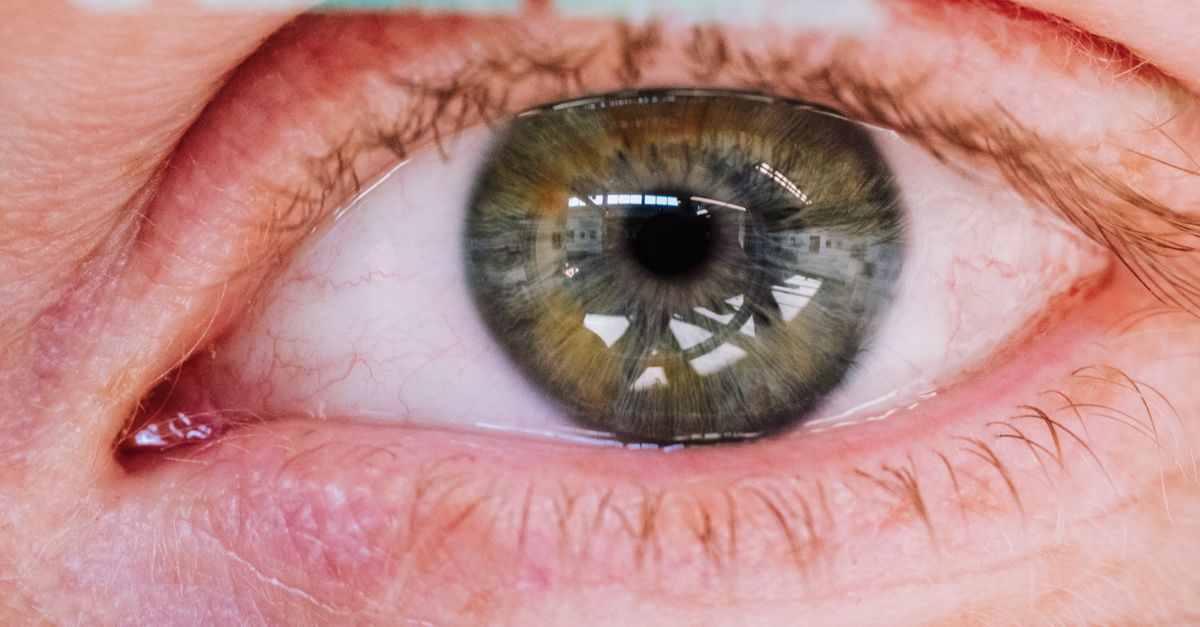
Eye color comes from melanin in the iris, the colored ring at the front of the eye. More melanin makes eyes appear brown, a moderate amount looks green or hazel, and very little produces blue. In simplified schoolbook genetics, brown is treated as dominant and blue as recessive, with green sitting between them. That shorthand is what lets a quick chart-based guess work at all, but real eye color is more complicated than one gene.
Researchers have tied eye color to at least 16 interacting genes, with OCA2 and HERC2 on chromosome 15 doing most of the work. Each parent passes on a mix of variants, and the child's final color reflects how those variants combine, not a copy of either parent. This is why two brown-eyed parents can still have a blue-eyed baby when both carry a hidden blue variant, and why blue eyes can skip a generation before reappearing. Because no combination of parents guarantees a single outcome, any tool that summarizes the odds is giving a probability range rather than a prediction.
How to Use the Baby Eye Color Calculator
The Baby Eye Color Calculator turns that genetics background into three quick inputs. It takes only the two parents' eye colors and returns a percentage breakdown of brown, green, and blue for the baby.
- Select the father's eye color from the three options: brown, green, or blue.
- Select the mother's eye color from the same three options.
- Read the predicted probability of brown, green, and blue eyes for your baby, displayed together so the three numbers add up to 100%.
Each combination of parents maps to a published chart from the genetics literature, so the same input always produces the same breakdown. If you want to compare scenarios, change one parent's eye color and see how the percentages shift. Swapping a brown-eyed mother for a blue-eyed mother can move the brown probability down and the blue probability up in one step, and that kind of side-by-side comparison is often the easiest way to see how each parent's contribution stacks into the final breakdown.
What Parent Combinations Usually Produce
The exact percentages come from the calculator, but the direction and rough magnitude of each pairing is well established. The table below summarizes what each combination tends to produce, with the strongest tendencies listed first.
| Parents' eye colors | Most likely baby outcome | Other possibilities |
|---|---|---|
| Brown + Brown | Strongly brown | Smaller chance of green; small chance of blue |
| Brown + Green | Brown or green | Smaller chance of blue |
| Brown + Blue | Close to an even split between brown and blue | Small chance of green |
| Green + Green | Green | Some chance of blue |
| Green + Blue | Green or blue | Brown is rare |
| Blue + Blue | Almost always blue | Brown is the rare exception |
For a concrete check on the math, two brown-eyed parents follow a classic simplified ratio of about 75% brown, 18.75% green, and 6.25% blue. Adding those three numbers together (75 + 18.75 + 6.25) gives 100%, which is how you can tell you are reading the full breakdown rather than a partial one. Plug the same parents into the calculator and it will return exactly those numbers, so you can use the arithmetic as a quick sanity check whenever a result looks incomplete.
How to Read the Percentages
Each percentage is an estimate of how often that eye color would appear across many similar parent pairs, not a promise about a specific child. A 75% brown reading for two brown-eyed parents means brown is the most common outcome among babies of similar pairs in the underlying chart, not that any one baby is 75% certain to have brown eyes. Think of it as the chart's best guess for the group, not a guarantee for your baby.
Because the percentages add up to 100%, you can also use them to size up the spread of likely outcomes. A breakdown of 50% brown and 50% blue tells you the chart sees those two colors as roughly equally likely, while a breakdown of 99% blue and 1% brown tells you one outcome is almost certain and the other is the rare exception. The larger the gap between two numbers, the more the calculator is leaning toward one color. When the breakdown is closer to evenly split, it usually means several gene variants are in play and the result could go a few ways.
Keep in mind that the chart is a simplification. Real outcomes depend on which specific gene variants each parent carries, and the calculator cannot read that information. It also cannot see recessive variants hidden in a brown-eyed parent's DNA, so even a small percentage on the chart can occasionally be the actual outcome. Treat the percentages as a science-informed range of possibilities rather than a forecast, and use the highest number as the most likely color while staying open to the others.
What the Calculator Includes and What It Leaves Out
Because the tool is built on simplified charts, it has clear limits. Knowing them keeps you from reading more into the result than it can actually tell you.
| Included | Not included |
|---|---|
| Brown, green, and blue options for both parents | Hazel, amber, gray, and other rarer shades |
| Probability of brown, green, and blue for the baby | Grandparents' eye colors or family history |
| A breakdown that always sums to 100% | The specific gene variants each parent carries |
| Published genetics charts in plain language | Medical, diagnostic, or genetic-counseling advice |
If a parent has hazel or amber eyes, the calculator will still ask you to pick from brown, green, or blue, and that mismatch is worth keeping in mind. The closer a parent's actual color is to one of those three options, the more accurate the result will be. The output is meant as a fun, educational estimate before the baby arrives, not a substitute for clinical testing, and it does not look at the full set of genes that influence eye color in the real world.
When a Baby's Eye Color Becomes Permanent
Many infants are born with lighter or bluish eyes because melanin is still building up in the iris. The color often deepens over the first several months and usually settles by about 6 to 12 months of age, though small changes can sometimes continue a little longer. Light eyes at birth often get darker as the months pass, while brown-eyed babies tend to keep their color from the start.
If you use the calculator during pregnancy or right after birth, treat the result as a guide to what is likely once melanin has finished developing. The percentages describe the genetic tendency the baby was born with, while the visible color in those first months is still catching up. By the end of the first year, what you see should line up closely with the calculator's prediction, unless one of the rarer gene variants shows up.
If a baby's eye color still seems to be shifting after 12 months, that is also within the normal range. A small number of children see additional changes into toddlerhood, especially around the edges of the iris. The calculator's percentages describe a genetic tendency rather than a specific moment in time, so let the eyes settle before comparing them to the prediction.
For a deeper look, see How to Read a Baby Eye Color Chart Before Baby Arrives.
For a deeper look, see How to Determine Brinell Hardness Number Step by Step.