To calculate ovulation from your last period, add your cycle length to the first day of your last menstrual period to project your next period, then subtract 14 days — the typical length of the luteal phase — to estimate your ovulation day. This backward count is the heart of the calendar (rhythm) method, and it relies on one well-established observation: while the first half of the menstrual cycle varies from person to person, the second half between ovulation and the next period stays close to 14 days. The fertile window then stretches from about 5 days before ovulation through 1 day after, because sperm can survive several days in the reproductive tract while an egg remains viable for roughly 12 to 24 hours after release. Entering the first day of your last period and your average cycle length into the Ovulation Calculator returns an estimated ovulation day, fertile window, and projected next period, with all of the date math done for you in the browser.
Why the Calendar Method Counts Backward From Your Next Period
The math that calculates ovulation from your last period is counter-intuitive at first glance. Most people instinctively count forward from the first day of their period — for example, "my period started on day 1, so ovulation must be on day 14." That intuition is wrong for a subtle but important reason: the length of a menstrual cycle is determined almost entirely by the first half, before ovulation occurs.
In a typical cycle, the body takes some variable amount of time to recruit and mature an egg. That span, called the follicular phase, can range from roughly 7 to 21 days depending on the person and the month. The second half of the cycle, called the luteal phase, runs from ovulation until the next period begins, and it is far more stable at about 14 days for most individuals, as covered in standard references on the menstrual cycle. Counting backward from the projected next period removes the variability of the follicular phase and lands on a much more reliable ovulation estimate.
This is why two people with the same last period date but different cycle lengths will see different ovulation days in any calculator — a 30-day cycle pushes the predicted ovulation day two days later than a 28-day cycle, and a 25-day cycle pulls it three days earlier. If you try to count a fixed number of days forward from your period, you will systematically misplace ovulation whenever your cycle is not exactly 28 days long.
The Calculation Step by Step
The arithmetic is simple once you know which numbers to use. Here is the step-by-step method that any fertility-awareness tool applies under the hood.
- Find the first day of your last menstrual period. This is "day 1" of your current cycle — the first day of actual bleeding, not spotting.
- Estimate your average cycle length. Count the days from the first day of one period to the first day of the next period, then average your last several cycles if they vary. The default assumption is 28 days; most cycles fall between 21 and 35.
- Project your next period by adding your cycle length to your last period date. For example, an LMP of May 1 with a 28-day cycle gives a projected next period of May 29.
- Subtract 14 days from the projected next period to find your estimated ovulation day. In the example above, May 29 minus 14 days is May 15.
- Mark your fertile window as the six days surrounding ovulation: 5 days before the predicted ovulation day through 1 day after. In the example, the window runs from May 10 through May 16.
You can run the same calculation by hand for any cycle length, but a free Ovulation Calculator handles the date arithmetic for you and shows the fertile window in a calendar view, which is faster than counting days on a paper calendar.
Cycle Length Changes the Result
The single biggest input that shifts your ovulation estimate is cycle length. The table below summarizes how the calculator behaves across common cycle lengths — for exact dates, plug your own LMP into the tool.
| Cycle length | What it typically means | Effect on the ovulation estimate |
|---|---|---|
| 21 days | Short cycle | Ovulation falls earlier than the textbook day 14 |
| 24 days | Short but within range | Ovulation earlier than day 14 |
| 28 days | Textbook cycle (the default) | Ovulation around day 14 |
| 30 days | Slightly long | Ovulation later than day 14 |
| 35 days | Long cycle | Ovulation notably later than day 14 |
| Above 35 or irregular | Outside the reliable range | Calendar estimates become unreliable — confirm with a clinician or ovulation test |
The pattern is consistent: longer cycles push ovulation later, shorter cycles bring it earlier, and the relationship is roughly linear because the luteal phase stays put. If your cycles vary by more than 7 to 9 days from month to month, use an average of your last three to six cycles as the input — this gives a more representative number than any single cycle on its own.
Worked example using LMP = May 1 and cycle length = 28 days:
- Next period: May 1 + 28 days = May 29
- Estimated ovulation: May 29 − 14 days = May 15
- Fertile window: May 10 through May 16
How the Fertile Window Stretches Beyond the Single Ovulation Day
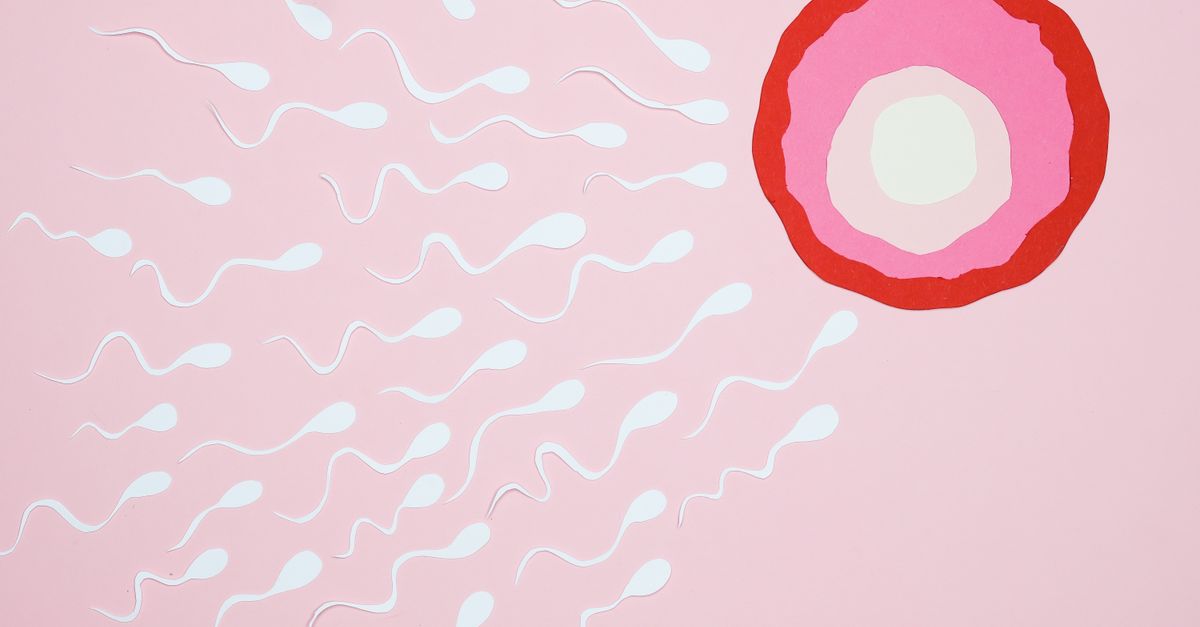
The calendar method marks a six-day fertile window, not just one day, because biology gives the egg and sperm different lifespans. An egg survives for roughly 12 to 24 hours after ovulation, so intercourse on the day after ovulation can still result in conception if the egg is still viable. Sperm, by contrast, can survive in the reproductive tract for up to five days, so intercourse five days before ovulation can still result in conception.
That is why the calculator marks fertile days from 5 days before the estimated ovulation day through 1 day after — a six-day span. The two to three days leading up to ovulation are typically the most fertile of the window because they maximize the chance that sperm are already in place when the egg is released.
If your goal is to maximize the chance of conception, timing intercourse across this window — particularly in the two to three days before the predicted ovulation day — generally gives the best odds. If you are trying to track a single best day rather than a window, the day before the predicted ovulation day is often cited as the most likely single day for conception.
When the Calendar Method Stops Being Reliable
The calendar method is a planning tool, not a measurement. Its biggest weakness is variability: real cycles shift with stress, illness, travel, weight change, sleep disruption, breastfeeding, perimenopause, hormonal contraception, and many other factors. Someone whose cycles are consistently 28 days will see tighter estimates than someone whose cycles bounce between 25 and 35 days.
For people with irregular cycles — meaning cycle length varies by more than about a week from cycle to cycle — calendar predictions become far less reliable, because the "average" cycle length does not actually represent any real cycle the body will run. In that case, the calendar method should be paired with another fertility sign or a clinical test.
Three signals are commonly paired with calendar tracking:
- Basal body temperature: a small sustained rise after ovulation confirms that ovulation occurred.
- Cervical mucus changes: fertile-quality mucus appears in the days leading up to ovulation.
- Ovulation predictor kits: over-the-counter urine tests detect the LH surge that precedes ovulation by roughly 24 to 36 hours.
Each of these methods has its own false-positive and false-negative rates, but combined with calendar tracking they produce a more confident picture than any single signal alone. For anyone with persistent irregular cycles, fertility concerns, or a need for contraception, the appropriate next step is a conversation with a healthcare provider — the calendar method is not a reliable form of contraception on its own. If you want to work out other date-based calculations around your cycle — for example, how many days until your next period, or what day of the week your ovulation falls on — the Date Add Subtract Calculator and Day of the Week Calculator handle the underlying date arithmetic without you having to count by hand.
If you're weighing options, Calculate Ovulation After Miscarriage: A Practical Guide covers this in detail.