To calculate ovulation and your fertile window using the calendar method, add your average cycle length to the first day of your last menstrual period to project your next period, then subtract 14 days to find your estimated ovulation day; the fertile window runs from 5 days before that day through 1 day after. This estimate works because the second half of the menstrual cycle, called the luteal phase, stays close to 14 days in most people, while the first half varies from cycle to cycle. By counting backward from your projected next period rather than forward from your last one, the calculation automatically adjusts for shorter or longer cycles. An egg is only viable for roughly 12 to 24 hours after it is released, but sperm can survive in the reproductive tract for up to five days, which is why the fertile window is wider than the single day of ovulation itself. The Ovulation Calculator applies this formula in your browser using just two inputs. Knowing the difference between your ovulation day and your full fertile window matters when timing intercourse around the most fertile days, because the two to three days leading up to ovulation generally give the highest chance of conception.
Defining Ovulation and the Fertile Window
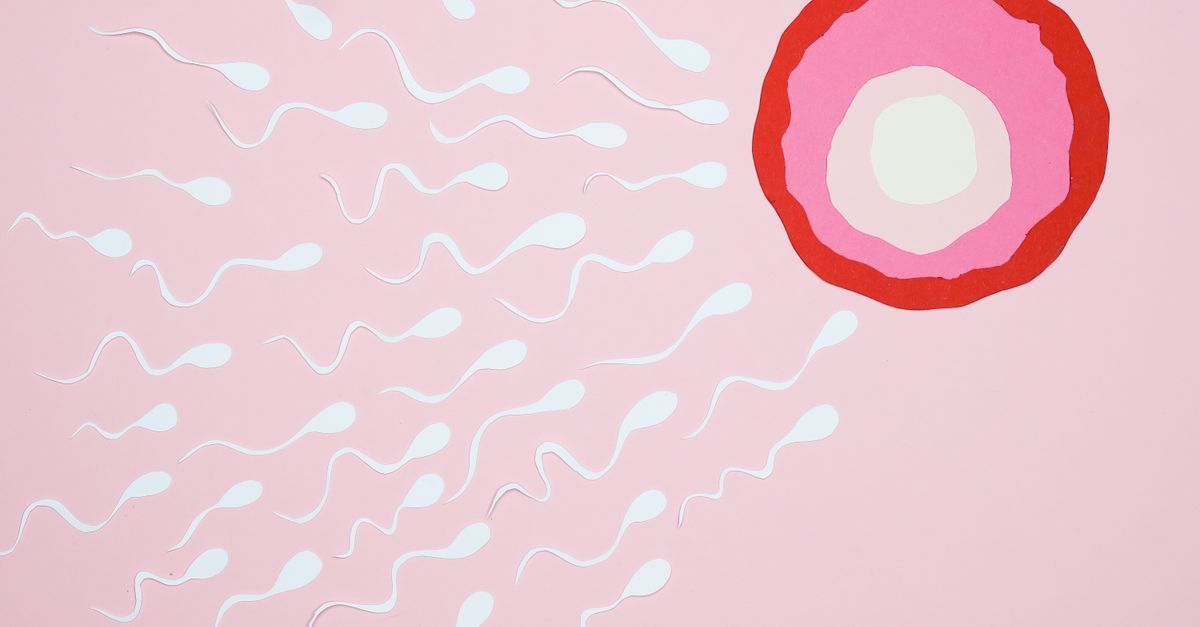
Ovulation is the moment a mature egg is released from one of the ovaries, usually once per menstrual cycle. After release, the egg travels into the fallopian tube, where it can be fertilized by sperm within a narrow window of about 12 to 24 hours. If the egg is not fertilized during that window, it dissolves and the next menstrual period begins roughly two weeks later, consistent with the stable length of the luteal phase described in the menstrual cycle literature.
The fertile window is the stretch of days during which intercourse is most likely to result in pregnancy. Because sperm can survive in the female reproductive tract for up to five days while waiting for an egg, and because the egg itself remains viable for up to about a day after release, the biological fertile window spans roughly six days around ovulation. Intercourse timed in the two to three days immediately before the predicted ovulation day tends to offer the highest probability of conception, simply because more live sperm are typically still present when the egg is released.
The Calendar Method Formula
The calendar method, also called the rhythm method, is one of the oldest fertility-awareness techniques. It rests on a single well-supported observation from fertility awareness research: while the first (follicular) phase of the cycle can vary widely from person to person and from cycle to cycle, the second (luteal) phase is remarkably stable at about 14 days in most people.
Because of that stability, the formula counts backward from your projected next period rather than forward from your last one. The steps are:
- Next period start = first day of last period + cycle length (in days)
- Estimated ovulation day = next period start − 14 days
- Fertile window start = ovulation day − 5 days
- Fertile window end = ovulation day + 1 day
Worked example. Suppose your last period began on March 1, 2025 and your average cycle is 28 days:
- Next period start = March 1 + 28 days = March 29, 2025
- Estimated ovulation day = March 29 − 14 days = March 15, 2025
- Fertile window start = March 15 − 5 = March 10, 2025
- Fertile window end = March 15 + 1 = March 16, 2025
Intercourse any time from March 10 through March 16 carries the highest probability of conception, with March 13 through March 15 typically being the peak days because they sit closest to ovulation. The Ovulation Calculator runs this same arithmetic for you so you do not have to worry about month lengths or leap years. Readers who want to apply the same fertile window to additional planning questions, such as gender timing, can also see the Plan for a Boy or Girl Using an Ovulation Calculator guide.
How to Calculate Ovulation and Your Fertile Window
If you would rather skip the date arithmetic, the tool does it for you. Here is the exact sequence.
- Open the Ovulation Calculator in your browser. No account or sign-up is required.
- Enter the first day of your last menstrual period using the date picker. This is the calendar day your most recent flow started, not the day it ended or the day you noticed spotting.
- Enter your average cycle length in days. The default is 28, which is the textbook average; if you have tracked your own cycles for a few months, use that number instead. Most cycles fall between 21 and 35 days.
- Read the results. The calculator instantly displays your estimated ovulation day, your six-day fertile window, and your next expected period date, all computed locally with nothing uploaded.
That is the full input the tool needs. Both inputs are easy to change, so you can rerun the calculation as soon as your next period starts and refine the average over several cycles.
How Cycle Length Changes Your Estimate
The single biggest lever in the calendar method is cycle length. Two people whose last periods start on the same calendar day will get different ovulation estimates if their cycle lengths differ, because the luteal phase stays near 14 days while the follicular phase stretches or shrinks to make up the difference. A 24-day cycle places ovulation roughly 10 days after the start of the last period, because the next period is closer in; a 35-day cycle pushes ovulation out to roughly day 21 of the cycle. Anything outside the 20 to 45 day range that the tool accepts is unusual and may warrant a conversation with a healthcare provider.
Because the precise arithmetic changes with every change in cycle length, rather than working each variant out by hand, run your own numbers in the Ovulation Calculator. The result updates instantly each time you change either input, and you can experiment with shorter or longer averages to see how much the fertile window shifts.
Comparing Fertility Tracking Methods
The calendar method is the simplest fertility-awareness approach, but several other methods can confirm or refine its predictions. Each method trades convenience for precision in a different way, and many people combine two of them.
| Method | What it measures | Strength | Limitation |
|---|---|---|---|
| Calendar (rhythm) | Projected ovulation from cycle history | Free, no equipment, easy to plan ahead | Population averages; unreliable for irregular cycles |
| Basal body temperature | A small temperature rise after ovulation | Confirms that ovulation already occurred | Only useful after the fact; daily measurement required |
| Cervical mucus observation | Changes in cervical fluid around ovulation | Tracks hormones in real time day to day | Requires careful daily observation |
| Ovulation predictor kits | Luteinizing hormone surge in urine | Detects ovulation 24 to 36 hours ahead | Costs money per cycle; occasional false surges |
A common approach for someone trying to conceive is to use the calendar method for forward planning and pair it with ovulation predictor kits or basal body temperature tracking for confirmation. The calendar method is not a reliable form of contraception on its own, because real cycles vary with stress, illness, and other factors that the math cannot predict.
What Can Shift Ovulation From Month to Month
Even when your cycle length looks consistent on paper, the day you actually ovulate can move by a few days from cycle to cycle. The most common reasons include:
- Stress, illness, or significant changes in sleep or exercise habits
- Travel across time zones or major schedule shifts
- Weight change or sudden changes in diet
- Breastfeeding
- Perimenopause
- Hormonal contraceptives recently stopped
- Certain medications and supplements
For these reasons, the calendar method gives an estimate, not a measurement. If your cycles are irregular from month to month, using an average of your last several cycles will give a more representative estimate than any single month, but the prediction will still be less reliable than for someone with very steady cycles.
When to Talk to a Healthcare Provider
The calendar method works best as a planning aid for someone with reasonably regular cycles who wants to time intercourse around ovulation. It is less reliable, and arguably not appropriate, in several situations:
- Your cycles are shorter than 21 days, longer than 35 days, or vary by more than a few days from month to month
- You have been trying to conceive for 12 months (or 6 months if you are over 35) without success
- You have known conditions such as polycystic ovary syndrome, endometriosis, or thyroid disorders
- You want to use a fertility-awareness approach for contraception, where the consequences of an off-by-a-few-days estimate are larger
A clinician can confirm whether and when ovulation is happening using bloodwork, ultrasound, or lab-grade urine tests, and can advise on next steps specific to your situation. Treat the calculator output as a useful starting point for planning, not as medical advice.
Related reading: How to Convert Power Windows to Manual: Motor Power Math.