The formula for the volume of a cylinder is V = πr²h, where r is the base radius and h is the height, and to read the answer in milliliters you simply measure both r and h in centimeters because 1 cm³ is defined to be exactly 1 mL. That one-to-one relationship between cubic centimeters and milliliters is the reason lab glassware, kitchen measuring cups, and small liquid containers are dimensioned in cm rather than meters or inches — the math comes out in the unit you actually want to read. A cylindrical cup with a 3 cm radius and a 10 cm height, for instance, holds π × 3² × 10 = π × 9 × 10 = 90π ≈ 282.74 cm³ of liquid, which is the same number expressed as 282.74 mL. The arithmetic is identical regardless of whether you call the final figure cubic centimeters or milliliters; the unit label is the only thing that changes.
Cylinders are the most common shape for holding liquids and gases in everyday life. Water bottles, soda cans, mugs, candles, drinking glasses, pipes, storage jars, paint tins, syringes, fuel tanks, and aerosol cans are all cylinders or close approximations, and what most people want to know about each is capacity. For anything below about a liter — mugs, jars, beakers, baby bottles, test tubes — the convenient capacity unit is the milliliter, and the convenient input unit for the formula is the centimeter. That pairing makes V = πr²h the most useful version of the cylinder formula for ordinary measurements, and it is the reason a single short calculation handles the vast majority of real-world capacity questions.
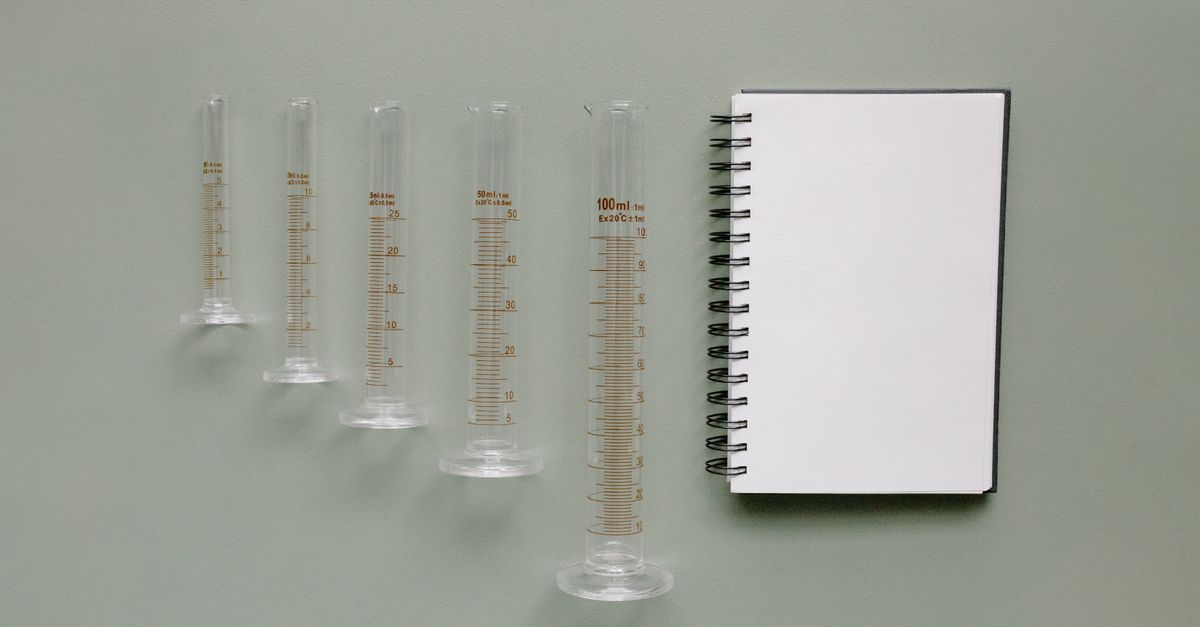
Why Milliliters Match Cubic Centimeters
The metric system was designed so that one cubic centimeter — the volume of a cube that is 1 cm on every side — equals exactly one milliliter. The original metric definition of the liter was one cubic decimeter (1 dm³ = 1,000 cm³), and the milliliter is one thousandth of that. When you measure a small cylinder in centimeters and apply V = πr²h, the result is in cm³, and you can replace the cm³ label with mL without changing the number. This is why measuring cups, syringes, and beakers are marked in mL even though the physical marks on the glass are spacing lines whose geometry is best described in cm.
Because the conversion factor is exactly 1, a calculator does not need a special mL mode. Type the radius and height in centimeters and the answer is a volume in cm³ that you can read as mL. Type the same numbers in millimeters and the answer comes back in mm³, which you would then divide by 1,000 to reach mL. Keeping the units consistent across both inputs is the only requirement; the unit you read in is the unit you measured in, cubed.
How to Calculate Cylinder Volume in mL
- Measure the base radius in centimeters. Use a ruler or caliper across the circular base, read the full diameter, and divide by 2 to get r. If you are working from a labeled product, the radius is often half of the diameter printed on the spec sheet.
- Measure the height in centimeters. The height is the straight distance between the two circular bases, measured perpendicular to the base, not along any curved side.
- Plug the numbers into V = πr²h. Square the radius, multiply by the height, then multiply by π (about 3.14159). The result is in cm³ and is numerically equal to the volume in mL.
- Verify with the Cylinder Volume Calculator. Open the Cylinder Volume Calculator, type the radius into the first field and the height into the second, and the volume, base area, lateral area, and total surface area appear instantly — no submit button to press and nothing sent to a server.
- Read the answer as milliliters. Because the inputs were in centimeters, the volume output is in cm³, which equals mL one-to-one. Use or record the number without any conversion factor.
A Worked Example in Centimeters
Consider a cylindrical kitchen canister with a measured radius of 7 cm and a height of 12 cm. Square the radius: 7² = 49. Multiply by the height: 49 × 12 = 588. Multiply by π: 588 × 3.14159 ≈ 1,847.26. The canister holds about 1,847.26 cm³, or 1,847.26 mL. A quick sanity check is to think of the base as a circle of area πr² ≈ 153.94 cm² — roughly a 14 cm wide disc — and to imagine stacking that disc 12 cm tall. The product 153.94 × 12 ≈ 1,847 mL matches the formula, which confirms the calculation. That same number, expressed in liters, is about 1.85 L, close to a standard 2 L beverage bottle but a little smaller.
Volume, Base Area, Lateral Area, and Total Surface Area
The cylinder volume formula has three close cousins that show up whenever you are measuring capacity, wrapping, painting, or cutting sheet material. The table below compares them so it is clear which one to reach for in any given task.
| Measurement | Formula | What it tells you | Unit with r, h in cm |
|---|---|---|---|
| Volume (capacity) | V = πr²h | How much space or liquid the cylinder holds | cm³ (numerically equal to mL) |
| Base area | Abase = πr² | Area of one circular end | cm² |
| Lateral (side) area | Alat = 2πrh | Area of the curved wall only, as if unrolled into a rectangle | cm² |
| Total surface area | Atot = 2πr(r + h) | Outer area including both circular ends | cm² |
The calculator returns all four of these numbers at once, which is useful when capacity is only part of the question. Painting a cylindrical storage drum, for instance, needs the total surface area to estimate the paint; cutting a label that wraps around the side needs the lateral area; lining the bottom with felt needs the base area. Because the formulas share πr², the lateral area 2πrh, and the total 2πr(r + h), the tool surfaces them together rather than forcing a separate calculation for each.
Where the Cylinder Volume Calculator Helps
The Cylinder Volume Calculator is designed for exactly the kind of measurement described above. You type the radius and the height in any consistent unit — centimeters, millimeters, inches, or meters — and the tool reports the volume the moment you stop typing. The same tool handles base area, lateral area, and total surface area in the corresponding squared units, so a single entry replaces four separate hand calculations. All of the math runs locally in your browser: no values are uploaded, no account is required, and no result is sent back from a server. The calculator accepts whole numbers and decimals, treats a radius or height of 0 as a volume of 0, and flags negative or non-numeric entries so a typo never produces a misleading answer. Extremely large inputs that would overflow are caught rather than displayed as a broken result.
If your measurement is in centimeters, the volume output is in cm³, which you can read directly as mL. If you happen to know the diameter instead of the radius, halve it before you type — the calculator does not convert diameter to radius for you, but the step is a single division. If you would like to see the same math worked out for larger containers, the guide on how to calculate cylinder volume in liters covers the unit switch in more detail.
Pitfalls When Measuring a Cylinder in mL
The single most common error when calculating cylinder volume in milliliters is mixing units between the radius and the height. A radius in centimeters and a height in millimeters produces a result that is neither cm³ nor mL, and the wrong number by a factor of 10 or more. Always convert both inputs to the same unit before applying V = πr²h, or use a calculator that assumes consistent inputs. With the Cylinder Volume Calculator, the rule is simple: whatever unit you put in for r must be the same unit you put in for h.
The second most common slip is forgetting to halve the diameter. A 10 cm diameter is a 5 cm radius; if you plug 10 into the radius field you will get a volume that is four times too large, because the radius is squared. This is also why doubling the radius quadruples the volume: the r² term amplifies any error in measuring the base far more than a similar error in the height, which is only multiplied once.
The third issue is treating the height as a slanted or diagonal length. Cylinders are measured from one flat circular face to the other, perpendicular to the base, not along any curved side. A measuring tape that follows the curve of a bottle will overestimate the height and the resulting volume, and the error grows with the cylinder's diameter.
Finally, remember that the formula assumes a perfect right circular cylinder. Tapered cups, oval mugs, and bottles with a narrow neck do not satisfy V = πr²h, and the calculator will give an approximate answer at best. For a simple beaker, mug, drinking glass, can, or jar, however, the formula and the tool are exact, and the milliliter reading is the answer you can take to the kitchen or the lab.