The area of a circle for a concrete pour is calculated with A = πr², where r is the radius (half the diameter). For a circular patio, fire pit pad, well cover, or round driveway, you measure straight across the center to find the diameter, halve it to get the radius, then multiply the radius by itself and by π (about 3.14159). The result is the square footage of concrete you'll need to cover that circle as a flat surface. Once you have that area, you multiply by the slab thickness to get cubic feet or cubic yards of concrete — which is the number the ready-mix company actually bills you on. Getting the area right is the critical first step, because a small radius error gets squared and bloats (or shrinks) your order. A 1-foot mis-measure on a 10-foot-diameter pad changes the radius by half a foot, which changes the area by roughly 15 square feet — enough to ruin a Saturday pour or leave you with a about 0.2 cubic yards of wasted mix.
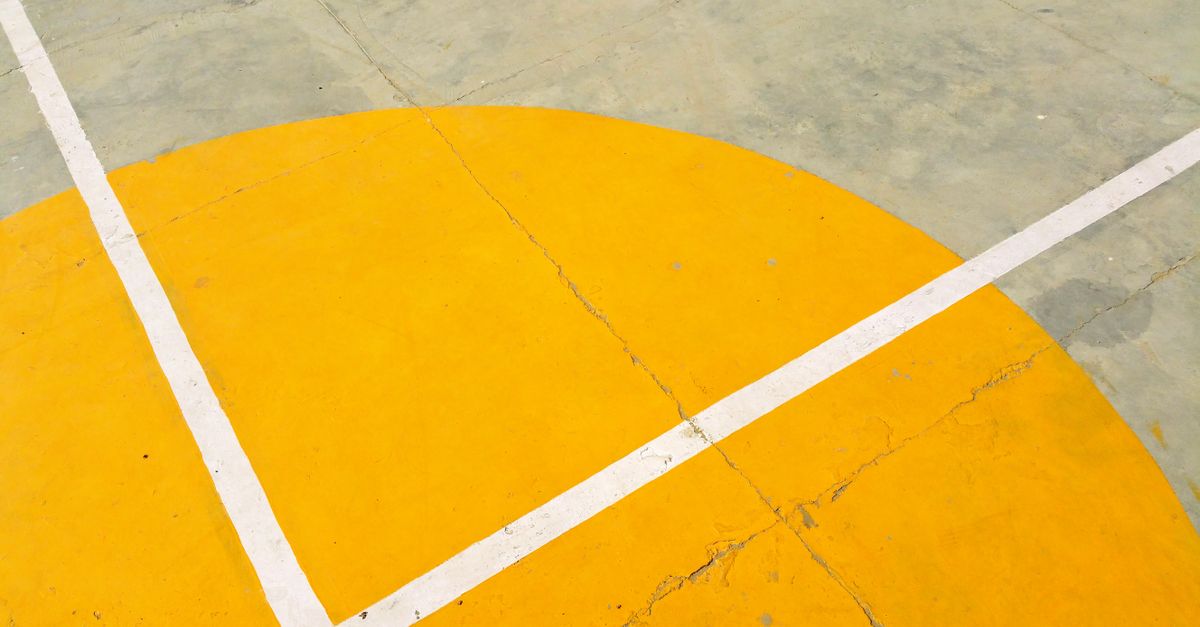
Why a Circular Concrete Pad Needs Real Math
Round concrete work shows up more often than people expect — a circular patio off a kitchen slider, a brick-and-concrete fire pit pad, a well cap over a 4-foot casing, a hot tub base that needs a clean ring, or a decorative compass rose inset in a driveway. Each one starts the same way: someone has to figure out how much square footage of concrete is going down so the truck doesn't show up short and the crew isn't left staring at half a yard of hardening mix.
Most homeowners underestimate how forgiving — and unforgiving — circle area math actually is. The formula is famously short (A = πr²), but the radius is squared, which means a small measurement error on the ground turns into a much bigger number on the order. A 9-foot-diameter patio is about 63.6 square feet of slab; a 10-foot-diameter patio is about 78.5. That's 15 extra square feet for one foot of diameter, and at 4 inches thick that one extra foot costs roughly 0.2 cubic yards of concrete. That is why doing the math before the truck pulls up matters.
The fastest way to lock down that number is the Circle Area Calculator, which handles the πr² step and also tells you the diameter and circumference from whatever you type. Then all that's left is multiplying by slab thickness.
Find the Circle's Area in Three Steps
Three quick steps get you from a tape measure to a usable square-foot number.
- Measure across the middle. Pull a tape or a long board straight across the circle from edge to edge, passing through the center. That distance is the diameter. If the pour isn't built yet (a stake at the center and a string to the edge work just as well), measure from the stake to a marked edge and double it.
- Pick radius or diameter in the calculator. On the Circle Area Calculator, flip the toggle to whichever input you measured. Enter the diameter straight in, or enter the radius (half of the diameter). The tool will work the conversion for you before applying A = πr².
- Read the area and the helper numbers. The area appears the moment you type, with the worked π × r² expression shown alongside it. The same screen also reports the diameter, the radius, and the circumference (2πr), so you have every measurement of the circle without re-measuring.
Type the value in any unit you like (feet, inches, meters, centimeters). The tool does not convert units — keep everything in one consistent unit and the area will come out in that unit squared. Feet in gives square feet out; meters in gives square meters out.
If the radius is 0, the calculator returns 0 (a circle with no width has no area). If a negative number or non-numeric text is typed, the tool flags it instead of producing a wrong answer, and an overflow on a huge value is caught before the result breaks.
Turn That Square Footage Into a Concrete Order
Area is the headline number, but concrete is sold and scheduled by volume. Once you have the area of the circle in square feet, two more steps give you the yardage to actually order:
- Multiply by slab thickness. Concrete thickness on a patio is usually 4 inches, on a driveway 5–6 inches, and on a hot tub base or fire pit pad 4–6 inches. A 4-inch slab is 1/3 of a foot thick, so cubic feet = square footage ÷ 3.
- Convert cubic feet to cubic yards. One cubic yard is 27 cubic feet. Divide the cubic-foot figure by 27 to get the net yardage.
- Add waste. Pour losses, over-excavation, and slab settling typically add 10% for a small round pad and 5% for a large simple one. Round the final number up to the nearest quarter yard; most ready-mix companies won't deliver fractional amounts below a quarter yard and they price in ¼-yard increments.
The calculator does not try to guess your thickness — that depends on the project. But the area number it gives is exact to roughly 15 significant digits (it uses the full-precision value of π built into your browser), which is well beyond what any tape measure can disturb.
Worked Example: a 10-Foot Round Patio Slab
Here is the kind of straightforward sequence a Saturday patio pour usually follows.
Step 1 — Measure. The homeowner marks a center stake, runs a string from the stake to the planned edge, and measures 5 feet. That makes the radius 5 feet and the diameter 10 feet.
Step 2 — Area. Using the Circle Area Calculator with radius 5: A = π × 5² = 25π ≈ 78.54 square feet. (The diameter reads back as 10 and the circumference as 10π ≈ 31.42 feet, useful if the patio gets a curved border.)
Step 3 — Volume at 4 inches thick. Four inches is 4/12 = 1/3 of a foot. So volume in cubic feet = 78.54 × (1/3) = 26.18 cubic feet. Convert to cubic yards: 26.18 ÷ 27 ≈ 0.97 cubic yards.
Step 4 — Order. Add 10% for waste on a small pad: 0.97 × 1.10 ≈ 1.07 cubic yards. Round up to the next quarter-yard increment, and the truck shows up with 1¼ yards of concrete. With the area number from the calculator, every step downstream is just unit arithmetic.
Common Sizes for Circular Concrete Projects
The pads people actually pour tend to cluster around a few sizes. This table gives rough starting points; the final diameter always comes from the site plan and the calculator.
| Project | Typical diameter | Recommended thickness |
|---|---|---|
| Backyard patio | 10–20 ft | 4 in |
| Fire pit pad | 8–12 ft | 4–6 in |
| Hot tub base | 7–8 ft | 4–6 in |
| Well cap or septic lid | 4–6 ft | 4 in |
| Decorative compass or logo | 3–6 ft | 3–4 in |
| Trash pad or A/C stand | 4–5 ft | 4 in |
A thicker slab costs more in concrete, but it also lets the same circle support more weight — a hot tub with water can run 5,000+ pounds on a 7-foot pad, which is why 6 inches is the safer call there. A 3-foot decorative inset on a walkway can sit at 3 inches because the load is just foot traffic.
Avoiding Measurement Errors on a Real Job Site
Most circular slab mishaps start with one of three setup mistakes. Catching them before the concrete arrives is the whole point of working the area out in advance.
- Measuring corner-to-corner instead of across the center. On an oval shape or a sloppy form, the longest straight line is not the diameter. The true diameter of a circle always passes through the center; on a circular pad, that line should hit both edges at right angles to each side.
- Forgetting that radius gets squared. Doubling the radius makes the area four times larger, not twice. A 4-foot radius gives 50.27 square feet; an 8-foot radius gives 201.06 square feet. If the form "looks about twice as wide" as the last one, the order needs to be four times the previous order, not two.
- Mixing units mid-calculation. A radius of 5 feet and a thickness of 4 inches, run through the same sheet, gives a wrong answer. Pick one length unit (feet is easiest for ready-mix) and stick with it from measurement through order.
The Circle Area Calculator does none of the unit juggling for you, but it produces an exact area number with the worked formula visible. That makes it easy to check whether the square footage you got from the tool matches what your site sketch suggests it should — and if it doesn't, the tape measure is the next thing to verify, not the formula.
Related reading: How to Calculate Cone Curved Surface Area Step by Step.
Related reading: How to Calculate Half Cylinder Surface Area.