To calculate calories for weight loss, multiply your basal metabolic rate (BMR) by an activity factor to estimate your Total Daily Energy Expenditure (TDEE), then subtract roughly 500 calories from that number to create the daily deficit that drives the loss. The arithmetic behind that sentence is the most widely used version of the resting-metabolism-plus-activity method, and the 500 kcal deficit aligns with the standard 3,500 kcal-per-pound convention that nutrition plans have used for decades. Building a target from BMR, the activity multiplier, and a fixed shortfall gives most adults a realistic number to eat toward every day, rather than a generic 1,200-calorie rule that ignores body size, age, sex, and how much someone actually moves. It also explains why two people with the same height and weight can need very different calorie counts: a desk worker and a construction worker with identical BMRs often sit hundreds of calories apart once movement, work, and exercise are added back in. Once those three layers are accepted, the entire "how many calories should I eat to lose weight" question reduces to running the inputs correctly, picking an honest activity tier, and adjusting the daily target after the first two or three weeks of measured progress.
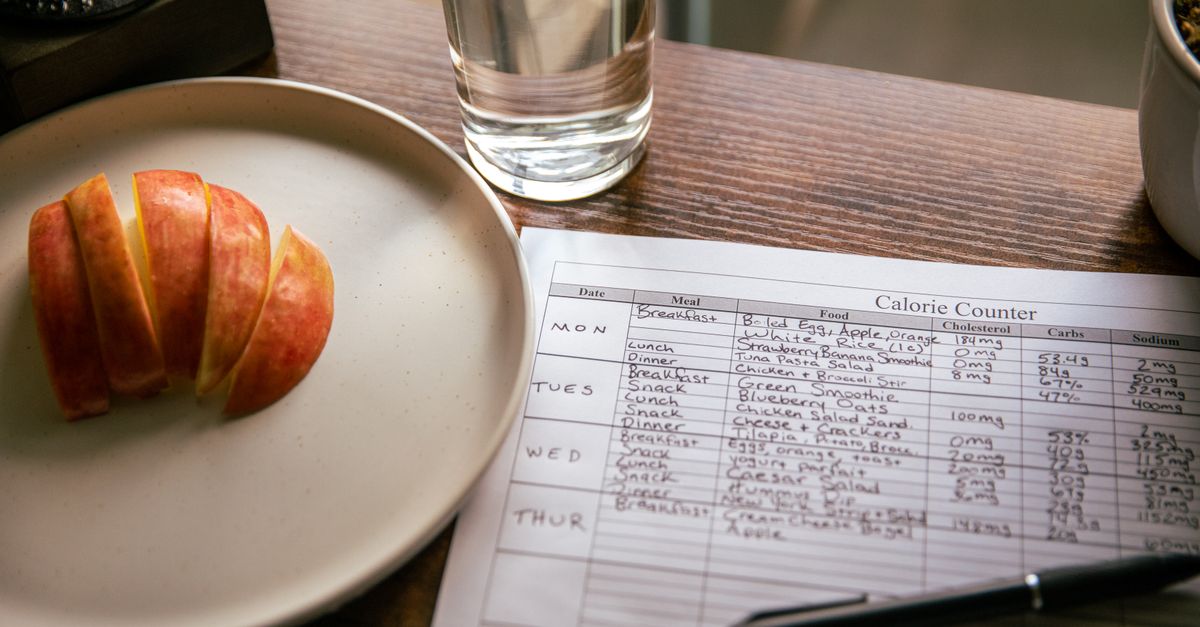
BMR, TDEE, and Your Weight Loss Target: How They Connect
Three numbers do the work behind any sensible weight loss calorie plan, and skipping any one of them tends to produce targets that are either too high to lose weight or too low to sustain.
BMR is the resting energy your body needs to keep organs, breathing, and basic cell function running while you do absolutely nothing. TDEE is BMR scaled up by how much you actually move during the day, including work, walking, exercise, and the thermic effect of food. The weight loss target is TDEE with a deliberate deficit applied on top.
Why the layering matters: two adults with identical BMR figures can have very different real-world energy needs. A desk-based worker and a warehouse worker with the same weight and height can sit hundreds of calories apart once movement is included, and that gap is exactly the difference between eating enough to fuel a day and under-eating by an entire meal. Building your target from TDEE rather than from a flat 1,200-calorie rule accounts for body size, sex, age, and movement in one go, and keeps the deficit proportional instead of forcing a 165 cm sedentary person and a 188 cm manual laborer to eat the same modest plate and hope.
The Mifflin-St Jeor Equation and Activity Multipliers
The Calorie Calculator starts from the Mifflin-St Jeor equation, published in 1990 and documented on Wikipedia's Basal metabolic rate page as the most accurate general-population predictor of resting energy use. The formula has two sex-specific constants and four multipliers on the inputs you provide:
Men: BMR = (10 × kg) + (6.25 × cm) − (5 × years) + 5 Women: BMR = (10 × kg) + (6.25 × cm) − (5 × years) − 161
That resting figure is then multiplied by an activity factor to estimate TDEE. The five standard multipliers cover most lifestyles, and they are the only piece of the calculation that you get to choose:
| Activity level | Multiplier | What it covers |
|---|---|---|
| Sedentary | 1.2 | Little or no exercise |
| Lightly active | 1.375 | 1–3 days of exercise per week |
| Moderately active | 1.55 | 3–5 days of exercise per week |
| Very active | 1.725 | 6–7 days of exercise per week |
| Extra active | 1.9 | Hard daily training or a physical job |
Multiply BMR by the multiplier that matches your typical week and you have your maintenance calories. Eat at that level and your weight, on average, holds steady. Any change in body weight, up or down, is then built on top of this maintenance number, which is why every serious calorie plan is two arithmetic steps, not one.
How to Calculate Calories for Weight Loss
This is the procedure the Calorie Calculator performs in your browser, written out so you can run the same three steps by hand or check the tool against your own arithmetic.
- Enter your basics. Choose your sex, then type your age in years, weight in kilograms, and height in centimeters into the first row of inputs. The Mifflin-St Jeor formula is calibrated for metric units, so convert if you normally think in feet and pounds before starting. One pound is roughly 0.4536 kg, and one inch is 2.54 cm.
- Pick an honest activity level. Match the option that describes your typical week, from sedentary through extra active. Round down rather than up when you sit between two categories, because the cost of a slightly conservative multiplier is much smaller than the cost of being unrealistic.
- Read TDEE, then flip the goal toggle. Your maintenance number appears immediately. Switch the goal to lose, maintain, or gain to see your daily target. The lose setting subtracts roughly 500 kcal from TDEE, the gain setting adds roughly 500 kcal, and the result is clamped so it never falls below 1,000 kcal per day.
A short worked example with the formula above: a 30-year-old woman, 170 cm tall, weighing 65 kg, who exercises about four days a week (moderately active, 1.55 multiplier).
BMR = (10 × 65) + (6.25 × 170) − (5 × 30) − 161 BMR = 650 + 1,062.5 − 150 − 161 BMR = 1,401.5 kcal/day
TDEE = 1,401.5 × 1.55 = 2,172.3 kcal/day Daily weight loss target = 2,172.3 − 500 = 1,672.3 kcal/day (well above the 1,000 kcal floor).
Run the same numbers through the Calorie Calculator as a check, and you should land on the same maintenance target and roughly the same daily goal.
How the Activity Level Choice Reshapes the Target
The five-tier activity scale is where a calculated calorie plan usually drifts from reality. The Mifflin-St Jeor BMR for the example above is fixed, because it depends only on sex, age, weight, and height. The activity multiplier is the lever that swings the final target by hundreds of calories at a time.
If the 30-year-old woman in the example were classified as lightly active (1.375) instead of moderately active (1.55), TDEE would fall from 2,172.3 kcal to 1,927.1 kcal, and her weight loss target would drop from 1,672.3 kcal to 1,427.1 kcal. That is a 245-calorie swing for the same body, simply from a different category on the dropdown. Two habits keep the choice honest:
- Use the level that describes your last two or three weeks, not your best-ever week.
- If your day job keeps you on your feet (nursing, construction, postal delivery, kitchen line), assume at least one tier higher than the option that mentions only deliberate exercise.
Because the multipliers are population averages, treat the result as a well-grounded starting point rather than a personal lab measurement. Track your measured weight for two to three weeks and nudge the target up or down by 100 to 200 kcal if the trend does not match the deficit you planned for.
Putting the Daily Target to Work
A daily calorie number only works if it is actually edible. The Mifflin-St Jeor estimate quietly assumes normal food intake, normal hydration, and no major medical conditions, so the following habits make the target more usable in practice.
- Split the target across meals you already like. A 1,672 kcal target becomes breakfast, lunch, dinner, and a snack you can repeat without willpower, not a stack of unfamiliar foods you researched late at night.
- Weigh in the same way, on the same days, for two to three weeks. Daily weight bounces around because of water, sodium, and food mass. The trend over a fortnight is the signal that actually matters for whether the deficit is working.
- Adjust the target in 100 to 200 kcal steps, not 500. A loss slower than expected usually calls for a small nudge downward; a loss faster than expected usually calls for a small nudge upward so you do not give up lean mass or energy.
- Keep protein roughly steady. BMR and TDEE do not set protein, but most adults preserve muscle on a deficit with around 1.6 g of protein per kg of body weight per day.
- Re-run the calculator after a 5 kg or so shift in body weight. BMR scales with body mass, so a lower weight means a lower TDEE and a slightly higher weight loss target for the same 500 kcal shortfall.
When the Estimate Needs a Professional Review
The estimate is honest about its limits: it does not account for body composition, pregnancy, medical conditions, medications, or individual metabolic variation, and the activity multipliers are population averages rather than lab-grade measurements. Specific situations where the number should not be the final word include pregnancy or breastfeeding (calorie targets are set by obstetric guidelines, not a deficit), any prescription medication that affects appetite, thyroid function, or fluid balance, and diagnosed metabolic conditions such as PCOS, hypothyroidism, and diabetes. Highly trained athletes also tend to fall outside the 1.9 multiplier, because their measured TDEE often sits closer to lab values than to a general population average.
If your measured weight loss stalls for more than two to three weeks despite hitting the calculated target, the right next step is a review with a registered dietitian or your physician, not a deeper arbitrary cut. The Calorie Calculator is built to give you a defensible starting number from inputs you already have. The qualified professional is the one who refines it for the parts an equation cannot reach, because no formula knows your medical history, your medications, or how your body actually responds to the deficit in real time.
Related reading: How to Calculate Ideal Weight by Height and Sex.
Related reading: Calculate Macros for Weight Loss From Any Calorie Target.