The surface area of a ball is A = 4πr², where r is the sphere's radius. That single formula captures the total area covering the outside of any perfectly round three-dimensional object, and a dedicated Sphere Surface Area Calculator evaluates it the moment you provide a positive radius. Because area has two dimensions, every honest answer comes back in a squared unit — square meters for a radius given in meters, square inches for a radius given in inches — and the squared label is what separates a real surface-area answer from a plain length. The 4πr² relationship is the standard treatment for any perfect sphere, from a marble to a planet, and it is the formula referenced in geometry textbooks and applied mathematics alike. The rest of this guide explains what the formula measures, how it scales when the radius changes, the exact steps to compute a value in your browser, and the places where a geometric answer is just a starting point rather than a final number.
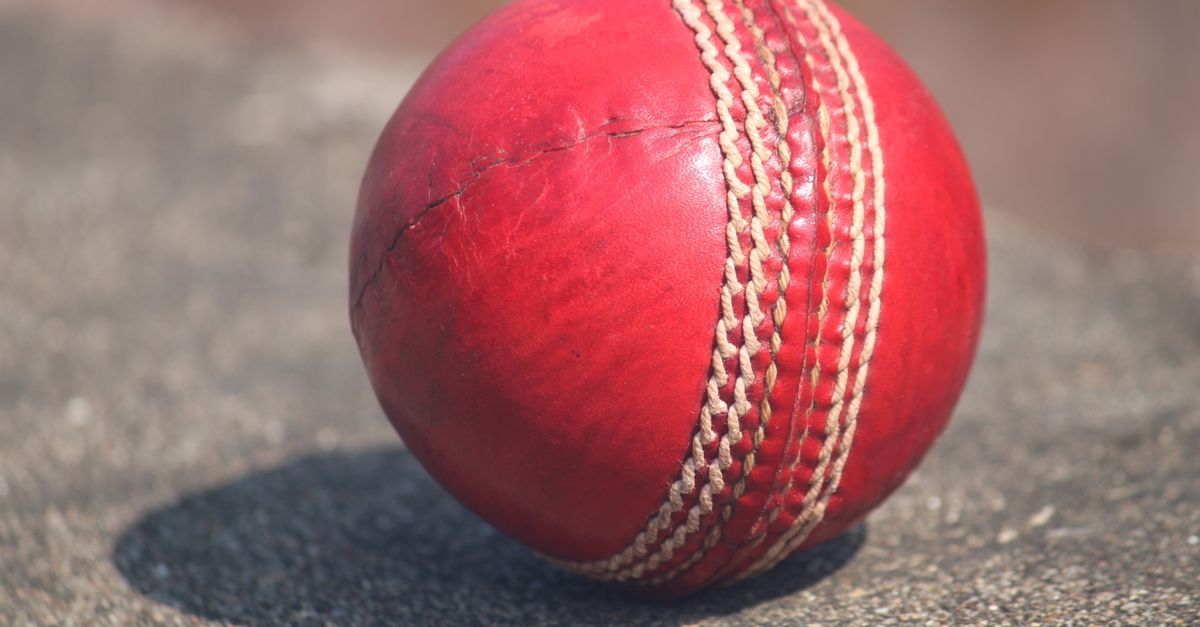
What "Ball Surface Area" Actually Covers
A ball, in the strict geometric sense, is the set of points in three-dimensional space that all sit at the same distance from a single center point. That fixed distance is the radius r, and the outermost shell traced out by those points is what the surface area measures — nothing inside, nothing but the perfect rounded skin. The 4πr² formula counts every bit of that skin, including the top, bottom, and every curve in between, treating the ball as if it had no seams, openings, or wall thickness.
That matters because real balls are rarely that clean. A real-world object can include stitching, openings, flattening, seams, fittings, texture, wall thickness, or a chunk taken out for a flat base. The geometric surface area is a clean mathematical ideal — the area of a perfectly smooth, perfectly round, perfectly closed sphere. It is the right number to use for homework, dimensional reasoning, and rough material planning. It is the wrong number to use as-is for purchase quantities, fabrication tolerances, or safety-critical pressure-vessel calculations, because real geometry always adds fudge factors the formula does not know about.
If you need only the curved part of a half-ball, or the curved part plus the flat circular base, a different formula applies and a separate hemispherical tool is the safer choice for that case.
The 4πr² Formula and How Area Scales With Radius
The formula 4πr² is not arbitrary. It agrees with classical calculus and coordinate geometry, and both Wolfram MathWorld and OpenStax state the same relationship, so any tool that outputs a different expression for a sphere's surface area is using the wrong formula. Common mistakes to watch for are the circle-area expression πr² (which gives a flat disk, not a sphere), the hemisphere-area expression 2πr² (half of a sphere's surface), and the sphere-volume expression 4πr³/3 (which answers a different question entirely).
What makes 4πr² especially worth understanding is how it scales. Because the radius is squared inside the formula, surface area grows faster than the radius does. The table below shows the multiplier that applies to the surface area whenever the radius changes by a given factor:
| If the radius changes by… | The surface area changes by… |
|---|---|
| Double (×2) | ×4 |
| Triple (×3) | ×9 |
| Quadruple (×4) | ×16 |
| Halve (÷2) | ÷4 |
| One tenth (×0.1) | ×0.01 |
That is different from how sphere volume scales, which uses the cube of the radius and the formula 4πr³/3. Tripling a radius multiplies volume by 27, not 9. This is why the relationship between radius and surface area feels generous for small changes but punishing for large ones — surface area is the second power, volume is the third power, and the difference only widens as the radius grows.
How to Calculate Ball Surface Area Step by Step
The Sphere Surface Area Calculator turns that formula into a one-screen workflow. The inputs it needs are minimal, and the output is labelled in a way you can copy directly into homework, a material estimate, or a quick dimensional check.
- Enter a finite radius greater than zero. A radius of 0 or a negative number is rejected, because neither describes a physical sphere. Scientific notation is fine for very small or very large values, and the upper bound stops floating-point overflow when the radius is squared.
- Choose the same linear unit used by the radius measurement. The supported choices are millimeters, centimeters, meters, inches, and feet. The selected unit is carried into the answer as a squared unit, so a radius in centimeters comes back in square centimeters.
- Read the surface area in the squared unit, verify the displayed diameter, and copy the result if needed. The result is rounded to twelve significant digits for display, but the calculation itself uses JavaScript's full π value without intermediate rounding.
That is the entire workflow. The calculator also shows the substituted expression 4 × π × radius², which doubles as a sanity check — if the substitution does not match what you entered, the result will not match either.
A Worked Example
Suppose a sports ball has a radius of 6.5 centimeters.
The diameter is 2r = 2 × 6.5 = 13 cm.
The surface area is 4 × π × r² = 4 × π × (6.5)².
Compute (6.5)² = 42.25.
Multiply by 4π ≈ 12.566370614.
Then 12.566370614 × 42.25 ≈ 530.93.
So the surface area is roughly 530.93 square centimeters, and the diameter reads 13 cm. If a calculator gives you the same two values, the formula is wired up correctly. If the diameter is not exactly 2r, or the result is a clean number that looks suspiciously like πr², something is wrong with the inputs or the tool.
Reading the Squared Unit and Checking the Diameter
Two details in the output are worth pausing on, because they catch the most common errors.
The first is the squared unit. Area is a two-dimensional measurement, so it is always reported as the input unit raised to the second power — m², cm², in², ft², or mm². A radius entered as 3 meters produces square meters. A radius entered as 3 centimeters produces square centimeters, and represents a physically much smaller object even though the numeric input looks similar. The calculator labels the squared unit but does not convert the entered magnitude between measurement systems, so if your source dimension is in inches and your desired output is in square meters, convert the radius first using a dedicated length converter before plugging it in.
The second detail is the diameter. The diameter is always exactly 2r, and the calculator shows it next to the surface area so you can sanity-check the radius you typed. If the displayed diameter does not match 2 × your input, the radius was entered with the wrong unit or the wrong magnitude. The diameter check is a fast way to catch typos before they propagate into downstream work.
When the Geometric Number Is Just the Starting Point
A mathematical sphere has a perfectly smooth surface. Real objects rarely do, and any number derived from 4πr² is a geometric baseline rather than a purchase quantity, a manufacturing tolerance, or a coverage rate.
For paint and coating estimates, the baseline area needs to be combined with the product's coverage rate, the number of coats, the absorption of the substrate, overspray, and the application method. For fabric, leather, or sheet material, add an allowance for seams, overlap, waste, and the curvature allowance that flat stock needs to wrap around a curved surface. For fabrication, treat the ideal sphere as a starting point and apply the appropriate tolerances for wall thickness, weld seams, and openings.
For safety-critical work — pressure vessels, structural spheres, procurement for load-bearing hardware — use the actual engineered geometry and the applicable tolerances rather than treating an ideal sphere as the finished component. The calculator gives the right mathematical answer; it does not know about your specific object.
Common Confusions
Three formulas get mixed up often enough to deserve a quick note.
The circle-area formula πr² describes a flat disk, not a sphere. It produces a much smaller number for the same radius and should never be used for an outer skin of a round object.
The hemisphere-surface-area formula 2πr² describes only the curved part of a half-ball. If the flat circular base is included, add πr² to get 3πr² total. A dedicated hemisphere calculator is the right tool when the object is a half-sphere, because the curved-only and curved-plus-base cases give different answers.
The sphere-volume formula 4πr³/3 measures enclosed three-dimensional space, not outer area. For a different question — how much air fits inside a ball, or how much material fills a spherical mold — switch to a sphere-volume tool.
A quick rule of thumb: if the answer is in square units, you are looking at surface area. If the answer is in cubic units, you are looking at volume. The unit label tells you which formula was used.
Putting It Together
To calculate the surface area of a ball, you only need one number — the radius — and one formula, A = 4πr². The Sphere Surface Area Calculator handles the arithmetic, labels the squared unit, displays the matching diameter, and shows the substituted expression so the work stays inspectable. Use it for homework, rough material planning, model making, packaging comparisons, and quick dimensional reasoning. For anything that involves real materials, real seams, real paint, or real safety margins, treat the geometric answer as a baseline and add the real-world adjustments on top.
For a deeper look, see Calculate Cone Surface Area With Just Radius and Height.