A typical electric vehicle costs about 4–6 cents per mile to charge at home, compared to 10–15 cents per mile for a gasoline car. The exact difference depends on your local electricity rate, gas price, vehicle efficiency, and charging habits. The EV Charging Cost Calculator lets you compare these costs instantly by entering your battery capacity, electricity rate, and charging range. It automatically accounts for charging losses (10–15% for AC home charging) so you see the true cost, not just the energy that reaches the battery. For example, if your EV has a 75 kWh battery and your electricity costs 14 cents per kWh, charging from 20% to 80% at 88% efficiency will cost about $7.15 for 45 kWh of usable energy — roughly 160 miles of range in many EVs.
Gasoline costs, on the other hand, depend on your car’s MPG and the current pump price. A 30 MPG car burning $3.50-per-gallon gas costs about 11.7 cents per mile. Over 10,000 miles a year, that’s $1,170 in fuel costs — nearly double what many EV drivers pay for electricity. However, gas prices and electricity rates vary widely by region, time of day, and charging location (home vs. public). Public DC fast chargers often charge 30–50 cents per kWh, which can make charging costs closer to 8–12 cents per mile — still cheaper than gas in most cases, but less dramatic than home charging savings. To make an accurate comparison, you need to calculate costs for your specific vehicle, local rates, and typical trips.
This is where the EV Charging Cost Calculator helps. Instead of guessing or relying on national averages, you enter your own numbers: your battery size, your electricity rate, and how much you typically charge (e.g., from 20% to 80%). The calculator shows the exact cost for that session, including charging losses. You can then compare this to the cost of driving the same distance in a gasoline car using a gas mileage calculator. For example, if your EV costs $7.15 to charge for 160 miles, and your gas car costs $18.72 to drive the same distance, you save $11.57 per trip. Over a year, those savings add up to hundreds or even thousands of dollars, depending on your mileage.
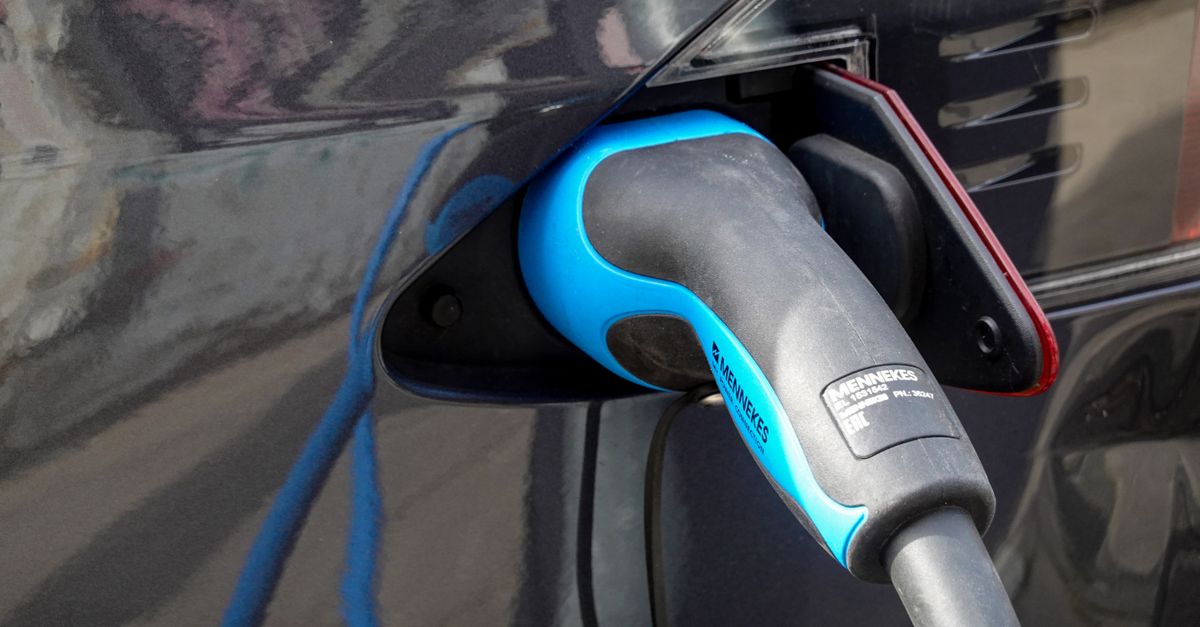
How to Compare EV Charging Costs to Gas Costs
To compare EV charging costs to gasoline costs, you need to calculate the cost per mile for both. Here’s how to do it step by step using the EV Charging Cost Calculator and a gas mileage calculator:
- Find your EV’s battery capacity and efficiency. Check your owner’s manual or the manufacturer’s website for your battery size (in kWh) and your car’s EPA-rated efficiency (in kWh per 100 miles or MPGe). For example, a 2023 Tesla Model 3 has a 60 kWh battery and uses about 25 kWh per 100 miles.
- Enter your battery capacity and electricity rate. Open the EV Charging Cost Calculator and enter your battery size (e.g., 60 kWh) and your local electricity rate (e.g., 14 cents per kWh). If you’re using a public charger, check the provider’s pricing — some charge by the minute or have tiered rates.
- Set your charging range. Enter your starting charge percentage (e.g., 20%) and your target charge percentage (e.g., 80%). The calculator will show how much energy you’re adding (e.g., 36 kWh for a 60 kWh battery) and the cost, including charging losses. For example, at 88% efficiency, 36 kWh of usable energy costs about $5.73 at 14 cents per kWh.
- Calculate the cost per mile for your EV. Divide the total cost by the miles you expect to drive on that charge. If your EV uses 25 kWh per 100 miles, 36 kWh gives you about 144 miles. $5.73 ÷ 144 miles = 4 cents per mile.
- Calculate the cost per mile for your gas car. Use a gas mileage calculator to find your car’s MPG (e.g., 30 MPG) and enter the current gas price (e.g., $3.50 per gallon). The calculator will show your cost per mile (e.g., 11.7 cents per mile).
- Compare the two costs. Subtract the EV cost per mile from the gas cost per mile. In this example, 11.7 cents - 4 cents = 7.7 cents saved per mile. Over 10,000 miles, that’s $770 in savings per year.
Key Factors That Affect EV Charging Costs
EV charging costs aren’t fixed — they depend on several variables, some of which you can control and others that are set by your location or charging setup. Understanding these factors helps you estimate costs more accurately and find ways to save money. The table below compares the main variables that influence EV charging costs:
| Factor | How It Affects Cost | Typical Range | How to Optimize |
|---|---|---|---|
| Electricity rate | Higher rates mean higher charging costs. Time-of-use rates can cut costs by 50% or more if you charge during off-peak hours. | 8–50 cents per kWh (home: 8–20 cents; public: 30–50 cents) | Charge at home during off-peak hours (e.g., overnight). Use apps to find cheap public chargers. |
| Charging efficiency | Not all electricity reaches the battery — some is lost as heat. AC home charging is 85–90% efficient; DC fast charging is 90–95% efficient. | 85–95% | Use slower AC charging at home for better efficiency. Avoid fast charging unless you need it for long trips. |
| Battery size | Larger batteries cost more to charge fully, but they also provide more range. You only pay for the energy you use, not the full capacity. | 40–100 kWh (most EVs: 60–80 kWh) | Charge only to 80% for daily use to save money and extend battery life. Use 100% only for long trips. |
| Charging location | Home charging is usually the cheapest. Public Level 2 chargers cost 2–3 times more, and DC fast chargers can cost 4–6 times more per kWh. | Home: 8–20 cents/kWh; Public Level 2: 20–40 cents/kWh; DC fast: 30–50 cents/kWh | Install a home charger if possible. Use public chargers only when necessary, and look for free or discounted charging at work or retail locations. |
| Vehicle efficiency | More efficient EVs use less energy per mile, so they cost less to charge. Efficiency is measured in kWh per 100 miles or MPGe. | 20–35 kWh per 100 miles (or 70–120 MPGe) | Choose an efficient EV if you drive a lot. Avoid heavy or high-performance EVs if you want to minimize charging costs. |
One of the biggest misconceptions about EV charging is that you always pay to "fill up" the entire battery. In reality, you only pay for the energy you add to the battery. For example, if your 75 kWh battery is at 30% and you charge to 80%, you’re only paying for 50% of the battery’s capacity (37.5 kWh). The EV Charging Cost Calculator lets you set your starting and target charge percentages, so you see the exact cost for the energy you’re actually using. This is especially useful for daily charging, where you might only need to top up 20–30% of your battery.
Another factor that’s often overlooked is charging efficiency. When you plug in your EV, not all the electricity from the outlet makes it into the battery. Some is lost as heat in the charging cable, onboard charger, and battery. AC home charging is typically 85–90% efficient, meaning 10–15% of the energy is lost. DC fast charging is more efficient (90–95%) but usually costs more per kWh. The EV Charging Cost Calculator lets you adjust the charging efficiency, so you can see how much these losses add to your total cost. For example, if you’re charging 50 kWh at 88% efficiency, you’re actually paying for 56.8 kWh of electricity from the grid.
How to Use the EV Charging Cost Calculator for Accurate Results
The EV Charging Cost Calculator is designed to give you a realistic estimate of what it costs to charge your EV, including real-world factors like charging losses. Here’s how to use it step by step to get the most accurate results:
- Enter your battery capacity. Find your EV’s battery size in kWh (e.g., 60 kWh for a Tesla Model 3 or 82 kWh for a Ford Mustang Mach-E). You can find this in your owner’s manual or on the manufacturer’s website. Enter this number in the "Battery capacity (kWh)" field.
- Enter your electricity rate. Check your electricity bill for your rate per kWh. If you’re using a public charger, check the provider’s pricing (e.g., Electrify America, ChargePoint, or Tesla Supercharger). Enter the rate in your local currency (e.g., 14 cents per kWh).
- Set your starting and target charge percentages. The calculator defaults to a starting charge of 20% and a target of 80%, which is a common daily charging range. Adjust these if you’re charging from a different starting point or need a full charge for a long trip. For example, if you’re starting at 10% and charging to 90%, you’ll pay for 80% of your battery’s capacity.
- Adjust the charging efficiency (optional). The calculator defaults to 88% efficiency, which is typical for AC home charging. If you’re using a DC fast charger, you can increase this to 92–95%. If you’re not sure, leave it at 88%.
- Read the total cost. The calculator will instantly show the cost to charge your EV from your starting percentage to your target percentage, including charging losses. For example, charging a 60 kWh battery from 20% to 80% at 14 cents per kWh and 88% efficiency costs about $7.64.
- Calculate cost per mile. To compare this to gasoline costs, divide the total cost by the miles you expect to drive on that charge. For example, if your EV uses 25 kWh per 100 miles, 48 kWh (80% of a 60 kWh battery) gives you about 192 miles. $7.64 ÷ 192 miles = 4 cents per mile.
The calculator also shows the amount of energy added to the battery (in kWh) and the amount of energy drawn from the grid (including losses). This helps you understand how much extra you’re paying for inefficiencies. For example, if you’re adding 48 kWh to the battery but drawing 54.5 kWh from the grid (at 88% efficiency), you’re paying for an extra 6.5 kWh of electricity that doesn’t end up in your battery.
When EV Charging Costs More Than Gas (And How to Avoid It)
While EVs are usually cheaper to "fuel" than gasoline cars, there are situations where charging costs can exceed gas costs. This typically happens when electricity rates are unusually high, gas prices are unusually low, or you’re relying on expensive public chargers. Here are the most common scenarios where EV charging might cost more than gas, and how to avoid them:
- Using public DC fast chargers frequently. DC fast chargers are convenient for long trips, but they often cost 30–50 cents per kWh — 2–3 times more than home charging. At 40 cents per kWh, charging a 25 kWh/100-mile EV costs 10 cents per mile, which is close to or more than the cost of gas in many gasoline cars (8–12 cents per mile). Solution: Use fast chargers only when necessary for long trips. Plan your route using apps like PlugShare or A Better Routeplanner to find cheaper or free charging options along the way.
- Charging during peak electricity hours. Many utilities charge higher rates during peak hours (e.g., 4–9 PM), which can double or triple your charging costs. If you charge during these hours, your cost per mile might be similar to or higher than gas. Solution: Charge at home during off-peak hours (e.g., overnight). If your utility offers time-of-use rates, sign up for them and set your charger to run during the cheapest hours. Some EVs and chargers let you schedule charging to start at a specific time.
- Driving a large, inefficient EV. Heavy or high-performance EVs (e.g., electric trucks or SUVs) use more energy per mile, which can make charging costs closer to gas costs. For example, a 2023 Ford F-150 Lightning uses about 40 kWh per 100 miles, compared to 25 kWh for a Tesla Model 3. At 14 cents per kWh, that’s 5.6 cents per mile for the F-150 Lightning vs. 3.5 cents for the Model 3. Solution: If you drive a lot, choose a smaller, more efficient EV. If you need a large vehicle, look for one with a high MPGe rating (e.g., the Tesla Model Y or Hyundai Ioniq 5).
- Living in an area with very cheap gas and expensive electricity. In some regions, gas prices are unusually low (e.g., $2.50 per gallon) while electricity rates are high (e.g., 20 cents per kWh). In these cases, a 30 MPG gas car might cost 8.3 cents per mile, while a 25 kWh/100-mile EV costs 5 cents per mile — still cheaper, but the difference is smaller. Solution: Use the EV Charging Cost Calculator and a gas mileage calculator to compare costs for your specific rates. If the savings are minimal, consider other benefits of EVs, like lower maintenance costs or environmental impact.
- Charging at hotels or retail locations with high markups. Some hotels and retail locations charge a premium for EV charging (e.g., 50 cents per kWh or more). At these rates, charging costs can exceed gas costs. Solution: Check pricing before you plug in. Apps like PlugShare show user-reported rates for public chargers. If the rate is high, look for a cheaper charger nearby or skip charging unless you really need it.
Even in these scenarios, EVs often have lower total costs of ownership than gasoline cars. Electricity is just one part of the equation — EVs also have lower maintenance costs (no oil changes, fewer moving parts) and often qualify for tax credits or rebates. For example, the U.S. federal tax credit for new EVs is up to $7,500, and many states offer additional incentives. Over the life of the vehicle, these savings can offset higher charging costs in some cases.
To get a complete picture of your potential savings, use the EV Charging Cost Calculator alongside other tools, like a date difference calculator to estimate annual mileage or a timesheet calculator to track commuting costs. For example, if you drive 15,000 miles per year and save 6 cents per mile by switching to an EV, that’s $900 in annual fuel savings. Over five years, that’s $4,500 — not including lower maintenance costs or tax credits.
See also: How to Calculate Online: Use a Free Browser Calculator.
Related reading: Frequency Converter vs VFD: Key Differences Explained.
Related reading: Find the GCF of Any Numbers Instantly with a Free Calculator.