Cups to grams is not a single conversion in baking — a cup of flour, a cup of sugar, a cup of honey, and a cup of water all weigh different amounts, so any baking measurement converter that quotes one fixed number for "cups to grams" is misleading. The phrase actually mixes two distinct measurement categories: volume (cups) and weight (grams), and bridging them requires knowing each ingredient's density. That is exactly why a serious cooking unit converter — including the Cooking Measurement Converter — deliberately stays inside one category at a time and reports volume-to-volume, weight-to-weight, and temperature-to-temperature conversions only. Volume-to-volume questions (how many tablespoons in a cup, how many milliliters in a fluid ounce) and weight-to-weight questions (grams to ounces, kilograms to pounds) have exact, fixed answers that do not depend on what you are measuring. The cups-to-grams case is different: it is an ingredient-density question, not a unit-conversion question, and it belongs on a chart that lists the weight of one cup of flour, one cup of sugar, one cup of butter, and so on. Understanding that single distinction is what separates a trustworthy kitchen tool from one that quietly produces the wrong cake.
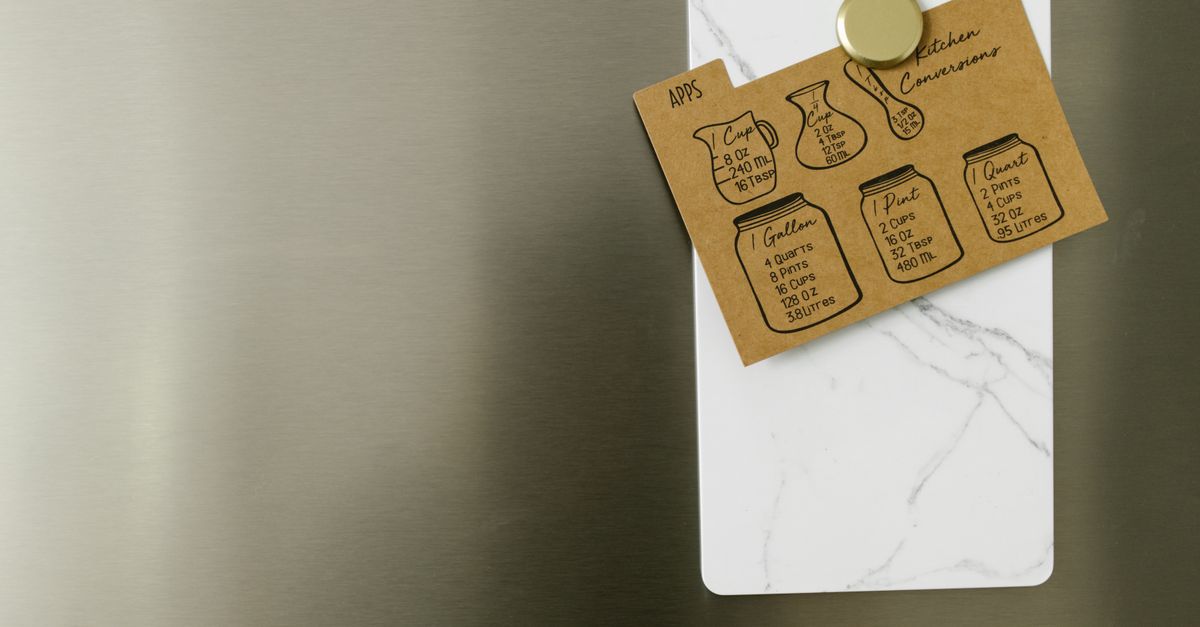
Why a Baking Measurement Converter Cannot Use One Cup-to-Gram Factor
The reason "cups to grams" keeps appearing in baking searches is simple: most American recipes were written in cups and spoons, while recipes from the UK, Europe, Australia, and much of the rest of the world specify flour, sugar, and butter in grams. Somewhere in the middle, a cook holds a phone screen with one set of numbers and a kitchen scale measuring another. The instinct is to look up a single conversion, the same way you would convert miles to kilometers. That instinct is what makes the question genuinely tricky.
Volume and weight are not the same physical quantity. A cup is a measure of space; a gram is a measure of how much matter fills that space. The bridge between them is density, which changes from one ingredient to the next. To give one example that does have a clean answer: one US cup of water, because water's density is 1 gram per milliliter at room temperature, equals exactly 236.5882365 grams. That is the only "cups to grams" number that is correct for every recipe without further research, and it is correct because of a physical coincidence, not because the cup unit changes size.
Flour, sugar, butter, honey, cocoa, chopped nuts, and rolled oats all pack the same cup with very different masses. That is why ingredient-density charts exist as a separate resource from a unit converter. Any page that prints "1 cup = X grams" without naming the ingredient is producing nonsense for most baking uses, and following it will give you a cake that is too dry, too sweet, or that never sets at all.
What the Cooking Measurement Converter Actually Handles
The Cooking Measurement Converter covers three independent measurement categories and refuses to mix them. Volume covers teaspoons, tablespoons, fluid ounces, cups, pints, quarts, gallons, milliliters, and liters. Weight covers grams, kilograms, ounces, and pounds. Temperature covers Celsius, Fahrenheit, and the UK gas mark scale. Within each category, every conversion is exact, not an approximation, because the underlying factors come from official definitions: 1 US fluid ounce is defined as exactly 29.5735295625 milliliters, and 1 pound is defined as exactly 453.59237 grams under the 1959 international yard and pound agreement.
That separation is the feature, not a missing function. For the queries that dominate real baking — how many milliliters in a cup, how many ounces in a pound, what 350 °F is in °C, what gas mark 4 corresponds to — the converter gives a precise answer the moment you type the numbers. For the question the reader actually typed, "cups to grams," the honest answer is to first look up the ingredient's grams-per-cup value on a dedicated density chart and then use the converter to translate between compatible units such as grams and ounces, or cups and tablespoons.
Privacy is built into the same design. Every calculation runs in plain JavaScript on the page you have open. Nothing is uploaded, no sign-up is required, and the tool keeps working offline once it has loaded — useful when the Wi-Fi cuts out halfway through a recipe.
A Five-Step Routine for Any Baking Conversion
This is the routine for any conversion the converter does handle: a volume-to-volume switch such as cups to milliliters, a weight-to-weight switch such as grams to ounces, or a temperature switch such as °F to °C or °C to gas mark.
- Open the Cooking Measurement Converter and pick the conversion type that matches what you are doing: Volume for cup, tablespoon, and milliliter questions; Weight for gram, ounce, kilogram, and pound questions; Temperature for oven settings.
- Enter the amount in the Amount box — for example, 2 for two cups, 350 for 350 °F, or 0.5 for half a pound.
- Select the unit to convert From in the first dropdown, then the unit to convert To in the second. For a US recipe asking for 2 cups that you want to measure in milliliters, set From to cup and To to mL.
- Read the result on screen. If you need the inverse — converting the milliliter reading back into cups — use the swap button to flip From and To without retyping anything.
- Click Copy result to put the converted number on your clipboard, so you can paste it into a notes app, a scale-of-recipe document, or a shopping list.
Worked example using the exact US customary factors: two cups to milliliters. The official conversion chain is 1 US cup = 8 US fluid ounces, and 1 US fluid ounce = 29.5735295625 mL. So 2 cups = 2 × 8 × 29.5735295625 = 473.176473 mL. Type 2, choose cup as From, choose mL as To, and the tool returns 473.176473 mL — the same number, with no rounding to mental-math approximations. This is the kind of precision that matters when scaling a bread recipe from six rolls to thirty.
Exact Conversion Factors Used by the Converter
For readers who want to see where the numbers come from rather than take them on faith, the following table lists the exact volume factors the converter applies. They are derived from the US fluid ounce definition rather than rounded kitchen estimates, which is why scaling a recipe up or down keeps its ratios intact.
| Volume unit (US customary) | Equivalent in mL |
|---|---|
| 1 teaspoon | 4.9289215938 |
| 1 tablespoon | 14.78676478125 |
| 1 fluid ounce | 29.5735295625 |
| 1 cup | 236.5882365 |
| 1 pint | 473.176473 |
| 1 quart | 946.352946 |
| 1 gallon | 3785.411784 |
| 1 liter | 1000 |
On the weight side, the figures are equally exact: 1 ounce = 28.349523125 g, 1 pound = 453.59237 g, and 1 kilogram = 1000 g. Note how a US cup compares with the other cups in circulation: a UK imperial cup holds roughly 284.1 mL, and the metric cup used in Australia and New Zealand holds exactly 250 mL. Unless a recipe specifically says otherwise — and most American blogs do not — assume the 236.6 mL US cup, which is also what the converter uses by default.
Oven Temperature Conversions for Baked Goods
Temperature is the third leg of any serious baking measurement converter, because an oven set to the wrong number ruins a cake faster than a mismeasured cup of flour. The Celsius-to-Fahrenheit side uses a single reversible formula, °F = °C × 9/5 + 32, which gives continuous answers: 180 °C → 356 °F, 200 °C → 392 °F, and so on. The British gas mark scale is different: it is a discrete ladder, not a continuous unit, so the converter snaps the result to the nearest mark on the official chart. The standard table below summarizes the published mapping that the converter applies.
| Gas mark | °C (approx) | °F (approx) |
|---|---|---|
| ¼ | 110 | 225 |
| ½ | 130 | 250 |
| 1 | 140 | 275 |
| 2 | 150 | 300 |
| 3 | 170 | 325 |
| 4 | 180 | 350 |
| 5 | 190 | 375 |
| 6 | 200 | 400 |
| 7 | 220 | 425 |
| 8 | 230 | 450 |
| 9 | 240 | 475 |
When a recipe says gas mark 4 and your oven is marked only in °C, the converter returns 180 °C; when it says 180 °C and your oven dial shows only gas marks, it returns the closest mark — gas mark 4 — so you can stop worrying about whether 175 °C or 185 °C was meant.
When to Reach for an Ingredient Chart Instead
Two patterns show up in real baking work where the converter is the wrong tool. The first is the ingredient-specific cup-to-gram question — flour, sugar, butter, cocoa, honey, oats — where the only honest answer comes from a density or ingredient-weight chart that lists one cup's mass per food. The second is the scale-up calculation: when a recipe for 12 muffins is being multiplied to make 60, each ingredient still needs its own density-corrected weight, and the converter is useful for translating that final weight between grams and ounces for whoever is doing the weighing.
For everything else a baking measurement day requires — converting between cups and tablespoons, between milliliters and fluid ounces, between ounces and pounds, between Celsius and Fahrenheit, between Celsius and gas mark — the Cooking Measurement Converter is exact and ready in a single click. Pair it with a density chart and a kitchen scale, and the mix of American volume recipes, European weight recipes, and British gas-mark ovens stops being a problem worth thinking about.
Related reading: Hardness Conversion Calculator: Accurate HRC, HRB, HV & HB.
Related reading: km/h to m/s: The Exact Conversion Factor Explained.