To calculate bra size, you take two tape-measure readings — the underbust (snug around the ribcage) and the bust (across the fullest part) — and let a calculator convert the difference between them into a band number and a cup letter. The standard approach, used by most fitting guides and reflected in tools like the Bra Size Calculator, is to round the underbust to the nearest even number for the band, subtract it from the bust measurement, and read the cup letter from the difference. The same two numbers produce a US size, a UK size, and an EU size, which is why one input pair is enough to shop across brands from three regions.
Many people type "calculate bra size how to" into a search engine because the process feels foggy. In a fitting room, a stylist does it visually; at home, you have to do it with numbers, and the cup-letter tables vary slightly by country. A short, reliable method is more useful than a long explanation, and that is exactly what the Bra Size Calculator is built for. It takes your band and bust in either inches or centimetres, does the subtraction, and returns the US, UK and EU size side by side so you can match the brand you are shopping.
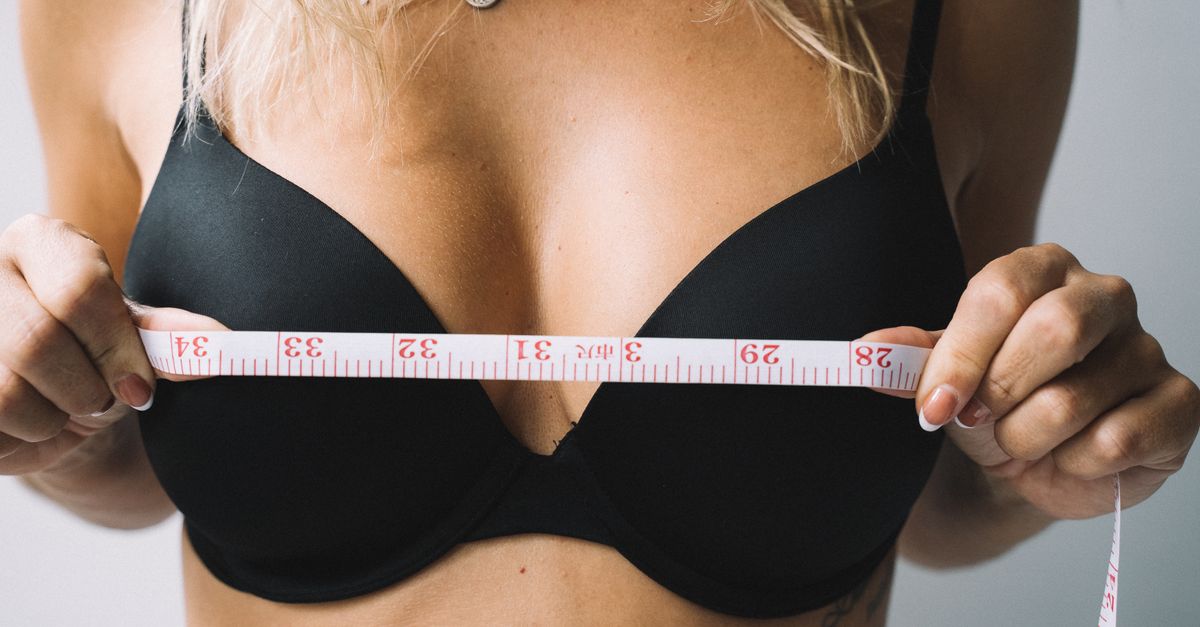
What You Need Before Measuring
You only need a soft fabric measuring tape — the kind a tailor uses — and a mirror. A rigid ruler or a metal tape will give a reading that is too tight at the back and too loose at the front, which throws the cup off by half a size or more. Stand in front of the mirror so you can see the tape stay level all the way around your body; a tilted tape reads high on one side and low on the other, and the resulting bra size is no better than a guess.
Wear a non-padded, non-wired bra or no bra at all. Push-up bras, sports bras, and any top with a structured cup pad the bust outward and inflate the reading by roughly an inch. If you must wear something, a thin, unpadded bralette is the next-best option. Measure at a time of day when your bust is at a typical size — many people find that mid-cycle, when oestrogen peaks, the bust reads one to two centimetres larger than during the rest of the month.
How to Calculate Bra Size in 3 Steps
The method below is the one the Bra Size Calculator uses under the hood, so the numbers you type in are the same numbers the tool uses to generate your US, UK and EU sizes.
- Pick a unit and measure your underbust. Choose inches or centimetres, then wrap the tape snugly around your ribcage, directly under the breast where the bra band sits. The tape should be level all the way around and tight enough that it does not slide, but not so tight that it digs in. Read the number where the tape crosses and round to the nearest whole unit.
- Measure your bust at the fullest part. Stand upright, arms relaxed at your sides, and run the tape across the nipple line — the widest point of the bust. Keep the tape level around the back; do not let it ride up. Breathe normally and read the number at the end of a normal exhale. Round to the nearest whole unit.
- Enter both numbers and read your size. Type the underbust and bust into the Bra Size Calculator. The tool subtracts underbust from bust, looks up the cup letter in the standard table, and prints the band-plus-cup result in US, UK and EU formats.
Reading the Numbers: Band, Bust, and Cup Letter
Two numbers go in, three things come out: a band, a bust-derived cup letter, and a final combined size. The underbust measurement is the band size: most guides round it to the nearest even number (so a 29-inch underbust becomes a 30 band, and a 31-inch underbust becomes a 32). The cup letter is driven by the difference between the bust and the band, because a 32B and a 36B do not hold the same volume — the cup letter is the band's companion, not a fixed quantity.
The cup table is the part that varies by country. The widely used system, including the one in the Bra Size Calculator, follows the table below for the difference between bust and band, in inches:
| Bust − Band (inches) | US & UK cup | EU cup |
|---|---|---|
| 1 | A | A |
| 2 | B | B |
| 3 | C | C |
| 4 | D | D |
| 5 | DD / E | E |
| 6 | DDD / F | F |
| 7 | G | G |
For example, a 34-inch underbust and a 37-inch bust give a difference of 3 inches, which reads as a C cup. In the US and UK this is a 34C; in the EU, where the same number is rounded up to a 75 cm band, the same cup is written as 75C. The band number changes but the cup letter does not, which is the cleanest way to think about cross-border shopping.
For a single worked example, take an underbust of 30 inches and a bust of 35 inches. The cup difference is 35 − 30 = 5, which sits between D (4) and DD (5) in the table, so the cup reads DD. The band is the even-rounded underbust, 30. The result is 30DD in the US and UK, and roughly 75E in the EU (because EU bands are usually written in centimetres and that same underbust rounds to 75). The Bra Size Calculator returns all three of these at once.
Why Sizes Differ Between the US, UK and EU
The cup letter is roughly portable — a C is a C, give or take a label. The band number is not, because of the unit and rounding convention. US and UK brands use inches and round the underbust to the nearest even number, while most EU brands list the band in centimetres and round to a multiple of 5 (70, 75, 80, 85). The same ribcage can be a 34 in the US and a 75 in the EU. The cup letter travels with you; the band number does not.
Some EU countries also use a separate French/Spanish system, and a handful of brands use the older "sister size" convention where a 32C and a 34B hold the same cup volume. If you shop in a different region, the safest move is to enter your two measurements into the Bra Size Calculator and read off the size for that specific region rather than converting one label to another by hand.
Common Measurement Mistakes That Throw Off the Result
Most "the calculator is wrong" complaints come from a measurement error, not a calculator error. The four most common mistakes are easy to avoid once you know to look for them.
- Tape not level around the back. A tape that rides up at the shoulder blades will read the underbust a full inch too small, which then drops the cup letter by one. Check in the mirror before you read.
- Over-padded bra during measurement. A push-up or moulded cup adds about an inch to the bust reading. Strip down to a soft, unpadded layer — or nothing — for an honest number.
- Tape pulled too tight on the underbust. The underbust should be snug, not squeezed. If you can barely slide a finger under the tape, the band reading is artificially small and the cup will read larger than it really is.
- Rounding in the wrong direction. The standard convention is to round the underbust up to the nearest even number, and to round the bust to the nearest whole number. Rounding down on the band shrinks the cup; rounding up inflates it.
What to Do if the Calculated Size Feels Off
A size from a calculator is a strong starting point, not a final verdict, because breast shape, breast spacing, and band firmness all affect how a specific bra sits on a specific body. If the band rides up at the back, drop a band size and go up a cup to keep the same volume — this is the "sister size" trade and is described in detail in our guide to how to calculate bra size accurately at home. If the cup wrinkles or gaps, the cup is too big; if it spills over the top or sides, the cup is too small.
Recheck your measurements every few months or after a major weight change, a pregnancy, or a change in hormonal contraception. A difference of half an inch in either reading is enough to move the cup letter by one step. The same goes for converting between regions — running your two numbers through the Bra Size Calculator before every new order is faster and more reliable than remembering a label.
Frequently Used Conversions for Shopping
Once you have your calculated size, the table below maps the most common US sizes to the equivalent EU and UK labels. It is a quick cross-check for browsing brands in another region, and it is built on the same band-and-cup logic the calculator uses.
| US size | UK size | EU size (band, cm) | Approx. underbust (in) |
|---|---|---|---|
| 32A | 32A | 70A | 28–30 |
| 34B | 34B | 75B | 30–32 |
| 36C | 36C | 80C | 32–34 |
| 38D | 38D | 85D | 34–36 |
| 40DD | 40DD | 90E | 36–38 |
Use this table as a sanity check, not a substitute for measuring. If your underbust sits at the edge of a range — say, 33 inches — try both the 34 and the 36 band; the one that stays level on the tightest hook is the right one. For a clean cross-border shop, the Bra Size Calculator will print the size in all three systems from the same two inputs.
Related reading: How Do You Calculate Brinell Hardness: Formula and Steps.
Related reading: How to Calculate Business Days Between Two Dates.
Related reading: How to Calculate Bra Size From Two Measurements.