Body Fat Calculator is a body fat calculator alternative that estimates body-fat percentage from tape-measure circumferences without calipers, a scale, or a gym visit.
It uses the U.S. Navy circumference method: select your sex, enter your height, neck, waist, and hip circumference if you are a woman, and read the estimate to one decimal place. Measurements must be in centimetres, and the calculator also provides a simple fitness-band label.
If you are seeking an alternative because weight or BMI does not reveal enough about body composition, circumference data can add useful information. It is still a statistical estimate rather than a direct measurement of tissue, so it is best suited to home screening and trend tracking.
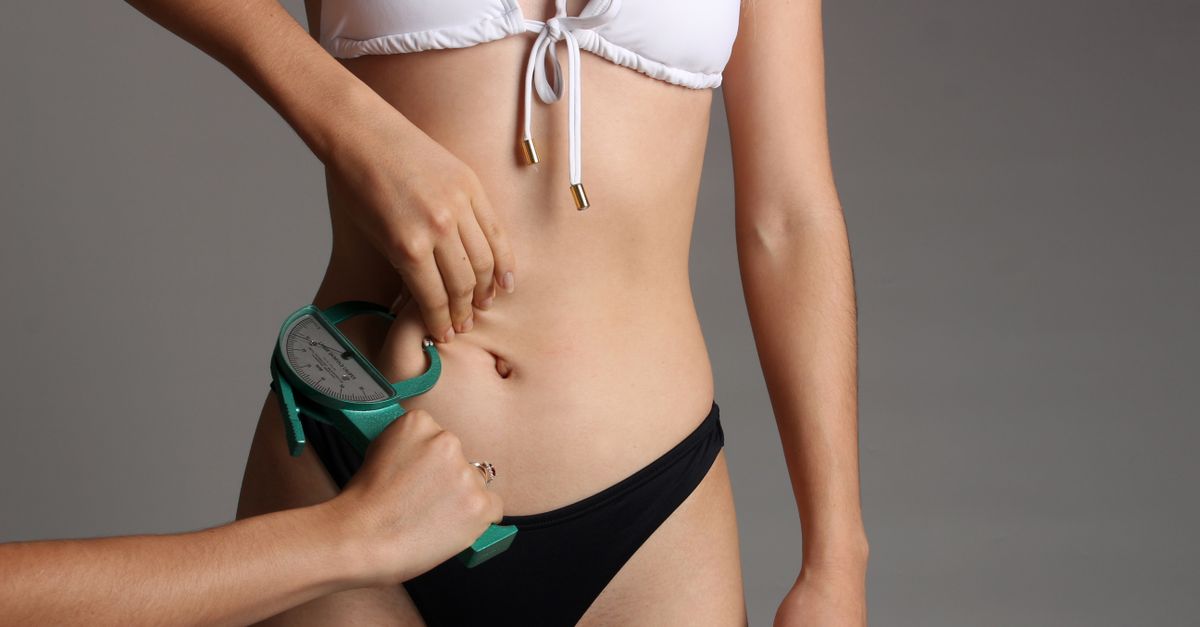
A private option for home screening
The main advantage of this alternative is its short list of practical inputs. A flexible tape measure and the ability to measure height are enough for the U.S. Navy method. Men provide neck, waist, and height measurements; women also provide a hip measurement. The calculator then applies the appropriate equation for the selected sex.
All calculations happen locally in your browser. Nothing you type is uploaded or stored, so the workflow can remain private at home. There is also no need to step onto a scale, buy calipers, or arrange a gym visit before obtaining a screening estimate.
This method is most useful when the goal is to monitor changes under consistent conditions. It can complement weight records by offering a body-composition signal that BMI cannot provide: two people with the same weight may carry very different amounts of fat and muscle.
How the Navy circumference method works
The U.S. Navy circumference method was developed by the Naval Health Research Center. It uses statistical relationships between body measurements and the ratio of fat to lean mass across large populations. The calculations use base-10 logarithms, with every circumference and height entered in centimetres.
Men’s equation: body-fat percentage = 495 ÷ [1.0324 − 0.19077 × log10(waist − neck) + 0.15456 × log10(height)] − 450.
Women’s equation: body-fat percentage = 495 ÷ [1.29579 − 0.35004 × log10(waist + hip − neck) + 0.22100 × log10(height)] − 450.
The difference in the equations is intentional. For men, waist minus neck acts as a statistical proxy related to abdominal fat. For women, adding the hip measurement creates a value that reflects both abdominal and lower-body fat distribution. Because the calculator uses separate formulas, a woman should select the female option and enter her hip circumference; a man should not be asked for that measurement.
The result is an estimate of total body-fat percentage. It does not reveal exactly where fat is stored on a particular person, such as whether it is concentrated around the abdomen. For a clearer explanation of the expected margin of error, see how to interpret body fat calculator accuracy.
Measure and calculate with the Body Fat Calculator
Use the same procedure each time you check your estimate, especially when you intend to compare results across several weeks or months.
- Select your sex. This chooses the correct U.S. Navy equation and determines whether a hip measurement is required.
- Prepare a flexible tape measure. Work in centimetres and measure on bare skin. Keep the tape snug without compressing the skin, stand relaxed, and avoid sucking in your stomach or flexing your muscles.
- Measure your neck. Place the tape just below the larynx. At the front, angle it slightly downward while keeping it in position around the full neck.
- Measure your waist. Men should measure at the navel, while women should use the narrowest point of the waist. Keep the tape level and parallel to the floor, and read it after a normal exhale.
- Measure your hips if you are a woman. Run the tape around the widest part of the buttocks and hips. Maintain the same level, snugness, and relaxed posture used for the other measurements.
- Measure and enter your height. Record your height in centimetres, then type your height, neck, waist, and applicable hip measurement into their corresponding fields. The estimate updates instantly as you type.
- Read the result and check the band. Review the estimated percentage to one decimal place and the simple fitness-band label. Then repeat the tape measurements two or three times and use the averaged values for a more reliable estimate.
What the percentage and fitness band mean
A body-fat percentage estimate gives more context than weight alone because weight does not show whether the body is carrying more fat or more muscle. The fitness band supplied by the calculator adds a quick classification, but it should not be treated as a diagnosis or a clinical risk assessment.
For average adults, the U.S. Navy circumference method usually falls within about 3–4 percentage points of gold-standard methods such as DEXA and hydrostatic weighing. Accuracy can be lower for very lean people, very muscular people, and older adults because the equations are based on population averages rather than each person’s internal tissue composition.
The output also does not identify the location of fat around the body. Two people can have the same percentage while carrying fat in different areas. Use the result as a screening signal, compare it with your own previous readings, and avoid judging it solely by the fitness-band label.
Reduce tape-measure error
Small placement differences can affect the final percentage. A mistake of one centimetre can shift the estimate by roughly a percentage point in some cases. Taking each measurement two or three times and averaging the readings reduces this type of error.
Repeatability improves when you use the same tape, landmarks, lighting, and body position every time. Morning measurements before eating tend to be the most consistent. Measure while relaxed, breathe normally, and do not compare a post-workout reading with a morning reading as though they were taken under identical conditions.
Look for changes over weeks and months rather than reacting to a single result. A rising body-fat estimate while weight stays steady may be consistent with muscle loss. A falling estimate during resistance training can be consistent with recomposition. These are patterns to monitor, not diagnoses, and they are more informative when they occur across several consistent measurements.
Choose the method that matches your goal
The tape-measure calculator is an alternative when you need a private home estimate without calipers or access to body-composition equipment. Clinical assessment, medical decisions, or cardiovascular-risk evaluation are different use cases that require a qualified healthcare professional and validated measurement equipment.
| Method or signal | Main requirement | Practical use | Key limitation |
|---|---|---|---|
| U.S. Navy circumference estimate | Height, neck, waist, and hip for women, all in centimetres | Private home screening and progress tracking | Statistical estimate whose accuracy varies by body type and age |
| Caliper-based estimate | Skinfold measurements taken with calipers | A home workflow when calipers and consistent technique are available | Requires equipment and careful skinfold placement |
| DEXA scan | Specialized clinical equipment | Clinical body-composition assessment | Requires professional access to specialized equipment |
| Hydrostatic weighing | Specialized weighing setup | A validated comparison or clinical assessment | Requires specialized equipment and a controlled setting |
| BMI | Height and weight | Broad weight-category screening | Cannot distinguish fat from muscle |
For a repeatable wellness check, the Navy circumference method offers a practical balance of accessibility and useful information. Keep the result in perspective: it is not a diagnostic device, and a single reading should not drive a health decision. If you need a clinical body-composition assessment or are evaluating a health condition, use a qualified healthcare professional who can combine validated equipment with your full medical context.
If you're weighing options, Cat Age Calculator Alternative: Vet Curve or Manual covers this in detail.